
From Text to Music: How Generative AI Changes Content Creation
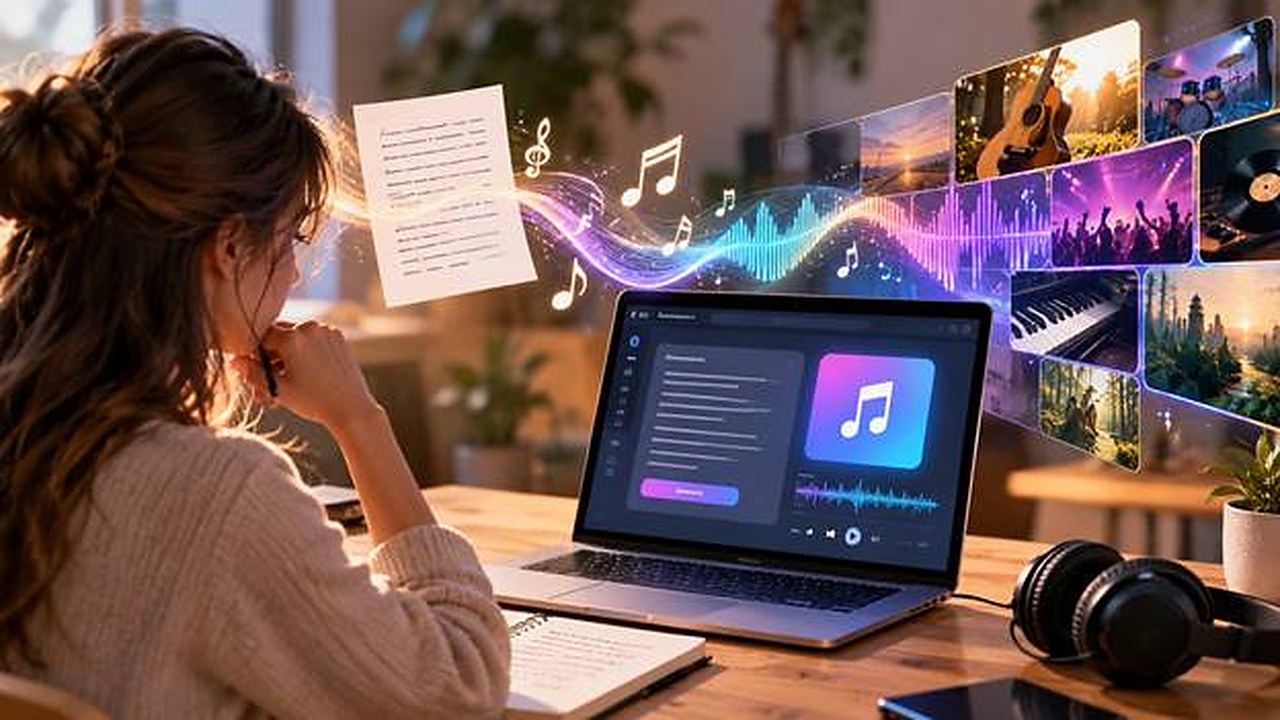
Generative artificial intelligence (AI) is giving people more ways to create digital content. Tools that once mainly created written text and images are now also being used to make sound, music, and other creative works. This change makes it easier for people to create music, even if they have song ideas but lack the technical skills or equipment traditionally needed to produce them.
AI music tools show how written words can become a starting point for a different kind of creative work. These tools read written instructions, lyrics, and descriptions of musical styles to help people explore music ideas, make early song demos, and try different creative approaches.
How Generative AI Turns Text Into Music
Making music in the traditional way can involve several steps, such as writing lyrics, composing music, arranging instruments and sounds, recording, and mixing. Each step requires different skills, and managing all these tasks can be difficult for independent creators.
Generative AI offers another way to work. Instead of creating every part of a song by hand, users can describe their ideas in words or provide lyrics they want to turn into a song. The AI tool then creates audio based on the information it receives and the features it can use.
InsMelo is one platform that offers this kind of technology. Its AI lyrics-to-song tool lets users explore how written lyrics can become music. Songwriters can use it to hear how their words might sound with a melody and singing voice. This gives them a starting point they can improve and develop further.
The technology cannot promise that every result will match what the creator had in mind. However, it can make it faster to turn a written idea into something people can hear.
Trying Out Ideas Before Making a Song
One possible benefit of AI-generated music is that it lets people explore different creative ideas early in the process.
A songwriter might have a chorus but not know whether it would work best as a pop ballad, an acoustic song, or an upbeat electronic track. Creating different versions can help the songwriter hear how the musical style changes the mood and the way the lyrics sound.
Trying different versions can also help people decide how to arrange a song. Listening to a demo may help creators spot words that sound awkward, parts that need more work, or ways to make a chorus stronger before paying for studio recording.
For independent musicians and people who make digital content, this is a practical way to test ideas. Professional musicians and producers can still help improve the arrangement, make performances better, and develop a unique artistic style.
Uses Beyond Songwriting
Turning text into music could be useful for more than making traditional songs. Digital marketers, video creators, teachers, and small businesses often need music or other audio to go with their content.
AI music tools can help these users explore background music for videos, presentations, social media posts, and other digital projects. Instead of always starting by searching for music that already exists, they can try creating a new piece to see whether it better suits their needs.
InsMelo's free AI song generator gives people a way to start exploring music creation with AI. Before beginning a project, users should check the platform's current features, access limits, and terms of use, especially if they plan to use the resulting audio for business purposes.
The main opportunity is not just making music faster. It is being able to test more ideas, compare different versions, and make creative choices by listening to actual audio instead of relying only on written descriptions.
Limitations and Responsible Use
Even with its potential benefits, generative AI does not solve every problem involved in making music. The results may need editing, and their quality or suitability can vary. Creators should also think about whether the music is original, whether they must credit anyone, and what licensing rules apply to the tools and source material they use.
Copyright is especially important when users provide existing lyrics, recordings, or other material protected by copyright. Creating new audio does not automatically give someone permission to use all the material involved.
Music licensing is beginning to change. Suno's newest models were trained using music catalogs licensed from Warner Music Group, BMG, and Believe, as explained in our report on Suno's licensing deals with record labels.
Human judgement is still important for deciding whether a song expresses the intended feelings, suits its audience, and meets professional standards.
Listeners are also receiving more information about AI-made music. Since October 14, 2026, YouTube Music has been labelling songs made mostly with generative AI on its player page.
The Future of Creativity Based on Text
Generative AI is creating new ways to connect different types of digital content. Turning text into music shows how an idea can move from written words to a piece of music that people can hear, using a process that is becoming easier to access.
For musicians, businesses, and independent creators, tools such as InsMelo provide another way to try out audio ideas and develop early versions of creative projects. Their greatest value may be in supporting human creativity by helping people test possibilities, improve their ideas, and decide which ones are worth developing further.

Nadia Dubois
Nadia Dubois is the AI & Innovation Editor at Tech Insider. She follows the fast-changing world of artificial intelligence, from foundation models to their use in real businesses. Before this, she covered AI and startups for La Tribune and contributed to MIT Technology Review's coverage of Europe. Nadia focuses on generative AI, AI rules and regulations, and the links between technology and European industrial policy. She has two degrees, one in Computational Linguistics and one in Journalism, from Sciences Po Paris.
View all articles