
Former OpenAI exec has quietly built $1.5 billion startup, betting AI can revive U.S. manufacturing
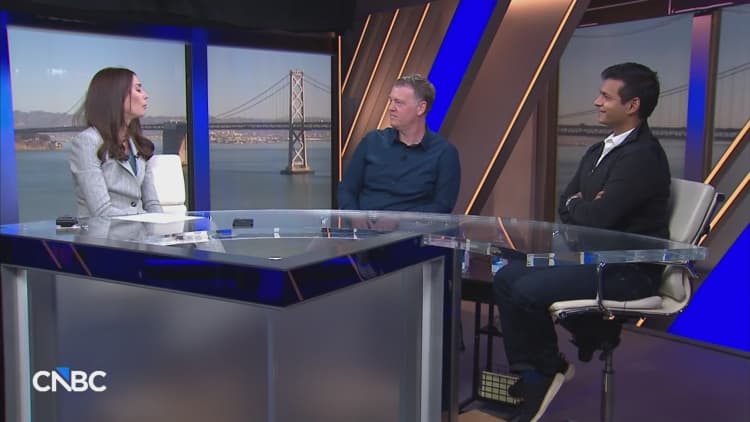
OpenAI’s former head of research has been quietly building a startup that aims to bring manufacturing back to the U.S. with the help of AI.
Bob McGrew’s new company, Arda, has raised $230 million in a funding round that values the company at $1.5 billion, the company told CNBC in an exclusive interview on Tuesday. Altimeter Capital, Accel and Khosla Ventures led the funding round.
Arda makes AI software that helps automate manufacturing. McGrew, who also led product and engineering at Palantir for more than 10 years, said Arda’s AI models are already being used by Anduril, a company that makes military technology.
“It’s a user interface and an agent that does for manufacturing engineers what Claude or Cursor does for programmers,” McGrew told CNBC. He explained that manufacturing still depends heavily on people, and it can take a long time to change how products are made when a weapon or drone gets a new design.
“When a design changes, you can retrain a human in a day — but it takes three to six months in order to change the automation to reflect the new design,” McGrew said. “We’ve built a software and AI product that basically allows manufacturing engineers to build assembly lines much faster.”
McGrew joined OpenAI in 2017 and worked on the ability of early AI models to reason before ChatGPT was launched. He left in 2024, during a wave of high-profile departures that also included chief technology officer Mira Murati and co-founder and chief scientist Ilya Sutskever.
“OpenAI is an amazing place,” McGrew said. He remembers sitting in meetings with CEO Sam Altman, Dario Amodei, who left to start Anthropic, and Sutskever. They were “talking about what it would look like when a model could write your email for you.”
McGrew stayed at OpenAI through the well-known weekend in November 2023 when Altman was suddenly fired and then brought back. McGrew said he wanted to stay long enough to release OpenAI’s reasoning product, which he called the “last key breakthrough left before AGI,” or artificial general intelligence.
“I said, if I could just ship that, I’d be happy with my career at OpenAI, and I’d be ready to move on to something else,” he said.

OpenAI CEO Sam Altman gives the main speech at the OpenAI developers conference at Fort Mason on Sept. 29, 2026, in San Francisco, California.
Heather Diehl | Getty Images
McGrew, who had not spoken publicly about Arda before this week, said the company uses a mix of its own AI models, open-source models and some of the most advanced AI models available to run its software. Arda’s other co-founders include Augustus Odena, who helped start Adept and previously worked at Google and Meta, as well as former Palantir engineers Alex Mark and Jakob Frick.
Apoorv Agrawal of Altimeter led the latest funding round. He met McGrew when they both worked at Palantir. Agrawal said that much of the world’s manufacturing takes place overseas, but there is an opportunity to bring more of it back.
“Manufacturing globally is a $16 trillion industry. In the U.S. alone, it’s $3 trillion,” Agrawal said. “We think that Arda, and the vision that they’ve outlined, will continue to capture a significant portion of that. Yes, the price is steep today, but the long-term opportunity is very high.”
McGrew said adding robotics is the next step in Arda’s product plans. He believes automating factories could help bring more manufacturing and more jobs to the U.S.
“If your design changes very frequently, the only place you can really build your product is in East Asia, because you need an army of human workers who can be retrained quickly, and you can’t wait for automation to catch up,” he said.
McGrew also pointed to the economic opportunity as the Trump administration works to bring manufacturing back to the U.S.
“No one has ever successfully built a smartphone in the U.S.,” he said. “Never successfully assembled one, and so if you can build a smartphone in the U.S. that is not taking away American jobs. That is bringing American jobs.”