
For the first time, artificial intelligence is a top 10 fear in the U.S.
It's official: artificial intelligence is now among the top 10 things people in the United States fear. In fact, AI-related concerns take up two spots in the top 10, according to the 12th annual Chapman University Survey of American Fears.
First carried out in 2014, this yearly survey tracks changes in people's fears, from everyday worries to fears about threats to human life and the future. This year, more than 1,200 people took part. Once again, 61.1 percent said their biggest fear was "corrupt government officials." This was also the top fear last year and has appeared on the list for the 11th year. Next came the fear of another world war, at 51.9 percent. The fear of "AI harming the political process" came in third, also at 51.9 percent. This puts it almost level with the fear of a loved one becoming seriously ill, which 51.8 percent of people reported.
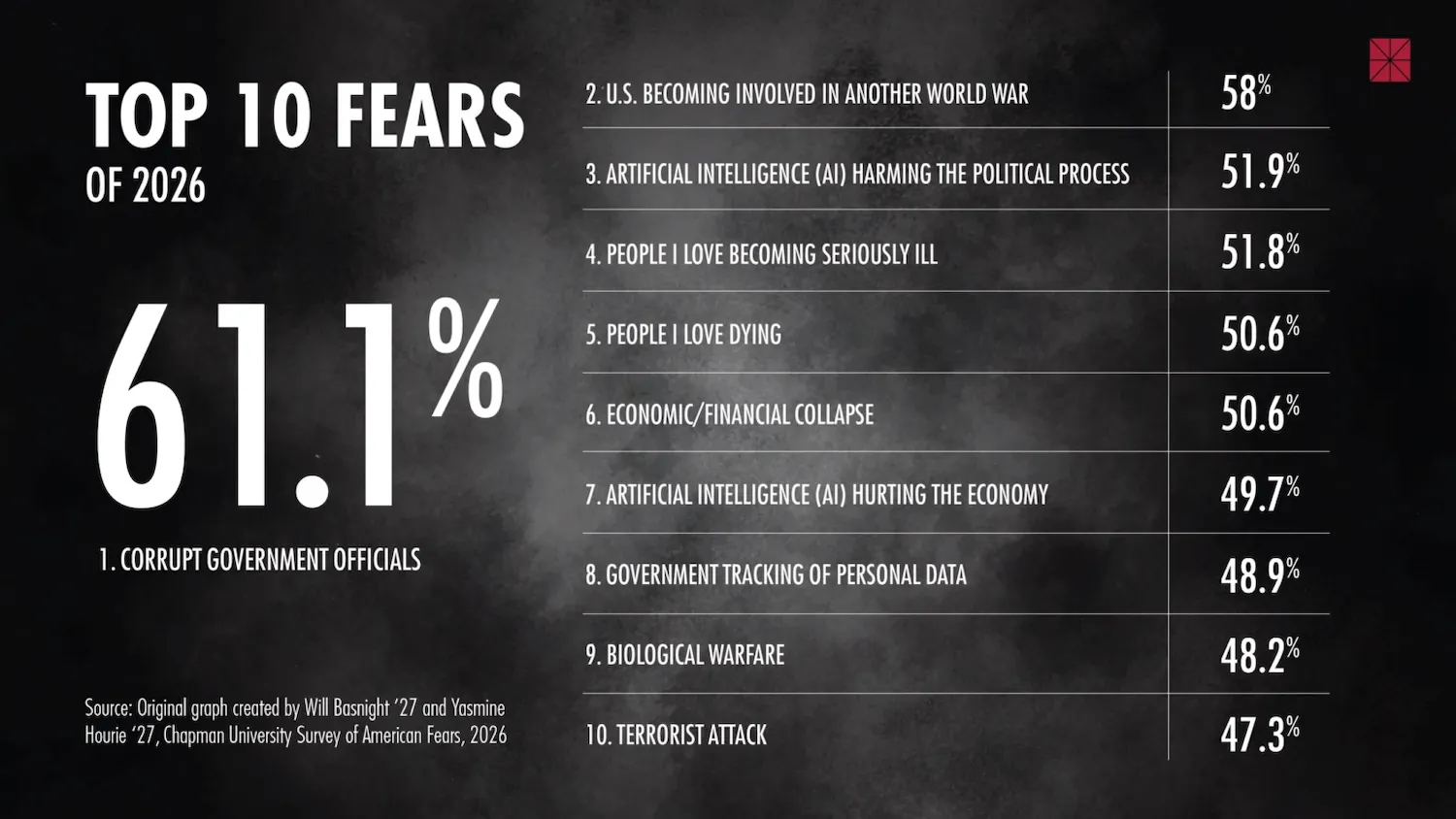
However, the survey's margin of error is plus or minus 3.79 percentage points, which makes the results harder to rank with confidence. When this margin is taken into account, it is difficult to say exactly which fears rank third through tenth. Even so, about 49.7 percent of those surveyed said they were also worried that AI could harm the economy. This means that, for the first time in the survey's history, two AI-related fears have made the top 10. Researchers at Chapman University in California included questions about AI for the first time this year, and they made clear that they will likely continue asking about it.
"As artificial intelligence becomes more integrated into everyday life, understanding these fears will be increasingly important," said Chapman University sociologist and survey creator Christopher Bader. "We expect concerns about AI to remain a significant part of the national conversation in the years ahead."
It is easy to see why so many people are worried about AI. The term now covers many things, from fake images that look real, to search engine chatbots that may give unreliable answers, to vague warnings that AI could bring about disaster. Despite these concerns, two of the biggest dangers from the AI industry may still be the rapid spread of false information and the lack of strong rules and proper oversight.
Whatever technology people fear most, the people behind the survey believe its results also show a feeling that many people share.
"What I'm seeing more and more over time is that our fear about our loved ones is going to always be there, no matter what's going on in the world," said sociologist Ashley Kranjac, director of Chapman University's Earl Babbie Research Center.