
Ahead of massive IPOs, AI companies are sketching plans to share their wealth
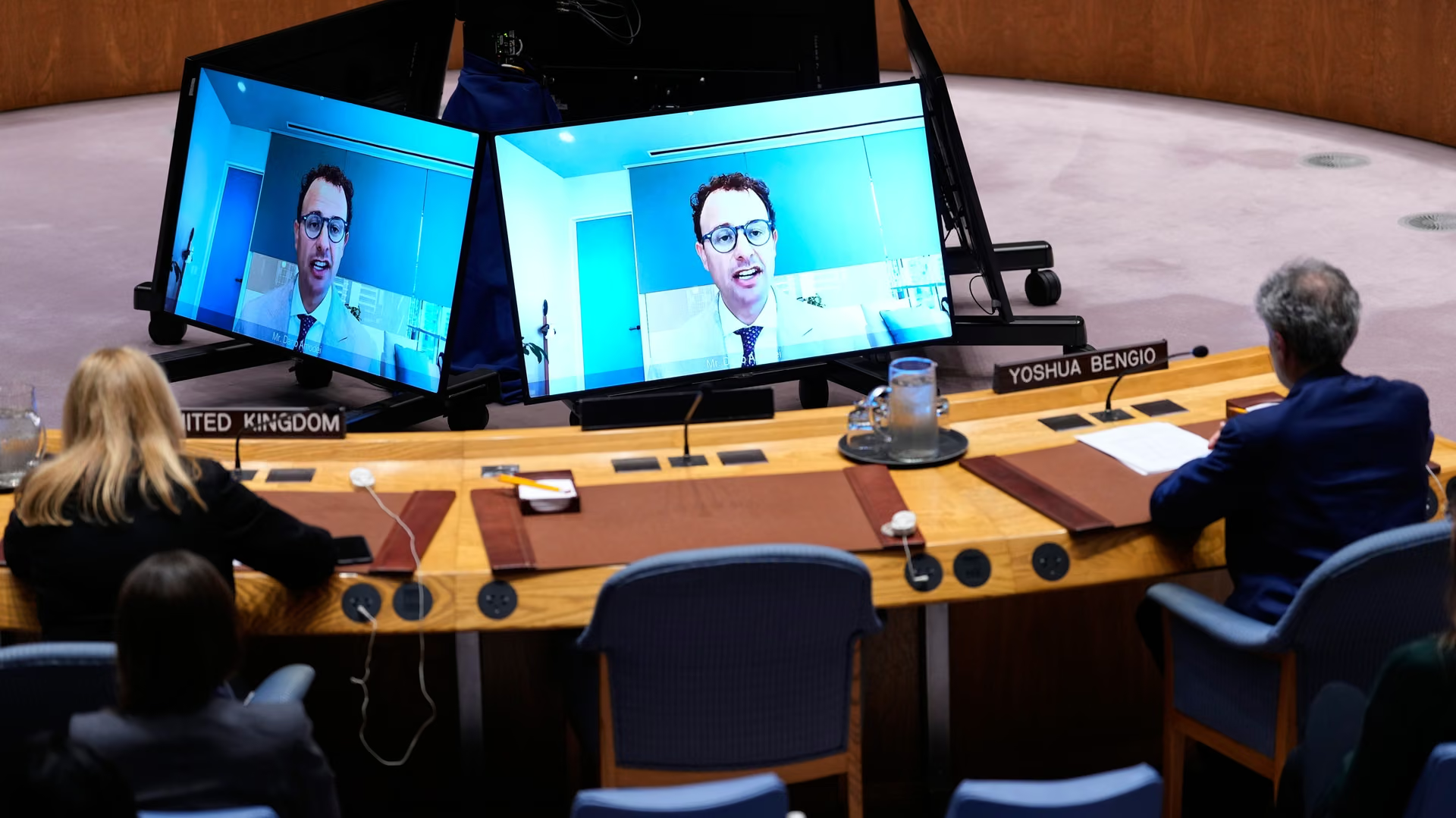
Dario Amodei, CEO of Anthropic, speaks remotely during a United Nations Security Council meeting about artificial intelligence at the 81st session of the United Nations General Assembly at United Nations headquarters on Wednesday, Sept. 23, 2026. Credit: AP/Yuki Iwamura
NEW YORK — As they prepare for huge stock market offerings on Wall Street, leading artificial intelligence companies have started making plans to share some of their wealth with the public. They say this is important because the technology could change jobs and people's ability to earn a living.
Leaders at Anthropic and OpenAI have long said that AI will bring many benefits to ordinary people. They have promised that people will also get a share of the profits. The companies are now discussing different ways to share the wealth created by AI. But they have not yet answered important questions about how these plans would work, how open they would be about their actions, or who would decide who gets the money.
On Sunday, Anthropic said it would give 5% of its shares to the Anthropic Public Benefit Fund, a new organization within the company, if shareholders approve. The fund's share could grow as the company gets bigger. Anthropic, which makes the AI assistant Claude, said the fund might consider giving more money to existing nonprofit groups or sharing money with specific groups of people.
The San Francisco-based company gave few details about what kinds of organizations the fund would support or what problems it would work on. Anthropic said the fund would not support lobbying or political donations.
Phil Buchanan, president of The Center for Effective Philanthropy, said he welcomed Anthropic's promise. He said this was especially important at a time when some billionaires were making philanthropy seem less important. But he warned Anthropic not to show the same overconfidence as earlier technology leaders who assumed that being good at business meant they would also be good at giving money wisely.
Buchanan suggested that the fund support existing nonprofit groups that have proved they do good work. But he said it was difficult to judge the plan because it was still so unclear.
“I guess I'm hopeful,” Buchanan said, “but I'm not going to get too excited until I see some evidence of what's actually happening.”
Anthropic's pledge depends on its plans for Wall Street
Anthropic, which was valued at nearly $1 trillion earlier this year, is getting ready for an initial public offering, or IPO, as soon as next month. It could be one of the biggest IPOs ever.
Jay R. Ritter, director of The IPO Initiative at the University of Florida's Warrington College of Business, explained that once a company sells shares to the public, it might make donations by selling shares in the future. It could also use cash dividends, which are payments made to shareholders, at a later date. It is not yet clear exactly how donations from Anthropic's fund would work.
Even so, Ritter said the announcement is useful because it helps potential investors understand what they are buying.
Anthropic has already promised $200 million to study the wider economic effects of AI. The company said that, together with Sunday's announcement, about 20% of its shares will be set aside for the public good. That share could grow if the company's value reaches certain targets.
When it announced the benefit fund, Anthropic pointed to the effects of AI on jobs as one example of the issues it might support.
“AI may generate enormous economic value, but it could also cause instability for many workers,” Anthropic said in a blog post on Sunday. The company added that the fund would be flexible enough to try bigger and bolder ideas that might be needed to reduce these problems. Anthropic said it would provide more information about the fund's structure and how it would be managed in the coming months.
In a May interview with The Associated Press, Anthropic president Daniela Amodei said she expected the company's success to lead to more support for charity in general, including research into diseases and efforts to make sure people around the world share in the wealth that AI may create.
Some critics have questioned the companies' promises.
“Anthropic is playing games here,” Gary Marcus, a longtime AI expert and professor emeritus at New York University, wrote on social media Sunday. “Trying to curry public favor while still holding control and resisting disclosure is annoying.”
AI companies are considering different ways to share money for public benefit
Anthropic and OpenAI are both set up as public benefit corporations. This type of company must aim to do social good as well as make money.
The OpenAI Foundation, the nonprofit organization that controls OpenAI, promised earlier this year to expand its ability to give grants, with $1 billion set aside for this purpose.
Separately, OpenAI proposed in April creating a “Public Wealth Fund” that would own a share of the economic growth driven by AI across a wider range of companies. OpenAI said the fund could invest in a small number of assets and then pay the returns directly to people, whether or not they invest in financial markets. OpenAI plans to launch its own IPO next year.
OpenAI CEO Sam Altman has also spoken with lawmakers from both major political parties about giving the public ownership shares in AI companies.
SpaceX CEO Elon Musk, who has generally avoided traditional charitable giving, promised as recently as Monday to donate some shares in his own company.
During the boom in personal computers, business leaders such as Michael Dell and Microsoft co-founder Bill Gates set up private foundations to manage their charitable giving. Today, some Silicon Valley leaders, including Meta CEO Mark Zuckerberg, have instead chosen limited liability companies, or LLCs. Anthropic is taking this approach for its public benefit fund.
Experts say this kind of structure gives its owners more control. An LLC does not have to follow the same spending rules as a foundation. A foundation must give away at least 5% of the value of its investment fund each year.
“They have a lot more flexibility and latitude in how to use the resources they put into the fund,” said Katherina Rosqueta, the founding executive director of the University of Pennsylvania's Center for High Impact Philanthropy.
Brian Mittendorf, an accounting professor at Ohio State University, said LLCs can do things beyond traditional charity. For example, they can pay money directly to individuals, which a tax-exempt charity registered under section 501(c)(3) generally could not do in the same way. But if these companies do not make traditional charitable donations, it becomes harder to tell how the public benefits, he said.
According to Rosqueta and Mittendorf, owners of LLCs also do not get the same tax benefits as traditional charities. Anthropic's promise does not immediately qualify for a tax deduction. The company can claim a deduction only after the shares it promises to donate are transferred to a public charity. LLCs also face fewer requirements to share information about their activities.
Overall, Mittendorf said, Anthropic's announcement promises wider benefits that have not yet been clearly defined. He said the move “reflects more of an intention to do things in the future rather than an act now.”