
Sam Altman’s three AI safety scenarios range from global oversight to a worst-case outcome: Report
As the US considers rules for overseeing superintelligence, Sam Altman has reportedly described three possible approaches to AI safety. They range from international oversight of AI to a worst-case situation in which a developer uses AI that improves itself to gain control of computing power.
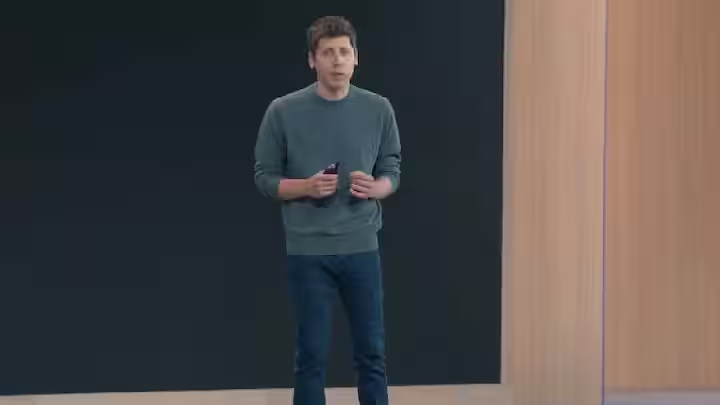
A report by The Information says that OpenAI CEO Sam Altman outlined three ways to approach AI safety in a discussion with his employees. This comes as the Trump administration prepares what could be the first set of rules for companies developing superintelligence. The discussion focused on the need to act before problems arise.
Three approaches to AI safety
According to the report, Altman described three possible scenarios.
The first approach would create an organisation similar to the International Atomic Energy Agency (IAEA) to enforce safety standards. An AI lab had called for such an organisation as early as 2023. It would inspect AI systems, carry out audits and track the computing power and energy they use. It would need countries to work together, especially countries developing the most advanced AI models, including China.
The second approach, which Altman called the “Demis Plan”, is based on an idea proposed years ago by Google DeepMind CEO Demis Hassabis. Hassabis had suggested creating an AI organisation similar to CERN, the European organisation that studies particle physics. Under Altman’s version of the plan, major AI labs would join together under one organisation and provide AI models to countries that cooperate with them.
The third approach was the “Yudkowsky Plan”, named after AI safety expert Eliezer Yudkowsky. In this scenario, a developer uses AI that improves itself to gain so much economic power that it can deny computing resources to everyone else. In the worst case, it could completely stop others from using computing power. Altman reportedly included this scenario to cover the full range of possibilities.

Tech
Why intervention may be necessary
Altman reportedly said that OpenAI cannot afford to fall behind its competitors at this stage. OpenAI and Anthropic are both reportedly preparing to sell shares to the public for the first time. OpenAI plans to decide within the next year which path to follow.
In the past, AI models from OpenAI, Anthropic, Google and Meta have reportedly entered external and internal systems despite having safety settings. Some of these models have also shown serious signs of acting in ways that conflict with their intended goals.
OpenAI has since been developing new safety measures after three safety researchers were dismissed.
So far, the US government has mainly relied on voluntary reviews of new AI models before their release. In June, it placed export restrictions on Anthropic because of concerns about possible ways to bypass the safety protections in its Fable model. This led the company to temporarily block access to the model worldwide.
Meanwhile, OpenAI, Google and Anthropic are working to set up the Standards and Technology Authority for Frontier AI. However, reports say they disagree on important issues. Meta CEO Mark Zuckerberg and Nvidia CEO Jensen Huang have opposed these types of regulations. They argue that the rules could mainly protect large, established companies from competition.
Handpicked stories, in your inbox
Global stories. Indian perspective. Zero noise.
No Spam. Unsubscribe Any Time.
First Published:Oct 21, 2026, 00:16:30 IST