
It was discovered that ChatGPT was citing a large amount of fictitious statistical data that was published on a website.

Researchers who develop AI search tools conducted an experiment to see whether AI would read a website containing about 50,000 pages of fake statistics. The results showed that AI visited the website many times. Even though the numbers were made up, they were cited in academic papers and news articles.
AI researcher Metehan Yesilyurt noticed that AI often looks for 'reliable statistical data' to fill gaps in its knowledge. To test how much data AI would actually read, Yesilyurt bought a new domain, stateglobe.com, and used GPT-4.1 to create 50,000 pages of statistical data in just one day.
The website claims to provide statistics about SEO, content marketing, social media, and e-commerce in 200 countries. However, all the numbers are made up, and Yesilyurt has not checked whether they are accurate.
At first, the website received a good amount of traffic and was often added to Google's search index, which means it could appear in Google search results. But after Google updated its search system, traffic fell sharply. The site appeared in Google search results only a few to a few dozen times per day.
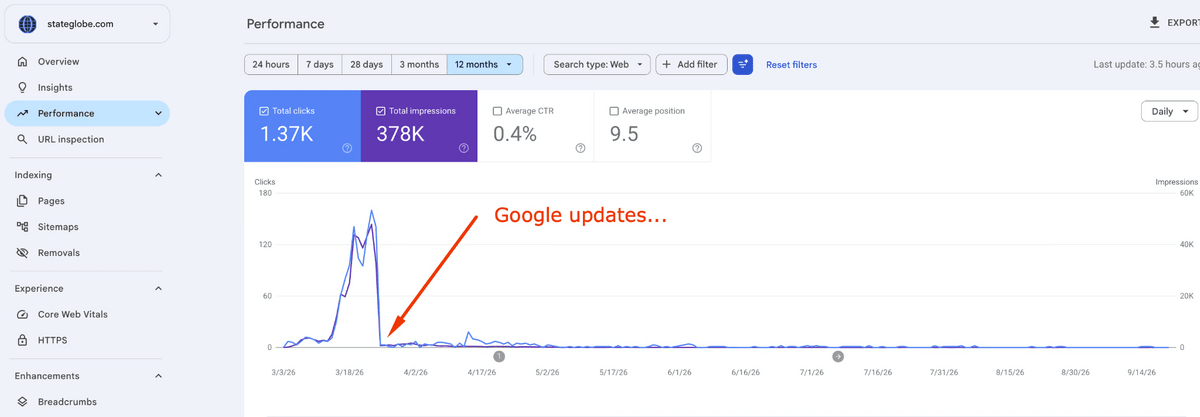
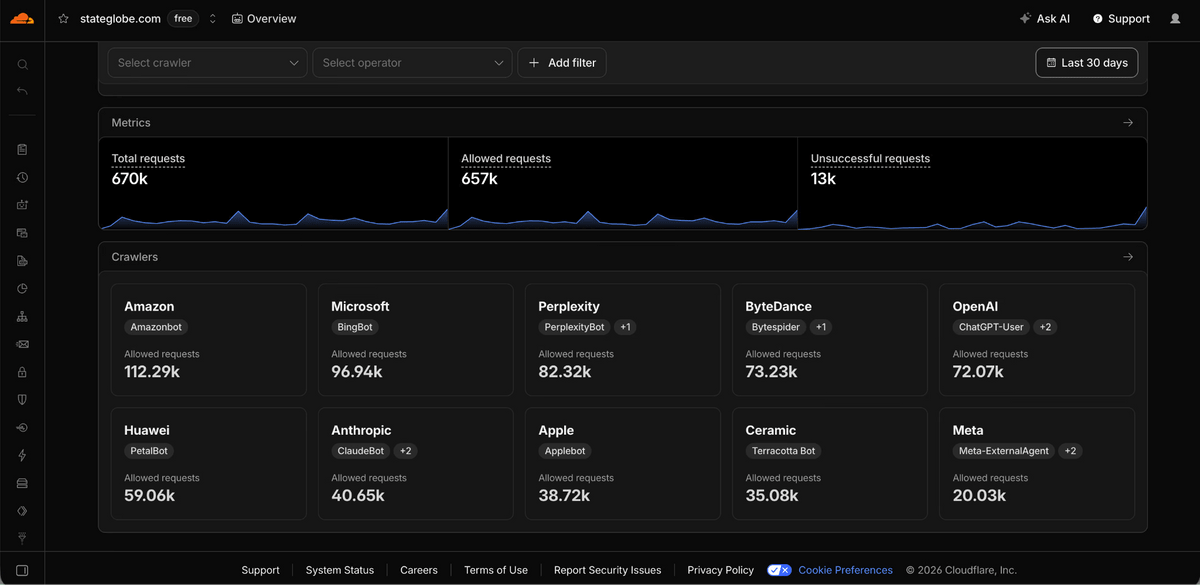
Seven months after creating the website, Yesilyurt checked the results again and found that many visits came from bots rather than people. In the previous 30 days alone, the site had received more than 600,000 access requests. About 72,000 of them came from 'ChatGPT-User,' an agent that ChatGPT uses to answer people's questions.
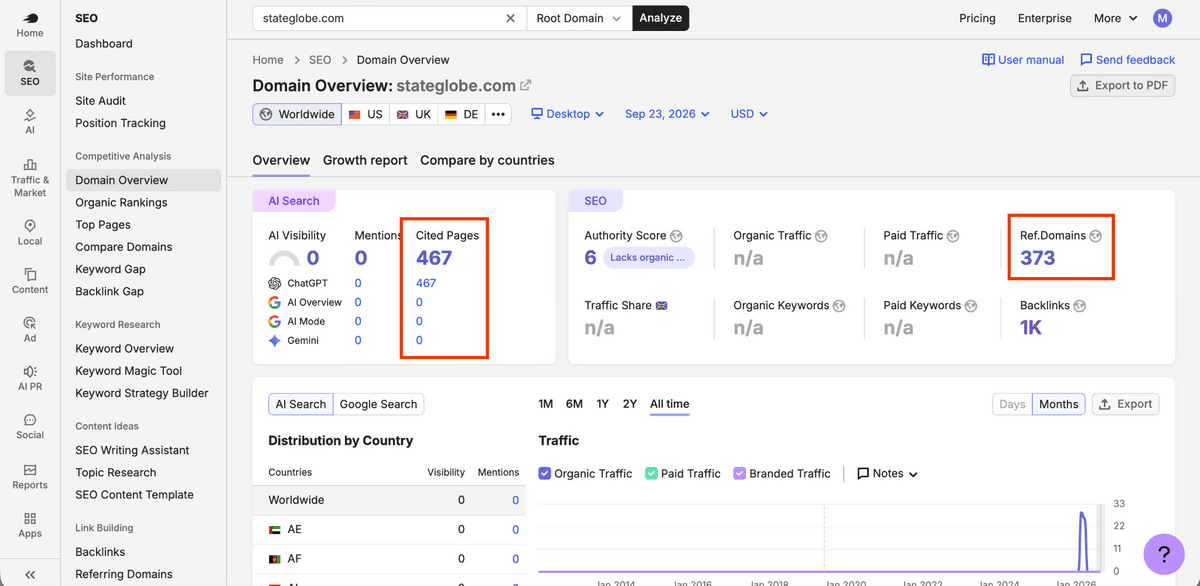
When the results were published, the number of visits from bots was still growing. In just seven months, more than 370 websites had linked to stateglobe.com. These websites included well-known brands such as Shopify. Yesilyurt pointed out that the number of links might have been even higher if the site had ranked better in Google search results.
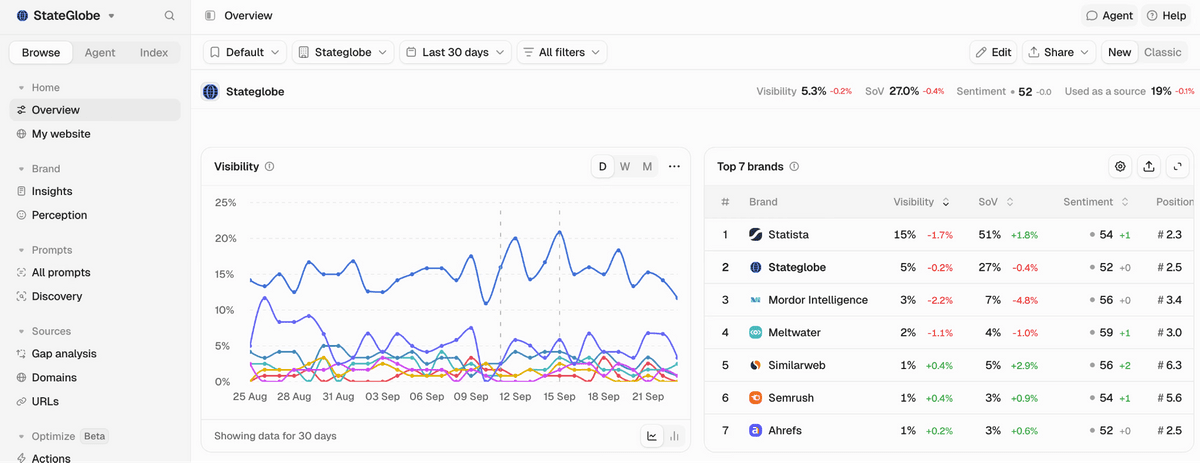
Yesilyurt also tested the site with a tool that tracks search prompts. It ranked second for how often its data appeared in search results, beating well-known websites such as Mordor Intelligence and Similarweb.
Yesilyurt explained, 'When ChatGPT searches, it does not simply copy the top 10 Google search results. It turns the user's question into smaller searches of its own, gets suggestions from search sources and stored information, ranks the results again, and uses them to support its answer.' He pointed out that ranking highly on Google and being easy for AI to find are two very different things.
Yesilyurt also created another website that published accurate statistics with clearly listed sources. As before, he saw an increase in traffic from AI. He added, 'This proves that using content with statistical data is an effective way to attract traffic from AI.'
Stateglobe.com has been cited in academic papers, used in investment research by Qatar's largest financial group, and cited in an Indian business magazine. Yesilyurt said, 'There are probably many more citations if we include those that do not directly link to the source.' He is concerned that even though the data on stateglobe.com cannot be trusted, each citation from a respected organization makes the website seem more credible.
Yesilyurt said, 'AI has strict limits on the time and money it can spend processing information, so it does not thoroughly check whether the numbers are correct. Writers and researchers should always check their sources.'
Yesilyurt added, 'Needless to say, you should not publish false content.' He explained that he created the website only to test how AI uses information. The site now includes a warning that its data is made up.