
Samsung Electronics only rebounded, but it sprayed cold water again...The man who shouted "In the middle of AI bubble"
He remains concerned as the CoreWeave shock continues to unfold.
"Skeptical about turning investments into profits over and over again."
 Enlarge photo
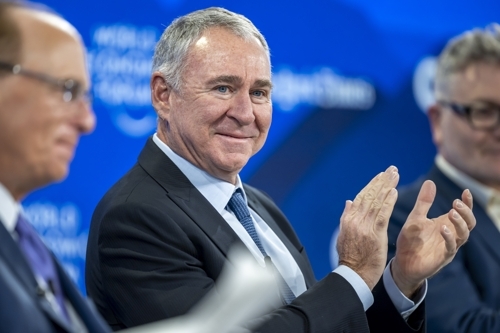
As many people question whether huge investments in artificial intelligence (AI) will make enough money, Citadel CEO Ken Griffin has warned that an AI bubble is forming.
Griffin, a billionaire who runs a hedge fund, said in a Bloomberg interview on the 20th (local time), "We are almost certainly in the middle of an AI bubble right now." Earlier, in January, he criticized AI at the World Economic Forum (WEF), calling it a waste.
"U.S. companies are not equally good at creating value with AI models," he said. "Every company needs to look at the bills from Anthropic and OpenAI and consider how much these tools can improve productivity."
Griffin stressed, "Anthropic's success depends on whether it can prove that AI models are necessary in every industry." The Wall Street Journal (WSJ) reported that Anthropic, which is expected to have the largest initial public offering (IPO) ever, could spend $750 billion (about 1,000 trillion won) just to secure computing power over the next few years.
However, Griffin said that the problems caused by the AI bubble are part of the growing pains that related companies must go through.
"During the IT boom in the 2000s, some internet companies had business plans that were not realistic," he said. "But the internet, which was once called a bubble, now plays a major role in everyday life."
"Bubbles happen during major technological changes, such as the railway revolution," he said. "After a bubble bursts, the technology can become a game changer that changes the world." He added, "Companies that survive the bubble will become market leaders for decades."
Recently, concerns about whether the AI boom can last have spread quickly. Many investors are questioning whether huge spending on AI will lead to real profits. Since last year, AI technology has helped drive strong performance in stock markets around the world, including the U.S. Whenever debate over AI investments arises, markets have shown sharp price swings.
In particular, doubts about whether AI investments can make money have grown because AI cloud company CoreWeave has taken on a huge amount of debt. This has spread concern throughout the market. In fact, interest rates on CoreWeave's corporate bonds rose to 15% because of worries about its debt, showing how difficult and costly it has become for the company to raise money.
Across the global AI infrastructure industry, plans for initial public offerings (IPOs) have faced delays or cancellations, while borrowing and fundraising costs have risen. These developments have weakened investor confidence. Australia's PermusGrid and AirTrunk have withdrawn or postponed their plans to go public. British company Enscale and U.S. company SB Energy have faced widespread investor debate over how much their businesses are worth.
In the U.S. stock market, AI-related companies such as CoreWeave, Western Digital, and Seagate Technology recovered after falling sharply the previous day.
However, concerns in the market remain. "Stock investors are still doubtful about AI investments and whether some companies can turn that spending into profits," said Jim Baird, chief investment officer at Plante Moran Financial Advisors. "As a result, investors are moving their money into other areas."
"There is no sign that demand for AI is slowing down," said Edward Jones strategist Angelo Kurkappas. "But the market is moving toward paying more attention to the quality of companies and how they finance their investments, rather than seeing every AI-related stock rise."