
OpenAI's George Osborne calls for UK investment in AI research and skills at Oxford summit
Speaking at the Oxford Generative AI Summit, Osborne spoke about OpenAI's five-year partnership with the University of Oxford. He also discussed how access to AI, public services and cybersecurity should be part of national AI plans.
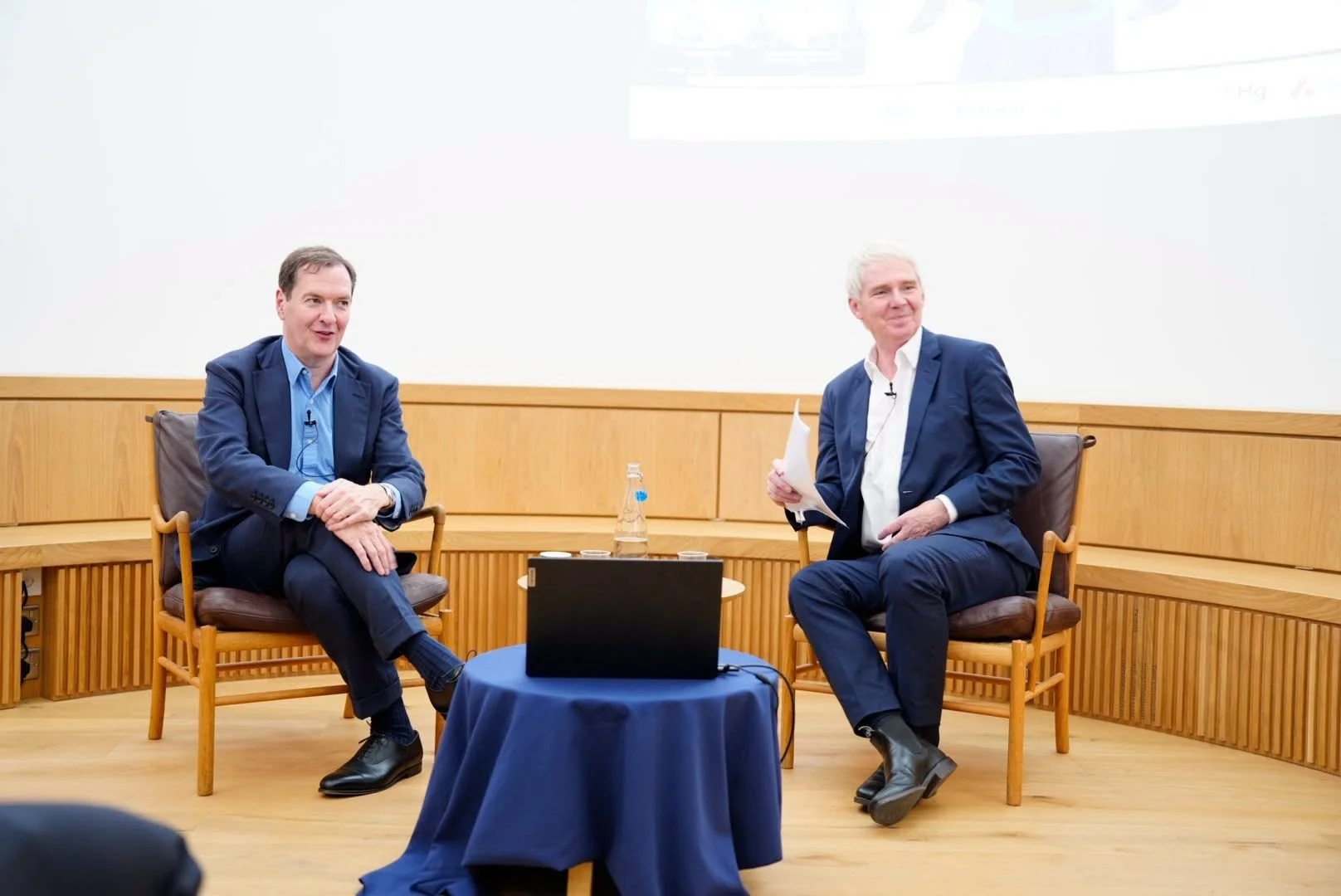
George Osborne, Head of OpenAI for Countries, took part in a discussion with Sir Nigel Shadbolt at the Oxford Generative AI Summit, held at Jesus College on 15–16 October 2026. Image credit: George Osborne
George Osborne, Head of OpenAI for Countries and a former UK Chancellor of the Exchequer, has called for Britain to invest more in advanced AI research and digital skills. He pointed to OpenAI's five-year partnership with the University of Oxford as one part of this plan.
Osborne spoke alongside Professor Sir Nigel Shadbolt at the Oxford Generative AI Summit, held at Jesus College on 15–16 October 2026. They discussed how countries can build their own AI capabilities while dealing with the technology's wider effects on education, public services and national security.
The two-day event brought together more than 200 leaders from universities, government, business and the media. They discussed how to use AI in practice, jobs, critical thinking, rules for AI and the economic effects of increasingly powerful AI systems.
In a LinkedIn post reflecting on the discussion, Osborne said Britain already has strong research institutions and skilled people to build on. But he argued that people also need investment and support to gain the skills to use the technology.
"We need to back frontier research and help people across the country build the skills and confidence to use AI," he wrote.
OpenAI's Oxford partnership and national AI development
Osborne pointed to OpenAI's existing work with Oxford as an example of this approach. He wrote: "OpenAI’s five-year partnership with the University of Oxford puts that ambition into practice."
He also explained the wider goals of OpenAI for Countries, the company's initiative to work with national governments:
"That ambition also drives our work through OpenAI for Countries: partnering with governments to build the operating system, skills and access that can translate AI advances into better education, stronger public services and new economic opportunities."
Cybersecurity was another topic he discussed. Osborne said democratic governments need access to advanced AI tools so they can improve their defenses against harmful people and groups that are developing similar technologies.
His comments connected countries' efforts to develop AI with wider questions about technological independence, security and access. These topics were also discussed throughout the summit.
Oxford discussions cover critical thinking and the use of AI
Other summit sessions looked at the practical problems organizations face when they start using generative AI and agentic AI, which can carry out tasks with less human input.
In their comments after the event, the organizers said human oversight, critical thinking and staff training were repeated themes. They also highlighted the need to give people chances to develop their own reasoning skills as AI systems take on more tasks.
Participants also discussed how a small number of companies control much of AI development, how countries can maintain control over their own technology, and what governments should do to guide the use of AI.
Professor Paul Newman of Oxa took part in research discussions about edge AI and the challenge of dealing with unexpected, unsafe situations in autonomous systems. Other sessions looked at the cost of AI infrastructure, uncertainty, rules for AI and public trust.
The event had two main tracks, Practical AI Adoption and Societal Impacts of AI. Both took place at the Cheng Kar Shun Digital Hub at Jesus College.
The Oxford Generative AI Summit has since made an OxGen26 On-Demand Pass available. It gives people access to recordings of keynotes, panel discussions and fireside chats from both days.