
LG Electronics brings AI and robotics to world's largest tidal power plant
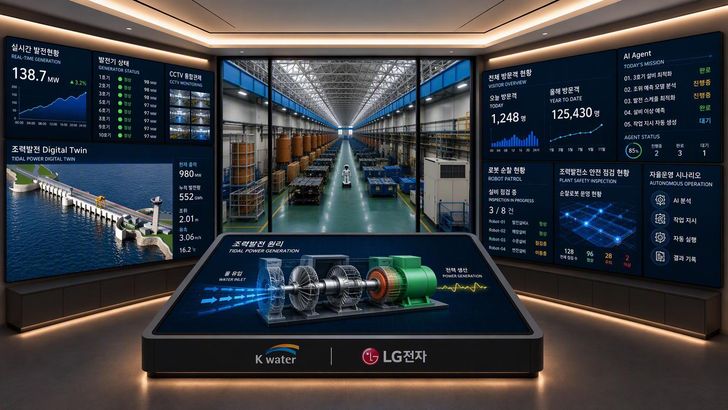
A drawing shows LG Electronics' technology for exploring AI-powered operations in renewable energy. Courtesy of LG Electronics
LG Electronics is bringing its smart factory technology beyond manufacturing and into renewable energy. It is working with Korea Water Resources Corp. to develop artificial intelligence systems for one of South Korea's largest power plants.
The companies signed a memorandum of understanding on Thursday at the cultural center of Sihwa Lake Tidal Power Plant in Ansan, Gyeonggi Province. They will study ways to use AI to run the plant, which has the largest installed electricity-generating capacity of any tidal power plant in the world.
The companies said they will combine K-water's experience in running power plants and its operating data with LG Electronics' knowledge of smart factories, digital twins, robotics and AI.
Under the agreement, they will study a digital twin system that creates a virtual copy of the plant and combines it with live information from power-generating equipment and surveillance cameras.
The system could predict how much electricity the plant will produce, test different ways to operate it and check the condition of its equipment. This could help workers find problems and understand how well the plant is working before making decisions.
The companies will also study AI agents powered by EXAONE, an AI model developed by LG AI Research. These agents could analyze why electricity production drops, spot unusual equipment behavior, help predict when maintenance is needed, assess risks and plan inspection schedules more effectively.
The technology could also study weather, changes in sea levels and equipment data to suggest how the plant should operate. It could also automatically handle routine tasks, such as preparing reports.
For work at the plant, the companies will study the use of patrol robots, AI-powered surveillance cameras and automated industrial systems. These tools could help workers inspect the facility, watch areas that may be dangerous and make storing and moving spare parts easier.
The agreement also includes working together on research and development, taking part in renewable energy and AI projects, and seeking business opportunities in other countries.
LG Electronics said the project could become an example of how its smart factory technology can be used at energy facilities in South Korea and other countries.
“Applying the smart factory capabilities LG Electronics has built up in manufacturing to public infrastructure is meaningful,” the company said.
The company added that it would work with K-water to help the plant use digital technology and make its operations more efficient and safer.
This article was written with help from generative AI and edited by The Korea Times.