
Sam Altman says AI could help discover a cure for a major disease within two years
OpenAI CEO Sam Altman expects artificial intelligence (AI) to help scientists find possible treatments for serious diseases within the next couple of years. In an interview with podcaster Matthew Berman, he talked about how AI could help discover new medicines and the challenges of turning scientific discoveries into benefits for society.
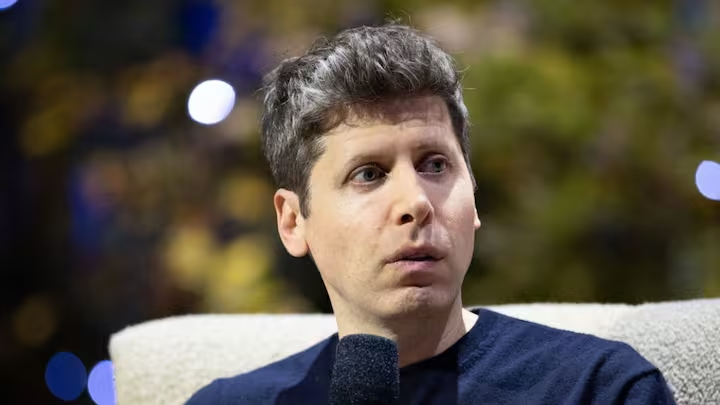
OpenAI CEO Sam Altman believes AI could help researchers find a possible treatment for a major disease within the next two years. AI systems are starting to help with scientific research in areas beyond software development and mathematics.
In a 45-minute interview with podcaster Matthew Berman, Altman explained how more powerful AI models could help scientists study biology, materials science and energy. However, he did not say that a discovery would become an approved medicine within that time. Clinical tests and reviews by regulators would still be needed before patients could use it.
He said, "I would hope we have the candidate for that in the next couple of years for the first like really major thing."
This prediction reflects growing interest in using AI to speed up research that has traditionally taken years of experiments, calculations and expert work. But finding a promising treatment candidate is only one step in developing a treatment that is safe and works well.
Role of AI in science
Altman believes AI could also help scientists make progress in other fields by using methods that have helped AI systems solve difficult math problems. If scientists can adapt these methods to biology and materials science, AI models could help them find connections and make discoveries that might otherwise be missed.

Tech
He suggested that future AI systems could help scientists discover new materials if they had enough computing power and access to real-world data. These discoveries could be useful in areas such as energy, although the interview did not give a specific timeline for these advances.
"I think, we are entering the era where AI is going to help us discover significant new knowledge. We have been talking about this for a long time. And now AI is doing very difficult things, figuring out very complicated, important new knowledge," Altman said.
Altman also expects AI to make a major contribution to finding new medicines. He said he hoped researchers would identify a promising treatment or cure for a serious disease within the next couple of years.
This would be an important step in research, not the arrival of a medicine that patients could use right away. Possible treatments must still go through the required tests and regulatory reviews to show that they are safe and effective. Altman said some steps between discovering a treatment and making it available could become faster without weakening the safety measures that protect patients.
When asked which scientific discovery he most wanted to see, Altman chose a major breakthrough in physics. However, he admitted that the discovery he found most interesting might not necessarily bring the greatest benefit to humanity.
The discussion also covered who should benefit from scientific discoveries. Altman suggested that some basic research should remain available to the public instead of being treated only as intellectual property that companies can use to make money. He did not say that every discovery made with AI should automatically be shared openly.
AI offers new hope for drug discovery
Scientists are increasingly studying whether AI can help develop treatments for diseases that have been difficult to treat using traditional methods. AI is creating new ways to investigate conditions such as Parkinson's disease, rare genetic disorders and infections caused by bacteria that resist antibiotics. However, many possible treatments are still at an early stage of research.
Antibiotic resistance is one of the biggest challenges. Bacteria are becoming resistant to existing medicines, making infections that were once treatable harder to control. Global research estimates suggest that bacterial resistance to antimicrobial medicines directly causes about 1.1 million deaths each year. The number of deaths could rise significantly if effective solutions are not found.
Developing new antibiotics has been difficult because research is expensive, development takes a long time and companies have limited financial reasons to invest. From 2017 to 2022, only 12 new antibiotics were approved. Many belonged to drug groups that already existed, making it harder to overcome resistance with completely new approaches.
AI could help scientists find possible new medicines faster by studying biological data and identifying compounds worth testing. Researchers are also exploring similar methods for diseases such as Parkinson's, where they are looking for ways to slow down or prevent the disease from getting worse, and for rare diseases that have few available treatments.
However, finding a promising molecule is only the first step. Possible medicines must undergo laboratory studies, clinical trials and regulatory reviews before they can be approved. AI may speed up some parts of this process, but it is still unclear whether it can reliably produce safe and effective treatments on a large scale.
Handpicked stories, in your inbox
Global stories. Indian perspective. Zero noise.
No Spam. Unsubscribe Any Time.
First Published:Oct 22, 2026, 10:27:56 IST