
Fitzroy Minerals and Fleet Space Technologies Use Machine Learning to Define New Untested Targets at the Buen Retiro Copper Project, Chile
VANCOUVER, BRITISH COLUMBIA - October 22, 2026 (NEWMEDIAWIRE) - Fitzroy Minerals Inc. (TSXV: FTZ, OTCQX: FTZFF, FSE: C3Y) (“Fitzroy” or the “Company”) is pleased to announce the results of a study that combined seismic data and machine learning (“ML”) with Fleet Space Technologies (“Fleet”) at the Buen Retiro Copper Project near Copiapo, Chile (“Buen Retiro” or the “Project”). The machine-learning study created a ranked list of priority target areas (Figure 1). It combined 3D Ambient Noise Tomography (“ANT”) data with earlier geophysical surveys, geological models, and about 24,400 copper test results from 140 drill holes. The model identified nine areas where the underground rock features closely match those found in rocks that contain known copper mineralization at Buen Retiro.
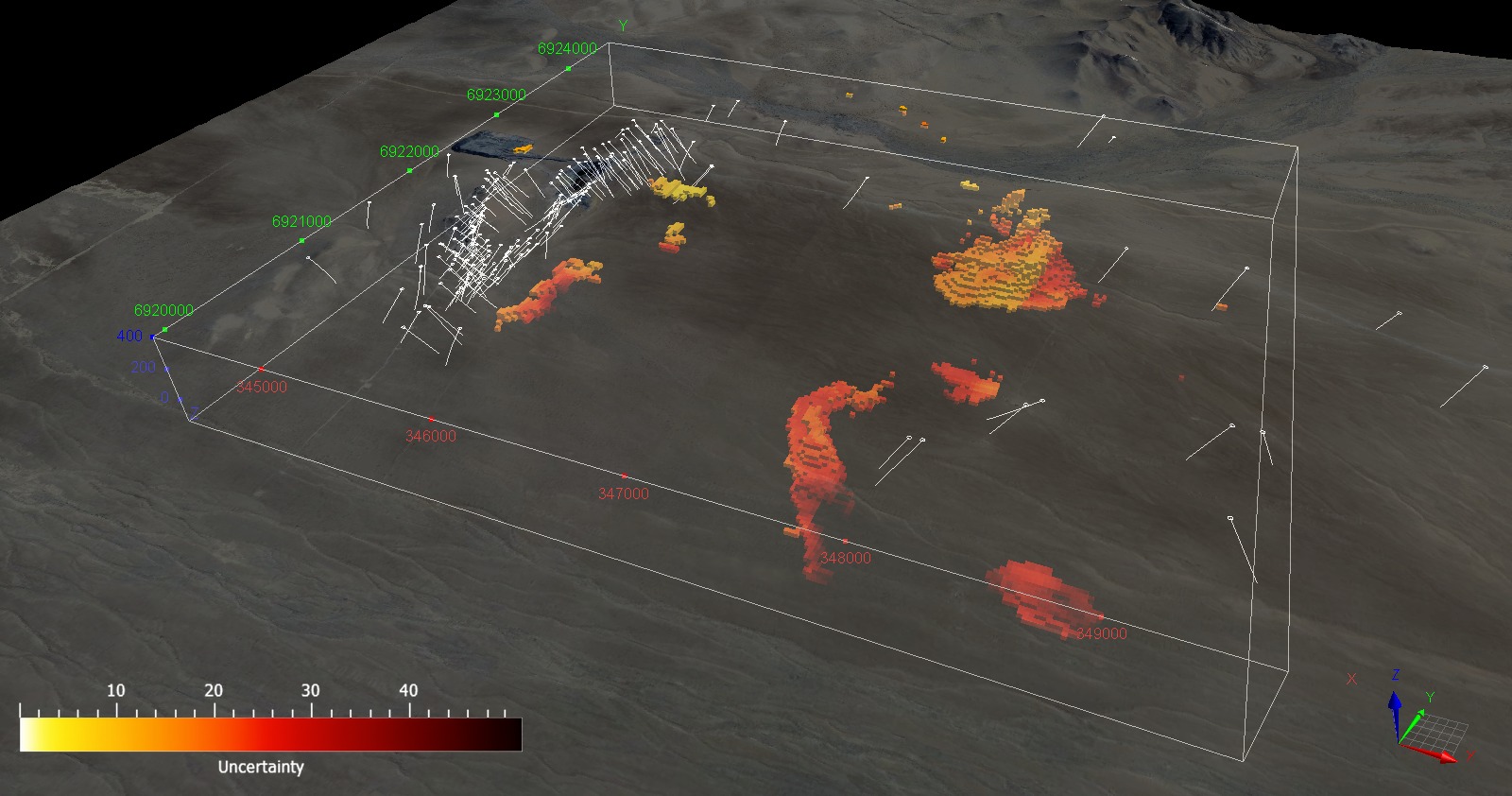
Fleet's regional and detailed ANT surveys mapped the deeper geology of the Project far below the depths reached by current drilling. This method uses natural seismic noise to create a 3D picture of the rocks underground. It gives Fitzroy a three-dimensional framework to follow known mineralized zones and find new, untested exploration targets at depths of about 400 metres. These targets include areas toward the company's wholly owned Sierra Fritis properties to the east. Thick layers of river-deposited gravel cover much of the area, making it much harder to map the geology at the surface and identify exploration targets.
Fitzroy has started a 5,000-metre drilling program using diamond and reverse circulation (“RC”) drilling rigs. As drilling records and copper test results become available, Fitzroy and Fleet will use the new information to update the machine-learning model. Each new drill hole therefore has three purposes: to test a specific target, to improve or check the model's accuracy, and to help decide where to drill next.
Highlights:
- Nine ranked target areas have been identified. All are new, have not yet been tested by drilling, and are within 400 metres of the surface.
- The targets combine Fleet's 3D ANT model of the underground geology with Fitzroy's own geophysical surveys, including induced polarization (IP) chargeability, IP resistivity, and magnetic susceptibility, as well as about 24,400 copper test results from 140 drill holes.
- The targets focus on geology covered by gravel and exclude ground that has already been mined or areas within 200 metres of an existing drill hole.
Merlin Marr-Johnson, President and CEO of Fitzroy, commented: “We believe Buen Retiro shares many geological features with the major iron oxide copper-gold (IOCG) deposits at Candelaria and Mantoverde. However, the wider property has barely been tested for its potential to contain sulphide minerals. So far, the main focus has been on oxide copper mineralization and its potential to support a production operation in the near future with relatively low upfront investment.
“Now we have a tool to test the different exploration opportunities across this large IOCG system in one of Chile's most productive copper regions. By combining advanced 3D underground imaging with machine learning and our large drilling database, we can identify and rank hidden exploration targets beneath the gravel cover. If the machine-learning targeting works well, it could provide a cost-effective way to make discoveries and create value for shareholders.”
Input Data
The model combined four 3D geophysical datasets with geological information and copper test results from drilling (Table 1).
From 3D Underground Imaging to Ranked Drill Targets
Fleet's work at Buen Retiro began with a regional ANT survey commissioned by Fitzroy in early 2026. The survey was designed to improve understanding of the deeper geology of the Project. It identified underground structures and zones linked to changes in the rocks and areas where the rocks had broken apart. These features were found at depth and gave Fitzroy a 3D framework for further exploration.
A second ANT survey was then carried out over the main area of interest. This survey used closer-spaced measurements to produce a more detailed picture. It improved understanding of the faults and fractures that are believed to control pathways through which fluids can move in the rocks and the related mineralization. It also made it easier to compare the ANT results with existing geophysical surveys and drilling data.
The machine-learning stage then used this geological and geophysical information to identify possible exploration targets. These targets are intended to support Fitzroy's own geological interpretations and drilling plans, not replace them.
Targeting Method
The targeting method follows four steps, from predicting where copper may occur to ranking possible exploration targets:
-
Prediction. The machine-learning model learned how geophysical data relate to copper test results from existing drill holes. It used these relationships to estimate the likelihood of copper mineralization at different points underground and calculate an uncertainty value for each location. The goal was to predict where copper mineralization with grades above a threshold of 0.5% Cu might occur in blocks of rock measuring 25 metres across the study area. The model also calculated an uncertainty value for each block. The 0.5% Cu threshold is used to visually highlight blocks at or above the target grade. It does not mean that the copper grade in every block has been estimated to be the same.
-
Refinement. Blocks were removed from consideration if they were inside the mined-out open pit, beneath mapped gravel cover, or within 200 metres of an existing drill hole. This was intended to focus the targets on ground with genuine exploration potential.
-
Domains. The remaining blocks were grouped into nine geographic areas called “domains.” Each domain contains a group of blocks with similar predicted results (see Figure 1). The areas were within the model's high-confidence range and were interpreted to have geological significance.
Drill Planning
Fitzroy and Fleet are now reviewing the direction and order of drilling for the exploration targets. All targets are within the top 400 metres below the surface, and Fitzroy has set aside 5,000 metres of combined RC and diamond drilling to test these new areas. As drilling records and copper test results become available, Fitzroy and Fleet will compare the findings with the original target list and update the model. The new information will be used in future versions of the model to improve its predictions and help plan the next round of drilling. Each new drill hole will therefore help test a target, update or check the machine-learning model, and guide the next drilling decision.
Technical Context
The new exploration domains are possible targets that have not yet been tested by drilling. They identify areas where the combined geophysical and copper test data resemble the data from known copper mineralization zones at Buen Retiro.
The targets do not confirm that mineralization is present or establish its grade, size, or continuity. The model's reliability depends on the quality and coverage of the data used to build it. Its reliability generally decreases farther away from existing drill holes and at greater depths. For this reason, the targets should be considered alongside traditional geological interpretation and other exploration information, rather than used as a replacement for them.
Qualified Person (“QP”)
Dr. Scott Jobin-Bevans (P.Geo., Ph.D., PMP), a Qualified Person under National Instrument 43-101 and an independent geological consultant to the Company, has reviewed and approved the technical information in this news release. He has also checked the disclosed data, including the sampling, laboratory analysis, and test data supporting the technical information in this release.
About Fleet Space Technologies
Fleet Space Technologies is an Australian technology company that uses seismic data and 3D underground imaging to help geoscience teams understand what lies beneath the surface. Fleet combines its imaging methods with a client's existing geological, geophysical, and drilling data. It then uses machine learning to turn this combined information into ranked recommendations to support decisions about finding new deposits, expanding known deposits, and developing projects. As new drilling results and other data become available, Fleet can update its models. This allows new information to improve future decisions about underground geology and helps test how well the drilling predictions match what is actually found.
About Fitzroy Minerals
Fitzroy Minerals focuses on exploring and developing copper projects in Chile that have significant potential for further discoveries. Its two main properties are the Buen Retiro Copper Project near Copiapo, Chile, and the Caballos Copper Project in Valparaiso, Chile. Fitzroy Minerals shares are listed on the TSX Venture Exchange under the symbol FTZ and on the OTCQX under the symbol FTZFF.
On behalf of the board of Fitzroy Minerals Inc.
Merlin Marr-Johnson
President and CEO
For further information, please contact:
Merlin Marr-Johnson
+447803712280
[email protected]
For more information on Fitzroy Minerals, please visit the Company's website: www.fitzroyminerals.com
Neither the TSX Venture Exchange nor its Regulation Services Provider, as defined in the Exchange's policies, accepts responsibility for the adequacy or accuracy of this news release.
CAUTIONARY STATEMENT REGARDING FORWARD-LOOKING INFORMATION
This news release contains certain statements and information that are considered forward-looking information under applicable Canadian securities laws. All statements in this release other than statements about past events are forward-looking statements. These include, but are not limited to, statements about the success of machine-learning targeting, how accurately machine-learning methods can identify and rank exploration targets, the possible presence of mineralization on the Company's properties, future exploration plans for those properties, and the timing and results of future exploration work.
Statements in this release that do not describe historical facts are forward-looking statements and involve risks and uncertainties that may affect the Company's business. These statements can often, but not always, be recognized by words such as “expects,” “plans,” “anticipates,” “intends,” “estimates,” “forecasts,” “schedules,” “prepares,” and “potential,” or by statements that events or conditions “will,” “would,” “may,” “could,” or “should” occur. Under applicable securities laws, all statements about the Company's operating plans and possible strategic opportunities are forward-looking statements. They concern future events and conditions and rely on assumptions made by Company management. They therefore involve risks and uncertainties described in the Company's regular filings with Canadian securities regulators. These include, but are not limited to, the risks involved in exploration, development, and mining; actual exploration or development plans and costs being significantly different from the Company's estimates; the accuracy and reliability of machine-learning prediction models; the ability to obtain and maintain permits, consents, or approvals needed for mining; environmental rules and hazards and compliance with complex mining regulations; climate change and climate-related regulations; changes in exchange rates; access to financing; operating in foreign and developing countries and complying with foreign laws; challenges related to remote operations and the availability of suitable infrastructure; changes in the price and availability of energy and other supplies needed for mining; shortages or higher costs for equipment, supplies, and workers; regulatory, political, and country-related risks, including local instability or terrorism and their effects; dependence on contractors, other third parties, and joint venture partners; disputes over ownership or surface rights; dependence on key staff and the ability to attract and retain skilled workers; losses that cannot be insured or are not covered by insurance; harmful climate and weather conditions; legal disputes; and competition from other mining companies. Because of these risks, uncertainties, and the assumptions behind the forward-looking information, actual results may differ significantly from current expectations. The Company does not represent that future results will be the same, in whole or in part, as those described in this release. The Company does not intend or undertake to update forward-looking statements or information unless required by law. Readers should also review the information about the Company's business in its reports filed with Canadian securities regulators. Although the Company has tried to identify important factors that could cause actual actions, events, or results to differ significantly from those described in forward-looking statements, other factors may also cause actual outcomes to differ from what was expected, estimated, or intended. For more information about the Company and the risks and challenges facing its business, investors should review the Company's filings available at www.sedarplus.ca.