
Anthropic’s ‘CLAUDE MYTHOS’ Trademark Application Denied by USPTO
Published: October 22, 2026
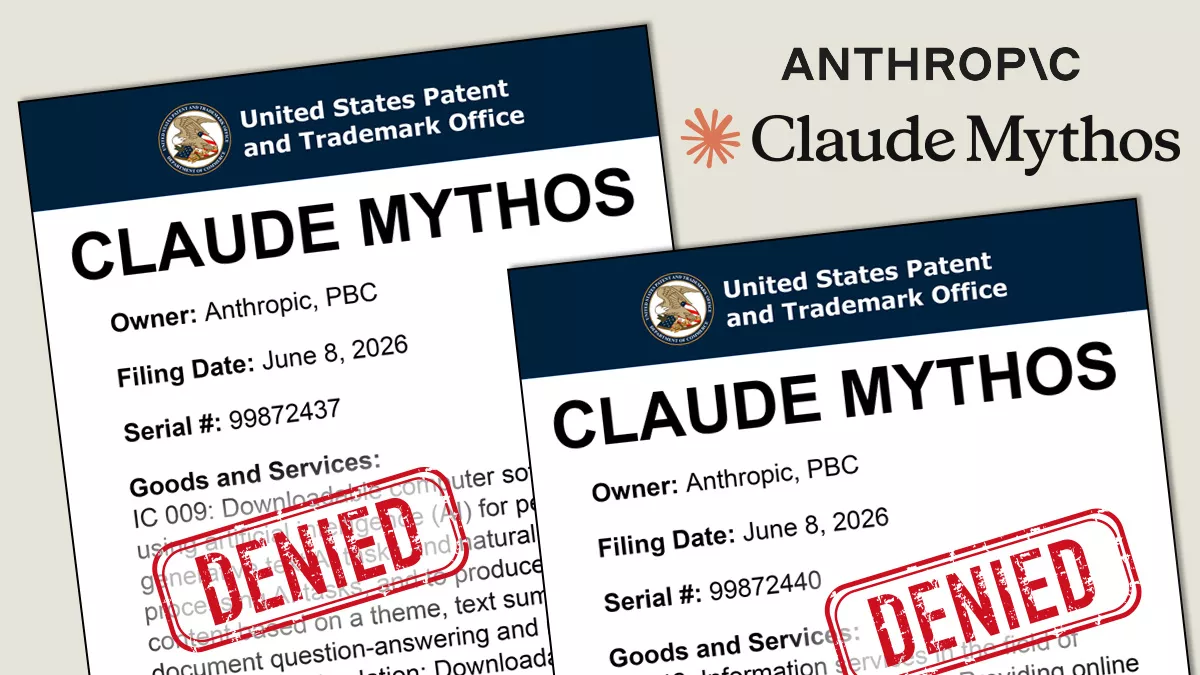
The United States Patent and Trademark Office (USPTO) has issued initial refusals for two trademark applications that Anthropic filed for ‘CLAUDE MYTHOS.’
The USPTO refused the applications because it found three earlier trademark filings that it believed were too similar to ‘CLAUDE MYTHOS’ and could confuse customers.
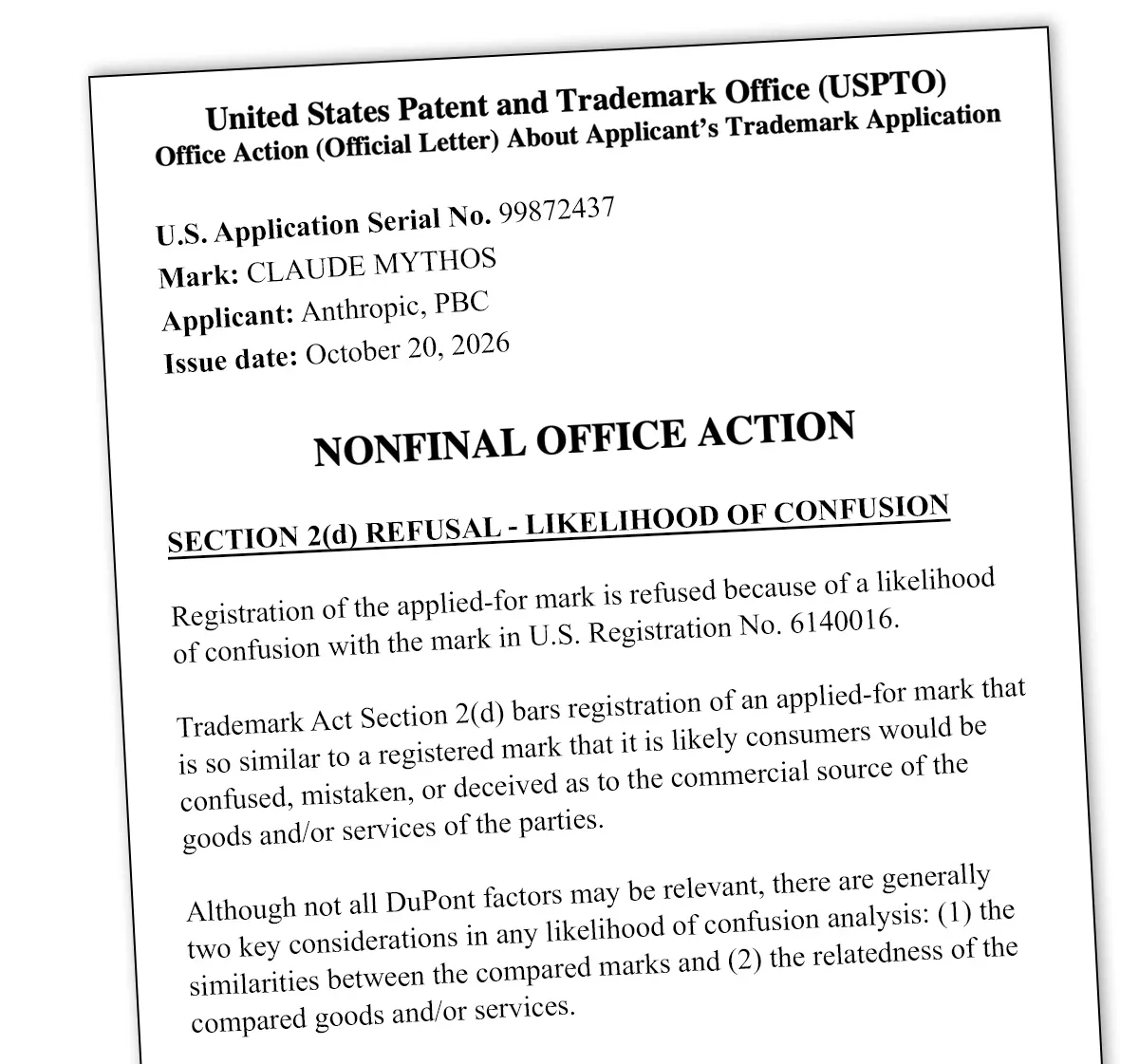
The USPTO examiner explained the reason for refusing Anthropic’s applications:
“Because the marks are similar and the goods and services are related, there is a likelihood of confusion about who provides [Anthropic’s] goods and services. Registration is therefore refused under Section 2(d) of the Trademark Act.”
The three trademarks cited by the USPTO are:
1. ‘MYTHOS’
Software used to manage university funds and donations.
2. ‘MYTHOS’
Software used to organize, manage, and share documents and other content.
3. ‘MYTHOS’
AI software used to store, manage, and search content created by users.
None of these three businesses appears to compete directly with Anthropic.
However, under U.S. trademark law, the fact that these companies are not direct competitors does not carry much weight in the USPTO’s review.
The USPTO checks new trademark applications against earlier applications and registered trademarks by looking at how the goods and services are described in the official filings.
The companies that already have ‘MYTHOS’ trademarks may not be developing AI models, but their software could still perform some of the same tasks as Anthropic’s technology.
The USPTO decided that this possible overlap was enough to refuse both applications.
It is important to note that these refusals are not final.
Anthropic can respond, challenge the USPTO’s decision, and possibly reach agreements with the companies whose trademarks were cited.
Can Anthropic Overcome the Trademark Refusals?
This kind of initial refusal is common, but it still creates a serious challenge for Anthropic.
The earlier trademark filings describe their goods and services broadly enough that they could overlap with Anthropic’s AI technology.
Even though these companies do not necessarily work in the same field as Anthropic, their software can perform tasks that an AI model could also perform.
This is where trademark law becomes complicated.
The USPTO does not focus on what two companies actually do in the marketplace. It looks only at how their goods and services are described in their trademark applications and registrations.
When those descriptions overlap, two businesses that seem very different can still face trademark conflicts.
In this case, Anthropic may be able to change the descriptions in its applications to show how its technology differs from the products and services covered by the earlier trademarks.
It can also make legal arguments explaining why customers would not mistake one trademark for another.
However, because the earlier trademark filings describe their goods and services so broadly, I believe Anthropic may find it difficult to overcome the refusals through legal arguments alone.
Another option is for Anthropic to contact the owners of the earlier ‘MYTHOS’ trademarks and ask them to agree to the registration of ‘CLAUDE MYTHOS.’
These written agreements, called “consent agreements,” are commonly used in trademark cases. If two companies agree in writing that their trademarks can exist side by side, the USPTO may accept the agreement and withdraw its refusal.
However, getting permission from all the relevant companies could be difficult in this situation.
Anthropic is already a major company in artificial intelligence, and its products could dominate search results and online discussions about the name ‘MYTHOS.’
This could be a serious concern for smaller companies that have spent years building businesses around their own ‘MYTHOS’ trademarks.
Even if customers can tell the products apart, a major AI product using the same name could make it harder for people to find these smaller companies online.
Because those companies filed their trademark applications before Anthropic, they may have an important legal advantage.
Anthropic could also offer money in exchange for permission or try to buy some of the trademark rights outright.
It is unclear whether the companies would be willing to consider such an offer.
A Growing Problem for Companies Seeking New Trademarks
This case also shows a much wider problem for companies trying to protect new product names.
The U.S. trademark register has become more crowded over time.
More than 500,000 new trademark applications are filed each year. This means companies must consider a growing number of existing trademarks that could prevent them from registering a new name.
It is becoming harder to find names that do not overlap in some technical way with earlier trademark applications, especially in the software industry.
For now, Anthropic has been told that it cannot register ‘CLAUDE MYTHOS’ unless it addresses the USPTO’s objections.
And that leaves one final question.
Will Anthropic use AI to write an appeal?