OpenAI CFO: Project Camellia Must Earn Residents’ Trust
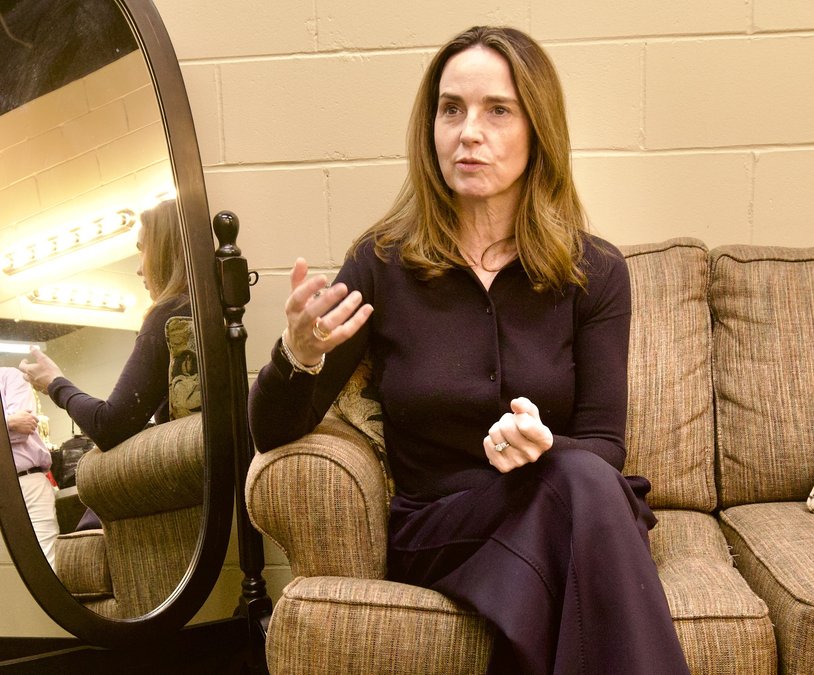
SPRINGFIELD, Ga. — OpenAI Chief Financial Officer Sarah Friar said the company's success in Effingham County will depend on more than building a data center. It will also depend on whether people believe OpenAI listens to their concerns, keeps its promises and acts like a good neighbor.
“Trust is earned over long periods of time,” Friar said during an interview backstage at the Mars Theatre with the Effingham Herald and Frank Sulkowski of WJCL 22 News. “You don't just show up and get it.”
Friar visited Effingham County on Thursday for the Effingham County Chamber of Commerce's “Future Shock: Catalyst Business Summit.” The all-day event took place at the Mars Theatre in downtown Springfield. It explored changes affecting businesses, workers and leaders. The summit was also sponsored by the Effingham County Industrial Development Authority, Between Two Rivers, Hospice Savannah, the Mars Theatre, Medlog Transport & Logistics and MAU Workforce Solutions.
During the interview, Friar talked about OpenAI's proposed 1,400-acre Project Camellia data center, the company's promise to invest $80 million in the community, concerns about possible effects of the project and the jobs it could bring to the area.
Investing in the community
OpenAI has promised to invest $80 million in the community as part of its proposed data center project in Effingham County. Friar said the company wants to ask residents directly what they need instead of deciding for them what the community should want.
“I don't like to ever show up and tell people what they need,” she said. “That is a surefire way to not make friends. Instead, you show up and ask, ‘What would they like? What do they need?’”
The company's investments include a $4.8 million grant to pay for school meals and a newly announced $2 million grant to help pay for trails at Atlas Park. The park is planned near Highway 80 and Sand Hill Road. OpenAI also paid the $109 registration fee for everyone who attended the summit.
On Thursday, Friar joined county officials at Atlas Park to announce the grant. The money will help pay for trails in the first stage of park improvements. These improvements are supported by the county's 2022 Special Purpose Local Option Sales Tax (SPLOST) program.
“It's beautiful,” Friar said about Atlas Park. “I'm a big hiker by nature, so I want to go hiking out there.”
Plans for Atlas Park include trails for walking and biking, pickleball courts, boat docks and areas where people can camp in recreational vehicles (RVs).
Friar said the number of people taking part in the school meal program has grown by nearly 50% since OpenAI began paying for it.
“You want to make sure kids are eating well and eating consistently when they go to school?” she said.
Addressing concerns about Project Camellia
Friar recognized that residents are worried about how the planned data center could affect electricity demand, water use, noise and the environment. She said OpenAI has taken time to listen to these concerns instead of moving forward without talking to the community.
She compared the situation to building a swimming pool in your backyard without telling your neighbors.
“If you show up and try to build a pool in your backyard and don't tell your neighbors, you're not going to make many friends,” Friar said.
She said OpenAI plans to pay for the energy its data centers use and use closed-loop cooling systems at its planned sites. According to Friar, water for the facility would be brought in by truck instead of taken from local residents' water supplies. She also said the cooling system would lose very little water each year.
To address concerns about noise, she said the company is studying the issue and plans to plant a thick strip of vegetation around the facility to help create a buffer.
These are OpenAI's stated plans. How much water and energy the project will actually use, and what effects it will have on the environment, remain open questions as Project Camellia moves forward.
Friar said the company must do more than explain its plans to earn the community's trust. It must keep its promises and respond to residents' concerns.
“I think a lot of it is how the community is grading us,” she said. “Like, is the community happy or unhappy with how we've shown up?”
She said OpenAI plans to keep a team in the area and stay involved with Effingham County for a long time.
“This is not some flyby where we come in and then we're gone tomorrow,” Friar said. “It will only work if we are invested in the community and are good neighbors to the community.”
Jobs and economic opportunity
Friar estimated that the data center would support 400 to 500 jobs. Building the facility would also create construction jobs and other jobs for skilled tradespeople.
She also said artificial intelligence (AI) could create opportunities outside the data center, especially in health care, education and small businesses.
Friar said AI tools can help people find information, support teachers and help business owners with tasks such as marketing and managing money. She described ChatGPT as a virtual co-worker that can help small-business owners throughout the day as they handle many different responsibilities.
A message to residents
When asked what she would say to people who are unsure about artificial intelligence or OpenAI's proposed project, Friar encouraged them to ask questions and learn more about the technology.
“We need to sell inspiration and hope and excitement about the future,” she said.
Her advice to people who have not yet made up their minds was simple.
“Be curious,” Friar said. “Like, if you don't know, come ask.”
She encouraged residents to learn about Project Camellia and ask OpenAI their questions as the project moves forward.
Summit brings business and tech leaders to Springfield
The “Future Shock: Catalyst Business Summit” brought business leaders, teachers and other educators, creative professionals and community advocates to downtown Springfield. They discussed new ideas, leadership, inclusion and the future of work.
The program included a series of short talks called Future Shock Think Talks. The speakers came from different professional backgrounds. Geoff Thatcher, founder and chief creative officer of Savannah-based Creative Principals, spoke from his experience creating visitor experiences, museums and theme parks. He has also written books. Dr. Ryan Foley, president of Savannah Technical College, shared his knowledge of higher education and helping people prepare for jobs.
Ivory Brown, Ed.S., is a special education teacher who adapts lessons for students' needs. She was also named Effingham County Schools District Teacher of the Year. Her work focuses on including students with intellectual and developmental disabilities and creating opportunities for them. Karima Burdette, an author and speaker whose work focuses on personal change and encouragement, also spoke. Joe Marchese, who works in commercial construction and helped start the Lowcountry Down Syndrome Society, shared his views on purpose, belonging and inclusion.
John T. Brantley, author of “The Auxin Leader,” gave a talk called “The Evolution of Leadership.” OpenAI trainers also led practical ChatGPT training so people at the event could try the technology themselves.
Friar ended the summit with an informal fireside chat, giving attendees a chance to hear directly from a senior leader at one of the world's best-known artificial intelligence companies.