
OpenAI bugging case raises questions about AI lab security
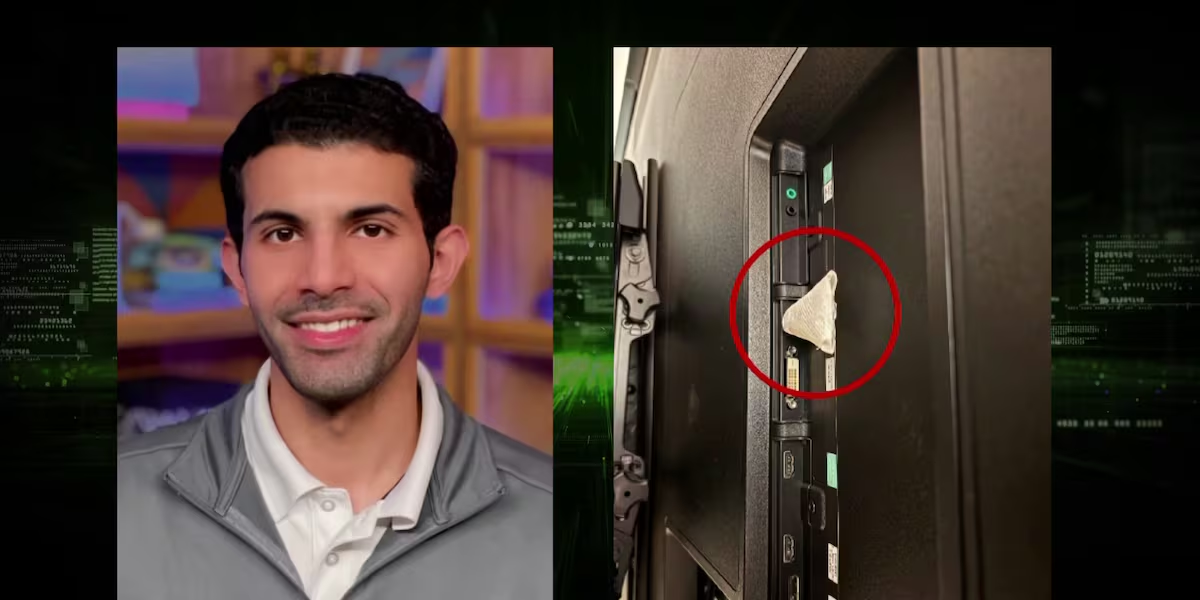
PHOENIX (AZFamily) — Prosecutors say a former OpenAI engineer used one of the company's own AI tools to find out where company leaders held meetings. He then hid an advanced recording device in that room.
The case is raising concerns about how the country's leading AI companies protect their secrets as their technology becomes more involved in national security work.
Abdulrahman Alfozan, a citizen of Saudi Arabia, is accused of illegally using a device to secretly record people's conversations. Prosecutors say he placed a specially made recorder behind a television in a meeting room used by company leaders at OpenAI's San Francisco offices in September.
OpenAI's security team found and removed the device within about two days. Later, security cameras recorded Alfozan looking for it, according to court documents.
Security workers also found a second, similar recorder in a bag Alfozan had left in a printer room. Photos on his phone showed equipment panels in other rooms at OpenAI, including another meeting room used for private, sensitive discussions.
The FBI arrested Alfozan on Oct. 9. He was supposed to fly to Saudi Arabia three days later with his wife and baby son, using tickets for a one-way trip. OpenAI fired him after his arrest.
AI companies are becoming more involved in national security
In 2025, OpenAI, Anthropic, Google and xAI each received agreements with the Pentagon worth up to $200 million. The agreements were for developing and testing highly advanced AI technology for national security purposes.
Since then, OpenAI has made a separate agreement to put advanced AI systems into military settings where secret government information is handled. OpenAI employees with special security clearance will be involved in that work.
However, working with the military does not automatically mean that every part of these companies' regular business must follow the strict security rules used for secret military work.
In June, the White House asked leading AI companies that wanted to participate to work with the government to improve security. This included better background checks on employees, sharing information about possible threats, and stronger protection for buildings and computer systems. These protections would be similar to those used by companies working in the defense industry. Joining these efforts is voluntary.
Prosecutors say Alfozan was able to enter a meeting room that he did not have permission to use. Company leaders met in that room. It was also used for private discussions about technology and products, and for meetings where government officials received information.
Prosecutors said OpenAI leaders met with government officials in that room around the time the recording device was placed there.
Prosecutors look into connections with Saudi Arabia
According to court documents, Alfozan often communicated with a member of Saudi Arabia's royal family. That person repeatedly encouraged him to join an AI project in Saudi Arabia.
In May, the person wrote, “Saudi needs you more then [sic] the US!” Alfozan replied, “100.” Prosecutors believe his response meant he agreed.
About 36 hours after Alfozan was arrested, his wife and son left the United States on a one-way business-class flight to Qatar. Prosecutors say a Saudi military official paid for their tickets.
The court documents do not say that the Saudi government ordered or directed the secret recording operation.
Even so, federal officials have described the case as a national security concern. Director of National Intelligence Jay Clayton said the case shows why winning the worldwide race to develop extremely powerful AI is important for national security.
Could Alfozan face more charges?
Right now, Alfozan is charged with breaking the federal Wiretap Act, a law about secretly listening to or recording communications. He has not been charged with spying or working as an agent for a foreign government.
Caroline Lynch, a former Maricopa County prosecutor, spoke with Generation AI about the case. She previously worked on federal laws about surveillance and national security as the top lawyer for a subcommittee of the House Judiciary Committee. Lynch explained that traditional spying charges usually involve information related to national defense.
But Lynch said prosecutors might also look into economic espionage, which means stealing valuable business secrets. That could become an issue if investigators find evidence that someone took company secrets to help a foreign government.
“I think that’s more likely one of the charges that the Justice Department is going to be looking at in this case,” Lynch said.
Prosecutors say they are still investigating the case and that Alfozan could face additional serious charges.
Should stronger security rules apply to work that is not classified?
Lynch said the case shows that AI companies can take steps to protect sensitive information even when the government has not officially marked it as classified or secret.
Lynch said companies like OpenAI can do a lot to improve security, and they are probably already making changes because of this case. She said they can check job applicants more carefully and pay closer attention to which parts of their buildings employees are allowed to enter.
Lynch also said companies could use “stricter security measures to actually prevent employees from accessing areas that they’re not allowed to.”
If Alfozan is found guilty of the charge he currently faces, he could be sentenced to a maximum of five years in prison.