
Anthropic launches opt-in security scanner for open-source projects

Anthropic has launched OSS Scanner, a free security tool that open-source projects can choose to use. It uses Claude Mythos and other powerful AI models to find possible security problems in software code. It sends reports directly to the people who maintain these projects, even though humans have not checked the findings yet. The reports include scripts that show how to reproduce the problems, explanations of what caused them, and suggested fixes.

Anthropic's Frontier Red Team said that checking every AI finding by hand has become a major challenge. Over six months, its AI models found more than 29,000 possible security weaknesses. Researchers checked and sorted about 6,000 of them by hand. Some project maintainers who wanted to receive reports sooner had already been sent around 5,000 reports that had not been verified, along with suggested fixes.
Every report includes a script that can demonstrate the possible security problem on its own. It also explains what might be wrong and suggests a code change to fix it. When the project's code history makes it possible, the scanner uses a method called bisection to track down when the bug first appeared. The scanner builds on Anthropic's earlier work through Project Glasswing, which was available only to participating organizations in April.
Noah Misch, a maintainer of PostgreSQL, said getting reports early helped the project fix problems before a software release became available to everyone. Misch said several reports included fixes that the team could use with almost no changes.
Anthropic tested an early version of the scanner by asking security testers to examine 97 findings marked as critical or high severity across 48 projects. The testers found that 85 met the requirements for coordinated vulnerability disclosure, a process for privately reporting security problems so they can be fixed. Another 11 were real problems, but they had already been reported or appeared elsewhere in the scan results. One finding was wrong. These results apply only to the findings chosen for this test. They do not show how accurate every report from the scanner will be.
Anthropic also admitted that some project maintainers have received reports that made security problems sound more serious than they really were. In other cases, the scanner misunderstood the project's threat model, which describes the kinds of attacks and risks the project needs to protect against.
Anton Arapov of OpenSSL Corporation said the scanner's reports were as good as, or better than, reports written by humans when a working example of an attack made the problem easy to check. Todd Ouska of wolfSSL said the suggested fixes worked well with the project's existing process for checking code changes. Ouska said wolfSSL received 74 reports, and all but two described real problems. Five of those problems were assigned CVE identifiers, which are official tracking numbers for publicly known security weaknesses.
Daniel Stenberg of curl said Anthropic's OSS Scanner found a security problem involving HTTP/2 file uploads. The problem, called a use-after-free bug, happens when software tries to use memory after it has already released it. The bug was fixed in curl 8.23.0. It was given the identifier CVE-2026-92392. Under certain conditions, an attacker could use it to run code remotely. However, Stenberg rated the problem as high severity rather than critical because successfully using it for an attack would be difficult. He said the more likely result would be a program crash.
Anthropic said Google's OSS-Fuzz helped inspire its scanner. However, OSS Scanner uses AI language models to examine software code. Another similar project is Google DeepMind's CodeMender, which InfoQ reported on in October 2025. Researchers Raluca Ada Popa and Four Flynn described ways to automatically check suggested fixes using software analysis and testing. Their approach still required humans to review fixes before they were submitted to the original projects. OSS Scanner is different because it sends findings directly to maintainers without requiring human review first.
Varun Badhwar, CEO and co-founder of Endor Labs, wrote on LinkedIn that fixing security problems in the original open-source projects does not help much if companies keep using older versions of the software. He said companies need to check whether attackers can actually reach the vulnerable code and whether installing a fix might break their applications. Dimitrios Thomas, also writing on LinkedIn and sharing his personal views, said people should judge these tools by how accurately they confirm problems, how much extra work they create for maintainers, and how long it takes to go from finding a problem to putting a working fix into use.
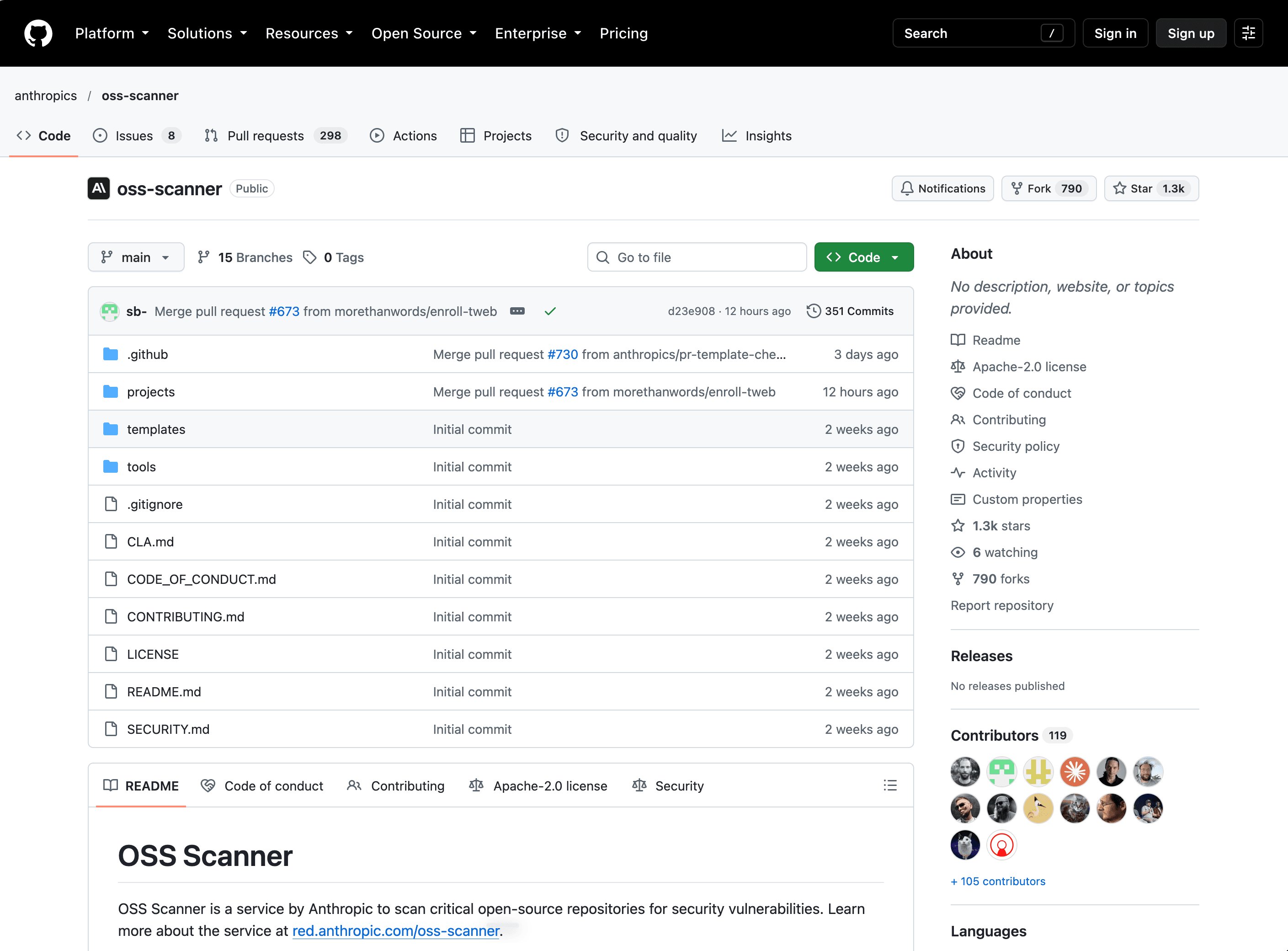
The scanner's frequently asked questions explain that AI agents check possible bugs again, suggest fixes, and study what caused the problems before Anthropic sends the reports. These checks are done automatically and are not the same as having a human review the findings. Later scans search for new security problems and older problems that previous scans missed. How often a project is scanned depends on how much the project is used and how busy the scanning service is.
Core maintainers can sign up their projects by submitting a GitHub pull request. The request must include the project's configuration and a Dockerfile, which contains instructions for preparing the software build and the other software it needs. Once setup is complete, the scanner runs without internet access. Maintainers can also provide an optional threat-model file to explain which security risks the scanner should focus on and how serious different problems should be considered.
Anthropic reviews every request to join by hand. It checks that the person applying is a core maintainer and that security reports will go to someone officially allowed to handle security issues for the project. Projects can choose to stop receiving reports temporarily or leave the service completely.
Reports that have not been checked by humans do not automatically start a 90-day deadline for publicly revealing security problems. If a finding is later checked and confirmed by a human, it can enter a separate coordinated disclosure process. In that case, the 90-day period begins when the maintainers are told that the problem has been confirmed. Anthropic will also continue providing human-reviewed security reports to projects that do not have enough people or time to investigate unverified findings themselves.
Source: infoq.com