
Government must look beyond generative AI to deliver better public services, says Atos | THINK Digital Partners
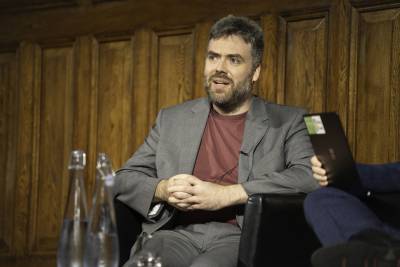
James Perrott from Atos says older, well-tested technology can sometimes work better than newer AI tools. He says government organisations should measure success by how much they improve public services, not just by how much time or money they save.
Published 23 October 2026 by Christine Horton
Government organisations may be missing out on useful, proven technology because they are rushing to use the newest generative AI tools, according to James Perrott, head of data science for the UK and Ireland at Atos.
Speaking at Think AI for Government 2026, Perrott (pictured) said older technologies still have an important role in making public services better. These include traditional machine learning, which helps computers learn from data, statistical analysis, which helps people understand numbers and patterns, and optimisation methods, which help find better ways to do things. He said these tools can sometimes cost less, work better and make it easier to understand how results are reached.
“Think about all the tools you have, and don't stop using something just because it's older,” he said.
Perrott is working with the Department for Education (DfE) on projects that include statistical modelling and agentic AI, which can carry out tasks and make decisions to reach a goal. He said government organisations should choose technology based on the problem they need to solve.
Choosing the right technology
Perrott said he is excited about new technology, but warned that large language models, the type of AI used to understand and produce language, are not always the best choice for every job.
He said older machine learning methods may be better at predicting what will happen in the future. Statistical methods are still useful for understanding what data tells us. Traditional optimisation methods can also help improve the way things work without costing too much. These older approaches can be easier to test and may be less likely to produce problems such as AI hallucinations, when AI makes up information that sounds true.
“Look at a wide range of options,” he said, encouraging government departments to think about all the technologies they could use.
Generative AI is especially useful for working with information that does not follow a fixed structure, such as long documents written in everyday language. It can also help present information in ways that people without technical knowledge can easily understand.
However, Perrott said that if a computer system only needs to predict a number that another system will use, a traditional model may be a better choice. Its accuracy and performance can also be measured more easily.
Building systems that can change
Perrott also said government organisations should understand the difference between the basic technology they will need for many years and AI tools that could quickly become outdated. Things such as how data is organised, the computer systems that support it, and the rules for managing it need long-term investment. This is because they support many different projects and future improvements.
AI models, on the other hand, are changing very quickly and may need to be replaced quite often.
Perrott said organisations should build their systems so they can take out one AI model and replace it with another without having to rebuild the whole system.
He also warned that spending too much time trying to make one AI tool perfect could be a waste if that tool will soon be replaced. In some cases, getting a useful system working several months earlier could bring more benefits than spending extra time improving parts that will soon be outdated.
Measuring results, not just efficiency
Perrott said AI projects should start with a clear idea of what an organisation wants to achieve.
“I would suggest that the best way to begin is to decide what you want to achieve, and then work backwards,” he said.
This means first deciding what needs to improve. Next, organisations should work out what decisions and actions will make that improvement happen. Only then should they decide what data and technology they need.
He said government departments should use the same clear measures to judge their projects. This would help them compare how well different projects work and make better decisions about where to spend money.
Importantly, these measures should look at more than just how much time and money are saved by using technology to do tasks automatically.
“Every government department and every part of government provides something for the people of this country. That is its main purpose,” he said.
Being open and getting people's agreement
Perrott also recognised that some people's doubts about AI have good reasons behind them. He said organisations should be open from the start about why they are using AI, who will benefit from it and how they will decide whether it has been successful.
Being open would help people understand why certain choices are made. It would also allow people outside the organisation to check whether AI systems are working as they should. Perrott said using AI fairly and responsibly is not always simple, especially because different ways of measuring fairness can lead to different answers.
Instead of treating these choices as problems that only technology experts need to solve, organisations should explain the difficult decisions and compromises involved.
When asked how the government could help people feel more positive about AI, Perrott pointed to two important things.
“Success and consent would be my two key things there,” he said.
He warned that people might become unhappy with AI if they feel they are being forced to use it without having a real choice.
“I think people don't like having AI forced on them,” he said.
He suggested that allowing people to choose AI-powered services instead of making them compulsory could help build trust. These services should also make people's experiences genuinely better.
In the end, Perrott said the government could make a stronger case for using AI by showing improvements that ordinary people can see and understand. Government departments should not judge their AI spending by how new or advanced the technology looks. Instead, they should judge it by whether it provides better services for the people who rely on them.