
Anthropic’s Pending IPO Has Silicon Valley on the Edge of Its Seat

The Week in Short
Anthropic's fundraising before its planned IPO pushed venture capital firms to become bigger, and its stock market debut will be very important. OpenAI is discussing a $30 billion fundraising round before its own IPO. SemiAnalysis faced criticism over its estimates for new data centers, starting a big debate. A ranking of AI investors by Stanford's Ilya Strebulaev and Ohio State's Blake Jackson puts a16z first. AI research company Flapping Airplanes raised $1 billion in Series A funding, while AI legal software company Legora raised $550 million in Series E funding. Bison Capital and Inspired Ventures raised new funds to invest in young companies. A possible merger between Tesla and SpaceX is moving closer. Serious PHP security problems caused alarm across the internet. Meta earned more than expected but still worried investors. And Polymarket CEO Shayne Coplan is facing difficulties.
The Main Item
AI Excitement Is Testing the Limits of Giant Venture Capital Funds

Does a big, famous venture capital firm have enough money to make an investment?
In Silicon Valley, people rarely had to ask that question. But the rise of artificial intelligence has changed things.
As we explained yesterday in our story about Anthropic's fundraising, venture capital firms including Menlo Ventures, Lightspeed, and ICONIQ had to become much bigger to afford the enormous investments Anthropic wanted. They raised new investment funds, encouraged their limited partners (LPs), the people and organizations that give them money to invest, to invest alongside them, and sometimes offered special investment vehicles to a wide group of investors to collect enough money.
Anthropic's S-1, a document companies file before going public, is expected any day. It will show a list of company owners dominated by large corporations and giant investment funds that invest in more mature startups. A few smaller venture capital firms own smaller shares, although those shares could still be worth an extraordinary amount of money. We have often written about how a small group of Silicon Valley's biggest investment firms, led by a16z and Sequoia, is gaining more power. Anthropic is a clear example of why this is happening. Startups need much more money than before, and the investors who fund venture capital firms are increasingly interested in putting large amounts into technology and AI.
OpenAI could make this trend even clearer. According to a CNBC report published Thursday, the company is preparing to raise $30 billion at a valuation of $1.25 trillion.
But even though giant venture capital funds are becoming more powerful than ever, there are reasons to believe that this trend cannot continue forever.
Even if Anthropic's IPO goes well, and everything becomes much more uncertain if it does not, many private startups valued at more than $1 billion still have no clear way for their investors to get their money back. High interest rates have hurt the market for mergers and acquisitions. Stock market investors are willing to buy shares in only the strongest companies going public. And the sharp fall in AI stocks late this week will make it even harder for companies to launch IPOs.
Many LPs have investments that look very profitable on paper, but they have received relatively little actual cash back over the past ten years. That means they may not have enough money to keep investing in bigger and bigger venture capital funds forever.
Another possible problem with giant venture capital funds is that they depend on a fairly small number of very large organizations for their money. Eventually, those organizations will expect strong returns. But in recent years, only a small percentage of venture capital funds have delivered those kinds of results. All the major firms managed to raise large new funds over the past year to invest in AI. It is unclear how much more money their investors will be willing to provide.
At the other end of the investment market, more wealthy investors are appearing. Many made fortunes during earlier technology booms or in completely different industries. They can invest much larger amounts than traditional investors in very young startups. Sound Ventures and Factorial Funds, which was started by a former Cruise Automation engineer, are likely to make enormous profits from Anthropic. They invested $35 million and $50 million, respectively, in Anthropic's Series C fundraising round. They got that opportunity because the giant venture capital firms on Sand Hill Road decided not to invest.
Something similar happened with SpaceX. Less-famous investors, including Valor Equity Partners, made huge profits from their investments.
The traditional venture capital industry is changing. Giant investment funds are becoming more powerful, while many medium-sized firms and newer fund managers are struggling. They are often unable to invest in the most promising startups. Sometimes they can invest only by paying very high prices through fundraising rounds with different valuations, a practice that is becoming increasingly common.
Still, AI offers so many investment opportunities that smart new investors with original ideas can succeed. Another way to understand giant venture capital funds is to look at how investors often copy one another. Everyone wants to invest in the same popular companies.
That means some of the biggest opportunities may come from doing something different from everyone else. There is still plenty of room for investors willing to take that approach.
Tweet Storm
SemiAnalysis Faces Criticism Over Its Estimates for New Data Centers
Companies are rushing to build more data centers, but nobody knows exactly how much new capacity will actually be ready. Some business leaders disagreed with recent predictions from SemiAnalysis.
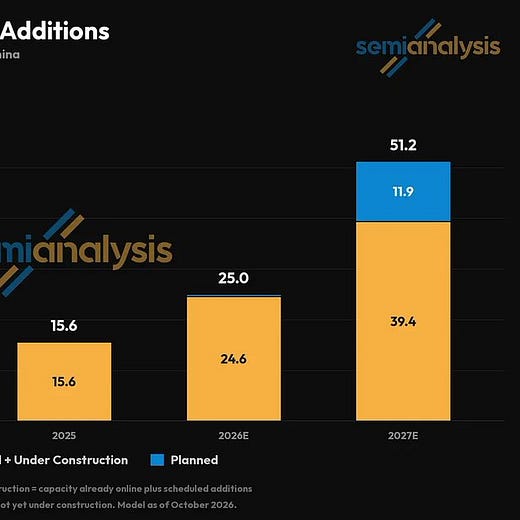
SemiAnalysis researchers predicted that 50 gigawatts (GW) of new data center capacity would become available in 2027. They based this estimate on signed agreements and construction projects that were already visibly underway.
SemiAnalysis (@SemiAnalysis_)
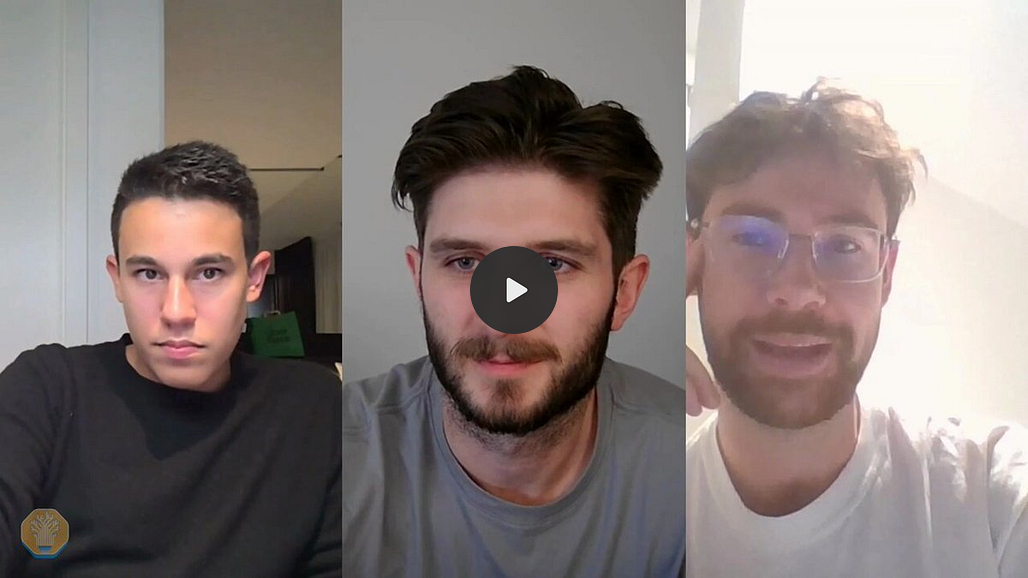
Is adding 50 GW in one year too ambitious? Brad Gerstner publicly challenged our estimate and cut it in half. So Jeremie (@JeremieEO) and Reyk (@robotknower) joined Jordan (@JordanNanos) to explain their calculations. They examined individual construction sites using satellite pictures and explained why they disagreed with simply reducing the estimate.
3:52 PM · Oct 20, 2026 · 44.8K views
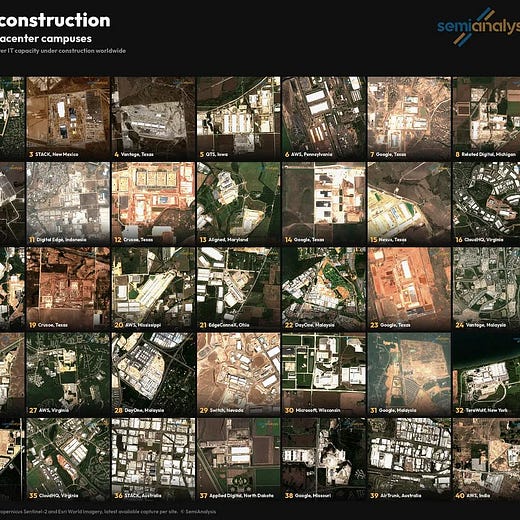
Altimeter's Brad Gerstner had questioned the estimate on the All-In podcast several weeks earlier. He said it was too ambitious and suggested that the actual capacity might be closer to 25 GW. SemiAnalysis responded by sharing satellite pictures of the construction sites it had counted.
P Equity Research (@pequityresearch)
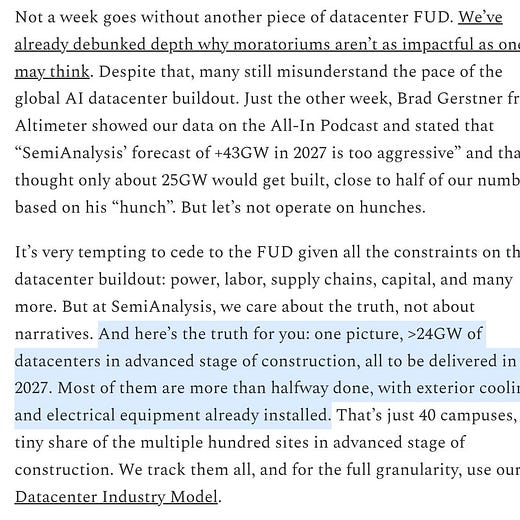
SemiAnalysis predicts that 51.2 GW of new data center capacity will be added in 2027. It says that slightly less than $1 trillion in binding data center rental agreements that cannot be canceled have been signed so far this year. Those agreements are an important reason for its ambitious forecasts for 2027 and 2028.
5:51 AM · Oct 19, 2026 · 216K views
Frans Bakker (@FransBakker9812)
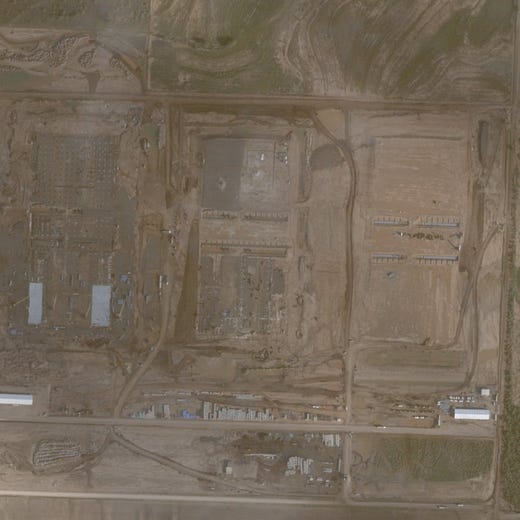
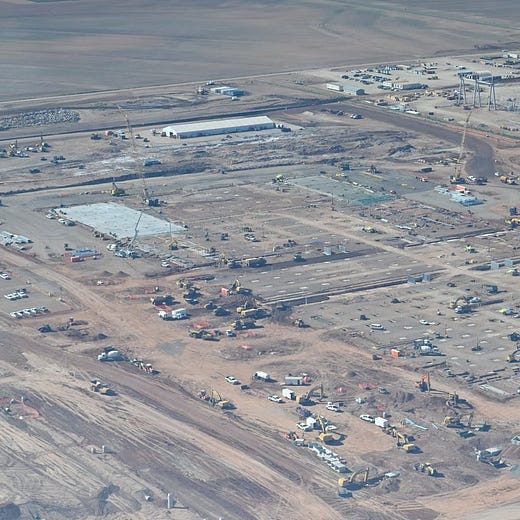
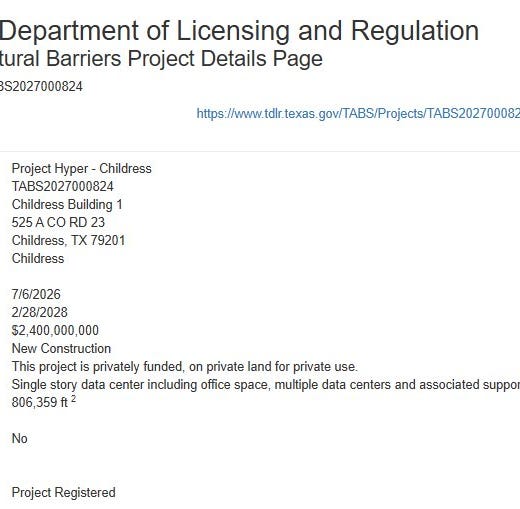
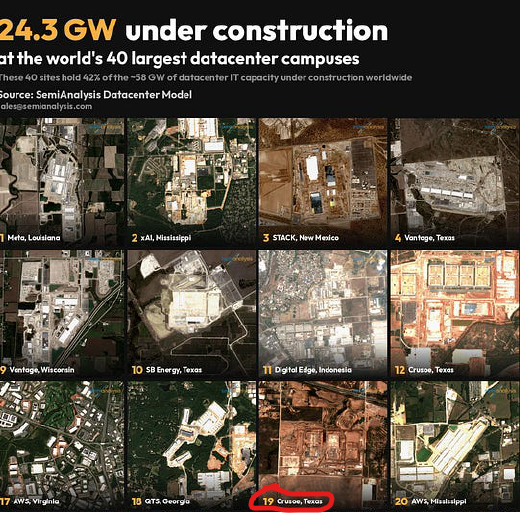
Bakker strongly criticized SemiAnalysis and challenged its claim that one picture showed more than 24 GW of data centers in advanced construction, all expected to be completed in 2027. He argued that its tracking system was not accurate.
2:20 PM · Oct 19, 2026 · 124K views
Dylan Patel (@dylan522p)
Patel replied that SemiAnalysis expected 195 megawatts (MW) to become available in 2027 at the site being discussed. He said Crusoe's figures were somewhat higher, but SemiAnalysis used its own data to estimate what would actually be built. Some of the capacity currently under construction would begin operating in 2027, and the calculations also allowed for sites that would be only partly completed.
6:38 PM · Oct 19, 2026 · 5.82K views
IREN CEO Daniel Roberts then explained how his company pays for its GPUs, the powerful computer chips used for AI. Customers pay about half the cost in advance, and borrowed money covers most of the remaining amount. That means customer payments help fund the construction. The bigger question is whether the chips and data centers can actually be installed and working by 2027.
Daniel Roberts (@danroberts0101)
Roberts explained that customers usually sign contracts lasting several years and agree to make payments in advance. Under IREN's recent three-year contracts, customers paid 45% to 55% of the cost of the related GPUs before receiving the service.
3:11 PM · Oct 19, 2026 · 685K views
Gerstner later said he found SemiAnalysis's updated explanation more convincing.
Brad Gerstner (@altcap)
Gerstner praised SemiAnalysis's work. He said he had enjoyed discussing the topic with Dylan Patel at Altimeter's annual meeting. After listening to an Elon Musk call, the SemiAnalysis discussion, and his own podcast conversation with Jensen the previous week, he said Altimeter's forecast would probably increase.
5:12 AM · Oct 21, 2026 · 14.3K views
Cerebral Valley Show
Did Elizabeth Holmes Fool Everyone Again?
One Big Chart
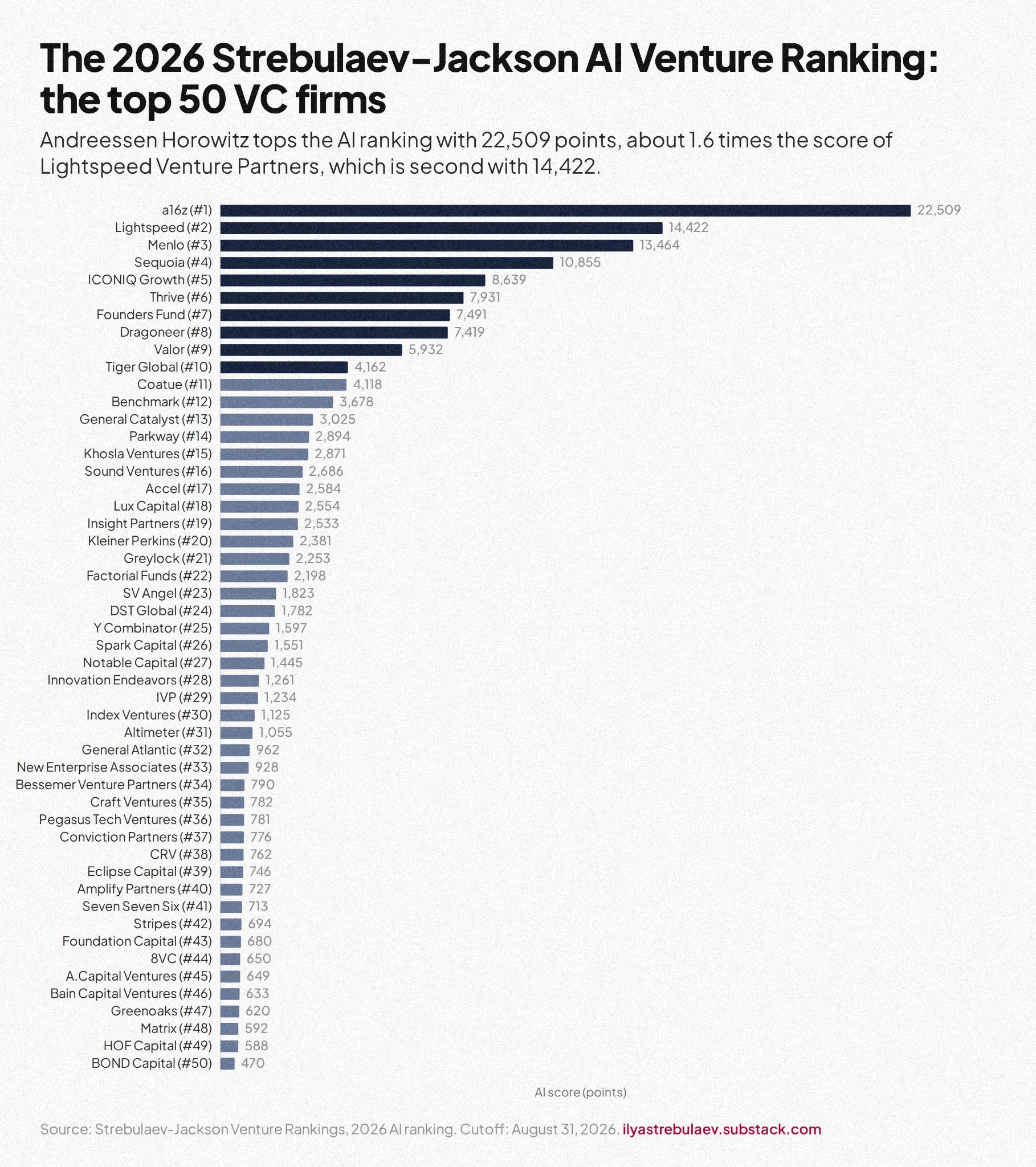
A16z Ranks First Among the Top AI Venture Capital Firms
A16z took first place in a respected ranking of 50 venture capital firms that invest in AI. The ranking was created by Stanford Graduate School of Business professor Ilya Strebulaev and Ohio State University professor Blake Jackson. They used information including company valuations, growth rates, how much investors' ownership shares had been reduced, how much money funds had returned to investors, and how much value each investment firm had added to its companies.
Lightspeed, Menlo Ventures, Sequoia, and ICONIQ Growth completed the top five. The largest investment firms also put a lot of money into businesses outside AI. But firms such as Menlo Ventures and Dragoneer scored especially well because a large share of their investments was in AI, including major companies such as Anthropic.
Nine Notable Deals
Flapping Airplanes, Legora, ASI, Pigment, Arda, Otter, Warhound, Inspired Capital, and Bison Ventures
Legora reached a valuation of more than $8 billion, while Pigment reached $2 billion during a busy week of unusually large European fundraising deals. The much-discussed new AI research lab Flapping Airplanes reached a valuation of $6 billion. Meanwhile, former OpenAI executive Bob McGrew attracted investors for his AI manufacturing startup.
New AI research lab Flapping Airplanes raised $1 billion in Series A funding. Lux Capital and Index Ventures jointly led the investment. Other investors included Sequoia Capital, GV, Kleiner Perkins, Valor Equity Partners, Atreides, A*, and Nvidia.
Legal AI startup Legora raised $550 million in Series E funding, led by Atreides Management. Other investors included Baron Capital, Capital Group, Fidelity, Glade Brook Capital Partners, JP Morgan, Accel, Benchmark, General Catalyst, ICONIQ, and Salesforce Ventures.
ASI, a startup co-founded by Bob McGrew, is building an AI system to help the military and airlines manage their equipment and other assets. It raised $325 million in Series C funding led by Spark Capital. Other investors included a16z, Craft Ventures, Meritech Capital, Energy Impact Partners, and Citadel Securities.
AI business-planning startup Pigment raised $250 million in Series E funding led by the Scaleup Europe Fund. Other investors included World Innovation Lab, Greenoaks, ICONIQ, IVP, and Meritech. Nvidia also plans to invest.
Manufacturing AI startup Arda raised $232 million in Series A funding. Altimeter Capital, Khosla Ventures, and Accel jointly led the round. Other investors included Felicis, XYZ Venture Capital, and 8VC.
Otter, which uses AI to take notes, raised $320 million from General Catalyst's Customer Value Fund.
Warhound, a startup founded by Colossal Biosciences' Ben Lamm and Anduril's Palmer Luckey, is working on genetically engineering dogs for military use. It raised $200 million in seed funding from investors including In-Q-Tel, Sequoia Capital, ARK Invest, Franklin Templeton, 8VC, Lux Capital, USIT, Bob Nelsen, Breyer Capital, CAZ Investments, Neogenesis, and Builders VC.
Inspired Capital, an investment firm that backs young startups and was founded by Alexa von Tobel and Penny Pritzker, raised $450 million for its fourth fund, Fund IV. Its previous investments included Suno, Rho, Deeptune, and MosaicML.
Bison Ventures raised $160 million for its second fund, which invests in young companies building technology for the physical world. Its previous investments included Thinking Machines Lab, AI infrastructure startup Zyphra, and robotics company Cobot.
Stories We're Reading
SpaceX and Tesla Consider Joining Forces, Companies Rush to Fix PHP, Meta Beats Forecasts and Plans New Shares, and Polymarket's Coplan Faces Criticism
SpaceX and Tesla reported their financial results on two days in a row this week. Both performed better than Wall Street expected. However, Tesla's stock price fell because the company planned to spend less on major investments than expected. Investors had wanted Tesla to spend more aggressively on AI and robotics. The biggest news involving Elon Musk's companies was the growing possibility of a SpaceX-Tesla merger. Musk publicly supported the idea and said both companies had created special committees to consider combining their businesses. In some ways, a merger would simply bring Musk's businesses together more formally. SpaceX already looks like a science-fiction version of Berkshire Hathaway, a company that owns many different businesses. The Wall Street Journal reports that SpaceX and Tesla have worked closely together for decades, sharing employees and resources. However, because Musk is CEO of both companies, he has a conflict of interest and is technically not supposed to take part in the merger discussions. His public comments have already disrupted internal talks at both companies.
Serious problems in PHP, a programming language used by more than 70% of websites worldwide, caused major security concerns this week. On Wednesday, the PHP Foundation, which manages and supports the language, announced that researchers had discovered two dangerous security flaws. They were named CVE-2026-109618 and CVE-2026-109619. The problems affect PHP systems going back to a version released in 2012. Hackers could potentially use them to take control of servers running PHP if those servers have not been updated with the security fixes. Security organizations Calif and Wiz independently found the problems using AI models and reported them to PHP. After the announcement, cloud computing companies rushed to protect their networks. Cloudflare CEO Matthew Prince wrote on X Thursday morning that attempts to exploit the flaws on Cloudflare's network had jumped from thousands during the ten hours before the announcement to millions afterward. Cloudflare said in a blog post that it had put firewall protections in place for its customers several hours before the public announcement. Research published by Amazon Web Services on Wednesday suggested that at least one hacker had tried to use the flaws on October 17, four days before the problems became public. The PHP Foundation is telling everyone who might be affected to install the updates as quickly as possible to prevent attacks. Several government websites that use PHP, including sites in Kenya, Finland, France, Germany, and the Netherlands, were taken offline as a precaution on Wednesday. Some were still unavailable Thursday morning.
Meta reported $65 billion in revenue for the third quarter, beating Wall Street's $63 billion estimate. Strong advertising sales helped the company earn more than expected. Investors were initially excited about Meta's new personal AI assistant, Muse, and the Muse Wonder model that followed it. The stock price rose at first, but investors became worried when Meta's spending on major investments climbed to $35 billion. The company also spent more cash than it brought in after its expenses and investments, its operating profit margins fell sharply, and it recorded almost $10 billion in costs related to a settlement over teenagers' mental health. Meta also announced a new type of share, called Class C shares, that does not give owners voting rights. These shares will let Meta raise more money for AI without reducing CEO Mark Zuckerberg's control over company decisions. By the end of trading Thursday, Meta's stock had fallen 7%.
Polymarket CEO Shayne Coplan appears to have faced a difficult period while Peter Thiel's Founders Fund tried to guide the young founder, who is known for challenging the usual rules. Bloomberg reported that Coplan used company money for personal living expenses and private jet trips before Polymarket had earned any revenue. According to the report, investors demanded that he repay the money before they would invest more. Coplan and people supporting him strongly disagreed with how Bloomberg described the situation. They said he had taken the initiative to track and repay every dollar as the company grew. They also said his total expenses were less than the salary of a typical software engineer. The Bloomberg report came at a difficult moment for Polymarket. Once one of the most celebrated companies in prediction markets, where people trade contracts based on what they think will happen, Polymarket continues to lose a large share of its market to its main competitor, Kalshi. The story also shows how difficult it can be for venture capital investors to guide startup founders. They need to make sure founders behave responsibly without gaining a reputation for being unfriendly to founders.