
Artificial Intelligence Advances Precision Cardiovascular Care
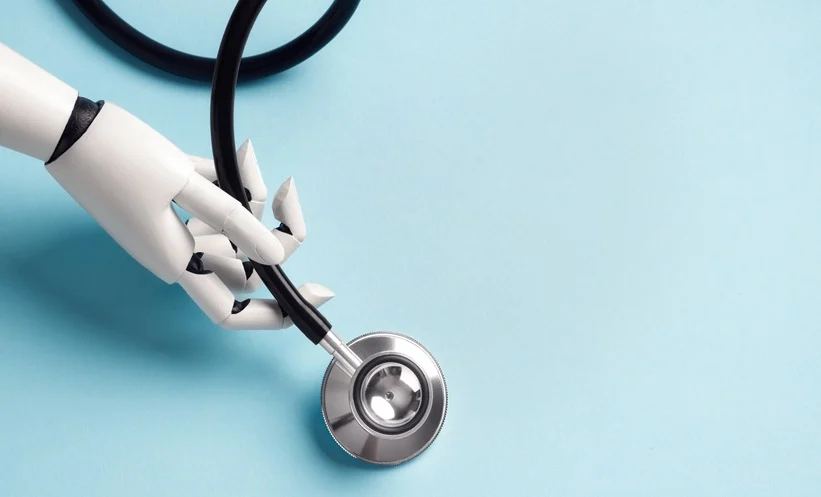
Artificial intelligence (AI) is changing how doctors find, understand, and treat heart and blood vessel problems. It is helping doctors make more accurate diagnoses, work out which patients face greater risks, and make better treatment decisions. This is according to a new editorial published in the medical journal Open Heart. The editorial looks at new ways AI could be used in heart care. It also highlights research that could help turn AI technology into tools doctors can use in everyday medical practice.
AI Helps Doctors Find Heart Problems More Accurately
AI is making existing medical tests more useful. It can help doctors spot signs of heart problems that might be hard to notice using traditional methods.
One study discussed in the editorial showed that deep learning, a type of AI that learns patterns from large amounts of information, could help doctors use chest X-rays to check for mitral stenosis. This is a condition in which one of the heart's valves becomes too narrow. Using X-rays this way could make it easier for more people to get checked for heart problems.
Researchers also used machine learning, a type of AI that learns from data, to study CT scans of the arteries that supply blood to the heart. The technology helped identify dangerous features of plaque, which is a buildup of material inside the arteries. Doctors might miss some of these features when looking at scans in the usual way. Finding them could help doctors predict more accurately who might have a heart attack, also called a myocardial infarction.
Another possible use involved generative AI, which can create and interpret information, to help examine coronary angiograms. These are images that show blood flow through the heart's arteries. Researchers compared ChatGPT-4o with experienced heart specialists who perform procedures to treat heart problems. They wanted to explore whether large language models, a type of AI trained to understand and produce language, could help doctors make difficult medical assessments.
Other studies looked at radiomics, which uses computers to find detailed patterns in medical images, and pulse wave analysis, which studies how pressure waves move through blood vessels. Researchers explored whether these methods could help predict the risk of atrial fibrillation, a type of irregular heartbeat, coming back. They also studied whether the methods could measure blood pressure and blood flow conditions in the body's main arteries without procedures that require instruments to enter the body.
Machine Learning Helps Predict Heart Risks
AI is not only helping doctors find heart problems. Machine learning is also helping them work out how likely different patients are to develop serious problems. Instead of relying only on traditional risk scores based on large groups of people, these tools may help doctors make predictions that better fit each patient.
The editorial discussed AI methods called gradient-boosting algorithms, including XGBoost and CatBoost. Researchers studied whether these tools could help doctors decide when to use scans of the heart's arteries. They also examined whether the tools could predict the risk of problems occurring within 30 days after surgery that does not involve the heart.
An important part of this research involved explainable AI, which helps people understand why an AI system makes a particular prediction. Researchers used methods called Shapley additive explanations to show which factors affected each patient's predicted risk. This could help address concerns that complicated AI systems sometimes give answers without making it clear how they reached them.
Researchers also explored a method called unsupervised clustering, which lets AI find groups of patients with similar features without being told what groups to look for. They studied whether this could help identify different types of heart failure. It might allow doctors to assess patients in a more personal way instead of relying mainly on traditional categories based on ejection fraction, which measures how much blood the heart pumps out with each beat.
Research Shows How AI Could Become Part of Everyday Heart Care
Researchers also examined systematic reviews and meta-analyses, which bring together findings from several studies. These looked at how well AI can detect atrial fibrillation and help with heart CT scans. The findings added to the growing amount of research supporting the use of AI to help doctors diagnose heart problems.
However, the editorial stressed that AI must fit into the way doctors and hospitals already work if it is to be used successfully in everyday care. Doctors must also continue to check and oversee how these tools are used.
The authors concluded that the next step should be to turn increasingly advanced AI systems into practical tools that doctors can understand and use. These tools should help doctors make medical decisions and provide care that better matches each patient's individual needs.
Reference:
Tang Y et al. Navigating the intelligence revolution: transforming cardiovascular care through AI-driven innovation. Open Heart. 2026;13(1):e004160.