
OpenAI’s Sam Altman lays out three AI endgames, two already on its 2023 list
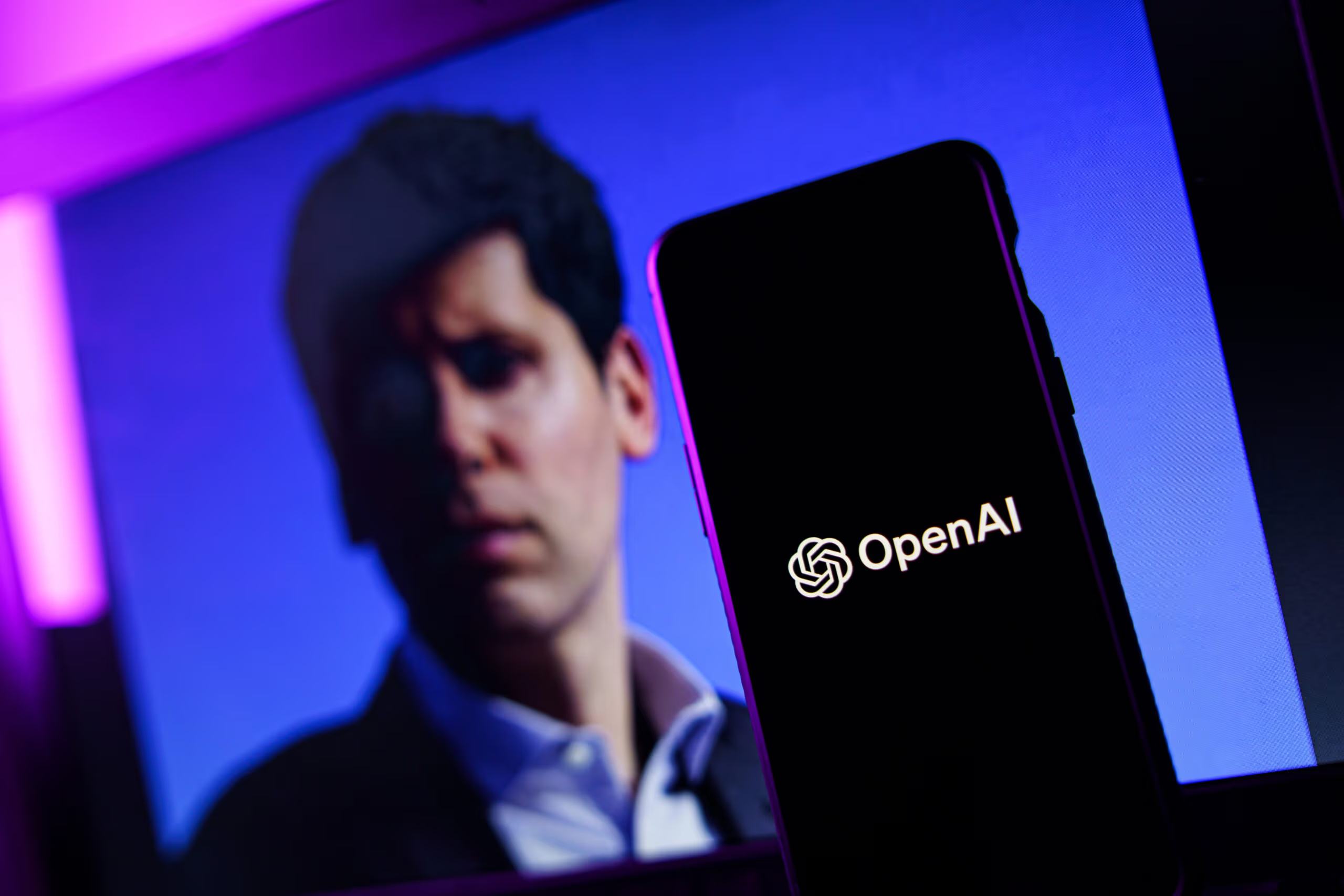
OpenAI CEO Sam Altman has told his employees about three possible ways the race to build superintelligent AI could end. Superintelligent AI means AI that is smarter than humans. But the interesting part is that two of his three ideas are very similar to plans OpenAI wrote about years ago. Neither plan was ever put into action. The third idea, which got the most attention in the news, was one Altman brought up only to say he thought it was a bad idea.
All three ideas deal with the same big question: who should control the computing power needed to run the most advanced AI systems? Altman's reported comments also help explain why nobody has made a final decision about this yet.
What Sam Altman told OpenAI employees about AI's future
The Information was the first to report on Altman's presentation to employees. It spoke to people who knew about the meeting but did not name them. The Decoder, Forbes and Latin Times later reported on it too. The information comes from anonymous sources. The first idea is to create an international organization like the International Atomic Energy Agency (IAEA). This organization would make sure companies building the most powerful AI systems follow safety rules. It could inspect AI systems, require safety checks, and watch how much computing power and energy companies use. Two people told The Information that Altman seemed to support this idea.
Altman called the second idea the "Demis plan," after Google DeepMind co-founder Demis Hassabis. About ten years ago, Hassabis suggested creating an AI organization similar to CERN, the international science research center. In Altman's version, the biggest AI companies would join together to form one organization, or work under its control. That organization would then provide AI models to countries that agreed to work together.
The third idea is called the "Eliezer plan," after AI safety researcher Eliezer Yudkowsky. In this situation, one company creates AI that can keep making itself smarter before anyone else does. That company then uses its new economic power to stop competitors from getting the computing resources they need. Altman described this as a way to "melt everyone else's GPUs," referring to the powerful computer chips used to run AI. "Obviously I think that one's terrible," Altman reportedly said. He added that he mentioned it for "completeness," meaning he wanted to include all the possible options.
OpenAI had already written about most of these ideas in 2023
The idea of an international AI safety watchdog is not new. In 2023, Altman, OpenAI president Greg Brockman and the company's chief scientist at the time, Ilya Sutskever, signed a post saying the world would probably "eventually need something like an IAEA for superintelligence efforts." They described an organization that could "inspect systems, require audits" and limit the release of AI systems once they became powerful enough or used more than a certain amount of computing power.
That same post described two other possible approaches. One was for major governments to create a shared project that many existing AI projects could join. OpenAI said governments "could set up a project that many current efforts become part of." This is very similar to the plan Altman now connects to Hassabis. Another idea was for AI companies to agree to slow down how quickly their most advanced systems improve. The companies "could collectively agree" that "the rate of growth in AI capability at the frontier is limited to a certain rate per year."
That last idea is basically a speed limit for AI development. According to The Decoder, Altman complained during the internal meeting that there are not enough practical ideas for putting a "speed limit" on AI development. But OpenAI had already published one such idea. What the company never created was an organization with enough authority to make companies follow that limit.
Why the safety watchdog is still just an idea: OpenAI says it cannot slow down
Altman reportedly explained the problem during the same meeting. He told employees that the first two plans would require a lot of cooperation between companies and governments. He also said OpenAI cannot afford to fall behind its competitors right now, especially because both OpenAI and Anthropic are moving toward selling shares to the public through stock market listings. Crypto Briefing explained the business reasoning: companies getting ready to sell shares usually try to become stronger than their competitors. They do not normally give up their advantages to a group of companies working together.
Creating an IAEA-style organization for AI would also mean getting the governments of the United States and China to allow outside inspectors into their most sensitive AI laboratories. According to Forbes, even a smaller US proposal for the two countries to tell each other about dangerous AI incidents is still only an idea, not an official agreement.
AI companies are building something more like FINRA than the IAEA
The AI safety organization that companies are actually working on is different from all three of Altman's ideas. OpenAI, Google and Anthropic are developing a group called the Standards Authority for Frontier AI. It would be a self-regulatory organization, meaning the industry would help set and follow its own rules. The group is based on FINRA, a private organization that oversees stockbrokers in the United States. According to Latin Times, the proposed system would include testing AI models before they are released, reporting dangerous incidents, and approving independent inspectors. But it would not have the legal power to force companies to follow its rules. The three AI companies also still disagree about who should be responsible for testing new models. Meta's Mark Zuckerberg and Nvidia's Jensen Huang argue that rules like these mainly protect the biggest companies that already lead the industry. A lawsuit in the United States also claims that cooperation between AI companies on safety rules is really a cartel, meaning a group of businesses working together in a way that unfairly limits competition. That claim has not been established as fact.
The names Altman gave his plans also need a closer look. Yudkowsky originally used the phrase "burn all GPUs" as a thought experiment. He was asking how extreme an action a properly aligned AI system, one designed to act according to human goals and safety needs, might have to take to stop a dangerous race to build more powerful AI. Yudkowsky wrote that destroying GPUs was not something he actually wanted to happen. But Altman's "Eliezer plan" changes that idea. Instead of an emergency action to stop danger, it becomes a way for one company to defeat all its competitors and control the market. According to The Decoder's reporting, one source said people understood Altman's comment as a criticism of a competitor because Yudkowsky has connections to Anthropic.
According to The Information, OpenAI plans to choose which approach to follow within a year. Meanwhile, the industry-led Standards Authority for Frontier AI is aiming to launch in late 2026 or early 2027.
Until OpenAI makes its choice, it is continuing to follow a path that Altman did not include among his three options: competing with other companies to build more powerful AI as quickly as possible.