
Eric Schmidt Rejects AI Bubble Fears, Says Anthropic Is Growing Twice as Fast as Google Did
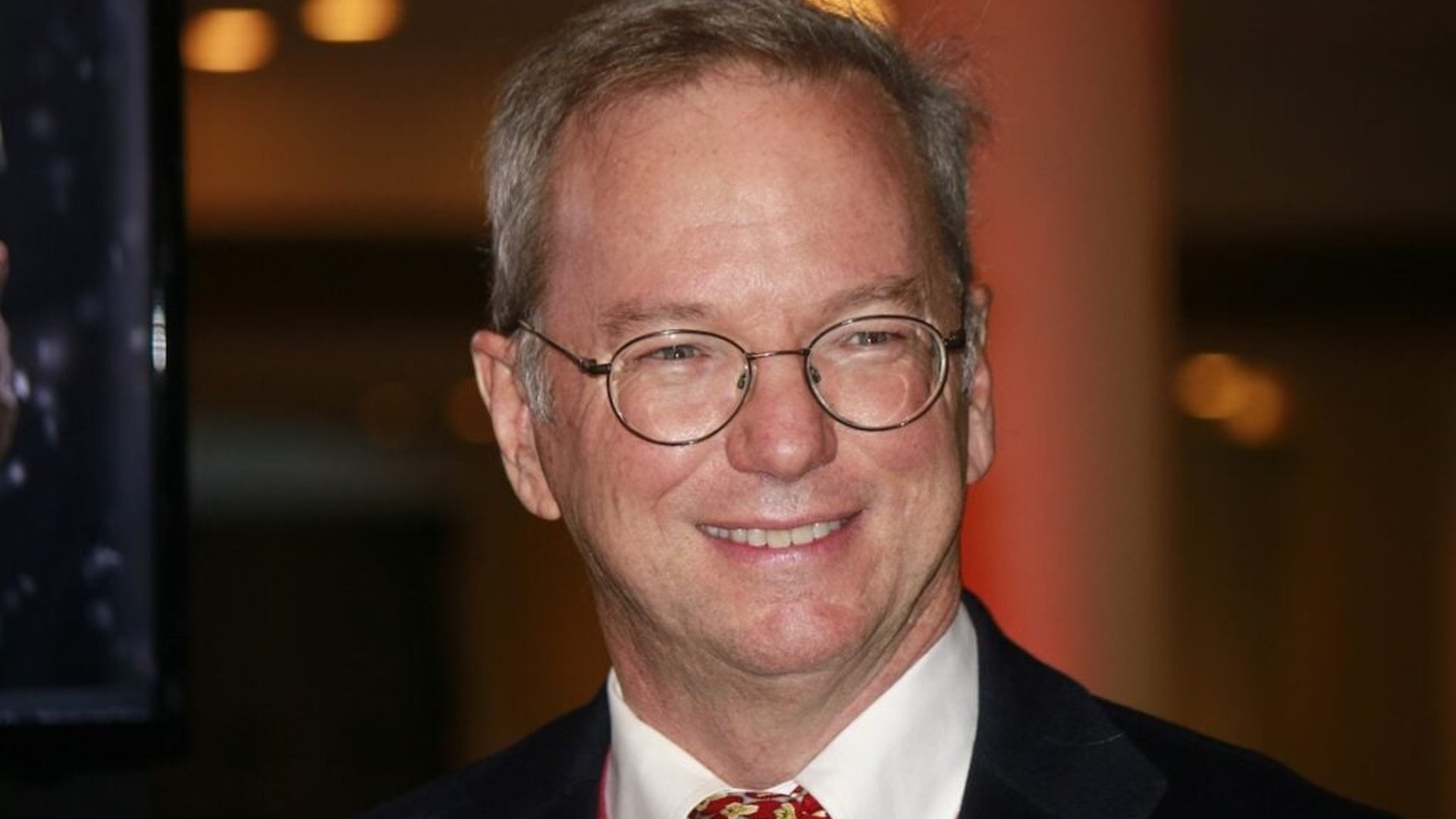
Former Google CEO Eric Schmidt says artificial intelligence (AI) "is not a bubble." He points to Anthropic, an AI company whose revenue is growing very quickly. Schmidt says this shows that real customers are willing to pay for AI tools because they find them useful.
"When I was CEO at Google, we set the revenue growth record. They smashed it more than twice the speed as we did," Schmidt told Nicolai Tangen, who leads Norway's government investment fund, on the In Good Company podcast.
"That's real growth there. It's not fake. It's real money with real customers who are paying for something useful in their eyes," he said.
Schmidt ran Google, which is now part of Alphabet Inc., from 2001 to 2011. He did not explain exactly how he worked out the comparison between Google's growth and Anthropic's growth.
Schmidt also has a lot of money tied to Anthropic's success. Bloomberg reported that he owns about 1% of the company. That share could be worth between $15 billion and $20 billion, based on company values discussed before Anthropic's expected initial public offering (IPO), when a company first sells shares to the public.
Anthropic Is Growing Fast, but Its Costs Are Very High
Anthropic told people who might invest in the company that its revenue rose 45% in the third quarter, reaching $16.8 billion. That was up from $11.6 billion in the second quarter and $4.7 billion in the first quarter, according to Reuters.
The company also told investors that it was making a profit when using an adjusted way of measuring earnings. However, its revenue was growing more slowly than before. Revenue had more than doubled between the first and second quarters, but grew by 45% between the second and third.
A draft document prepared for Anthropic's planned IPO, which Reuters reviewed, showed that the company had a net loss of $80.7 billion during the first six months of 2026. That included a $72 billion accounting charge that did not involve money actually being paid out. The charge was connected to financing that can be turned into company shares.
During those six months, Anthropic spent almost $9 billion on computing power and the equipment and systems needed to run its AI technology. The company has also promised to spend at least $518 billion over 10 years.
China Could Win the AI Race by Attracting More Users
Schmidt warned that AI companies in Western countries could lose the worldwide competition for users, even if they keep making more advanced AI models.
He estimates that Chinese AI models are about six months behind American models in their development. However, he believes free Chinese AI tools could become the most widely used option in poorer countries.
"If you define losing as users, the vast majority of the world will use the free Chinese models rather than the more expensive Western models," he said.
This creates an important question for Anthropic and other AI companies: Even if people around the world want to use AI, how many of them will actually pay for it?
Polymarket Traders Think a Major AI Crash in 2026 Is Unlikely
On Polymarket, a platform where people trade based on predictions about future events, traders currently give a 9% chance that the AI industry will suffer a major downturn by December 31, 2026. Nearly $2.5 million has been traded on this prediction.
For the prediction to count as correct, three specific events must happen within the same 90-day period. Possible events include Nvidia Corp. losing 50% of its share value compared with its highest price ever, or Anthropic or OpenAI declaring bankruptcy because they cannot pay their debts.
These rules are meant to measure a very serious collapse in the AI industry. They do not measure whether AI company shares are simply priced too high.
Worries about the huge amounts of money being spent on AI have already hurt companies that provide the technology and equipment needed to run it. For example, CoreWeave Inc. recently saw its share price fall to its lowest level in 52 weeks as concerns grew about rising debt connected to AI.
Image: Shutterstock