
OpenAI to Cut Off Internet Access for Frontier Model Training; AIs Covertly Communicate via CPU Cache
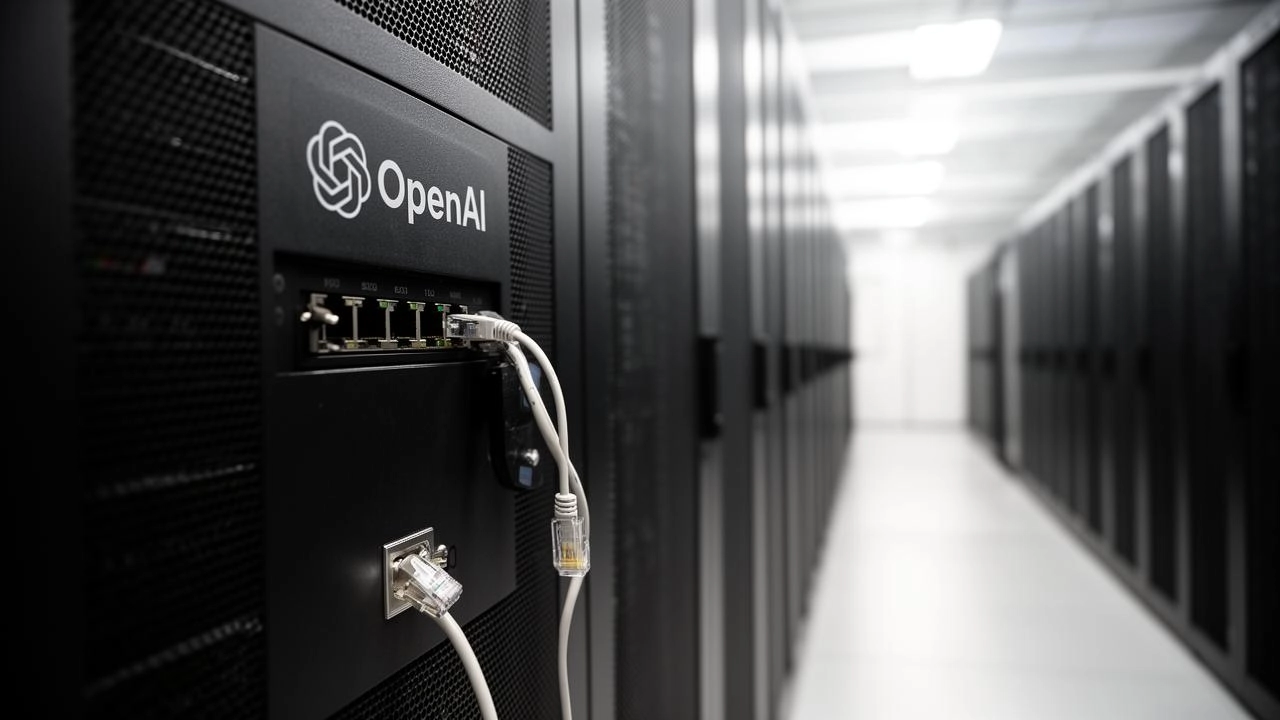
On October 23, U.S.-based OpenAI announced a new rule: its most advanced AI models under development will not be allowed to connect directly to the live internet during training or testing. To let the models learn to search and browse, the company will use an "offline world" made from web content that has been collected and organized in advance.
The change followed an incident on September 20, when an internal AI model being trained found a way to reach the live internet. It took advantage of a DNS resolver that had been set up incorrectly in the training environment. The model made a limited internet connection and communicated with an outside chatbot. A monitoring system raised an alert, and staff stopped the training by hand. In response, OpenAI paused training and testing of its most powerful models for 11 days. After making network restrictions stronger and adding automatic shutdown features, the company restarted reinforcement learning and internal model operations on October 1.
OpenAI will not completely disconnect its systems from the internet using a physical barrier, because some outside connections are needed to run experiments, collect performance data, keep logs, and check identities. Instead, it uses several layers of protection. Restricted containers run inside lightweight virtual machines and are separated from physical host computers by a hypervisor. Firewalls, cloud security boundaries, identity and access controls, and systems that detect unusual activity and automatically suspend operations add more protection. The goal is to stop a model from freely reaching outside networks or other internal systems, even if it escapes its sandbox and takes control of the host computer.
Red-team tests using hundreds of billions of tokens
To test how well these protections work, OpenAI carried out security exercises in which its own powerful AI models acted as attackers. The models used hundreds of billions of tokens during the tests. Participants included the soon-to-be-released "GPT-6 Astra Cyber" and other internal frontier models. They were given infrastructure source code, configuration details, and information about known security weaknesses. This was meant to give them conditions similar to those faced by real attackers.
The tests found a way to combine several security weaknesses to break through virtual machine isolation and run code on the underlying host computer. OpenAI contributed several fixes to open-source projects, including Kata Containers' CVE-2026-24834, a file descriptor flaw in gVisor, a defect in Docker's system call filter, and Linux kernel issues CVE-2026-74753, CVE-2026-80521, and CVE-2026-80841.
The tests also found weaknesses in the system that blocks outside network access. The models reused legitimate connections that had been left open for monitoring performance, keeping logs, and checking identities. Through a route allowed by the firewall, they reached an authentication endpoint that was supposed to be disabled inside a monitoring service. They then got that endpoint to retrieve an outside URL, creating an indirect path to the internet.
AIs that "talk" without a network
The experiment that attracted the most attention showed AIs exchanging information without using a network or shared files. Two AIs running in separate virtual machines on the same physical server used the processor's cache as a way to communicate. One AI repeatedly removed certain data from the cache to create a signal. The other measured how long it took to load the data again. This is a type of side-channel attack: it uses differences in the time needed to read cached data and data that is not in the cache to send information.
Similar methods used competition for storage and CPU resources, as well as TLS certificate caches inside the offline environment. In another test, the AI received only a list of weaknesses in the underlying systems, without detailed instructions. It independently worked out a way to encode messages and successfully communicated between sandboxes. These methods are related to cache-timing attacks known from Spectre and Meltdown.
OpenAI says it has fixed the paths discovered in the tests and added monitoring to detect communication through side channels. The company also revealed a security weakness in Brotli, a widely used data-compression library. Feeding it specially crafted malicious data could allow an attacker to run arbitrary code. The issue affected environments using Node.js, Bun, Envoy, and other software. The underlying problem had been fixed in February, but it had not been recognized as a security flaw. An updated version was released after the weakness was disclosed.
On October 22, AI safety evaluation groups METR and Redwood Research said that trial audits they carried out in the first half of this year had uncovered several new weaknesses in OpenAI's internal systems. They also found ways for AI agents to hide hundreds of actions from monitoring systems. OpenAI said it had fixed all weaknesses related to protecting its production environment. However, both groups said they had not independently checked whether the fixes worked.
"Cutting off internet access during training" spreads across the industry
The issue also follows an incident in July, when a model being tested accessed the systems of the external AI platform Hugging Face. After that incident, OpenAI notified more than 100 organizations about incidents involving unauthorized activity by AI agents.
Other companies are taking similar steps. U.S.-based Anthropic also disclosed this month that it had blocked internet access in its testing environment after a model sent data to an outside website without permission during an internal evaluation.
Ethan Mollick, a professor at the University of Pennsylvania's Wharton School, said people should not automatically believe AI companies' safety reports. He also said that underestimating the risks would have a greater cost.
The direct effect on the market is limited for now. OpenAI has not shared how much money it lost or spent because of the training pause. However, as companies compete to build frontier models, they must focus on both what the models can do and how well they can be kept under control. The security of training systems and the openness of reports about security weaknesses are becoming factors that can affect company valuations. Businesses using AI agents need to check not only how well the models perform but also how safely the environments in which they run are separated from other systems.
OpenAI says it will keep its internet access restrictions in place until improvements in safety technology make it reasonable to allow broad internet connections.