
Anthropic says one AI agent beats many subagents now that models can handle complexity alone

Anthropic found that one AI agent with access to information when needed often works better than a group of agents. It can produce better results, cost less, and respond faster. The company is releasing a migration kit to help teams test this approach and switch to it.
Anthropic recommends that companies consider replacing groups of smaller AI agents with one main agent that gets the information it needs when it needs it. Newer models, starting with Opus 4.5, as well as Opus 5.5 and Fable 5.1, can handle complex plans in one continuous process. This can also lower costs and reduce waiting times. In one comparison, Anthropic found that the single-agent system ran about twice as fast as the system using multiple agents.
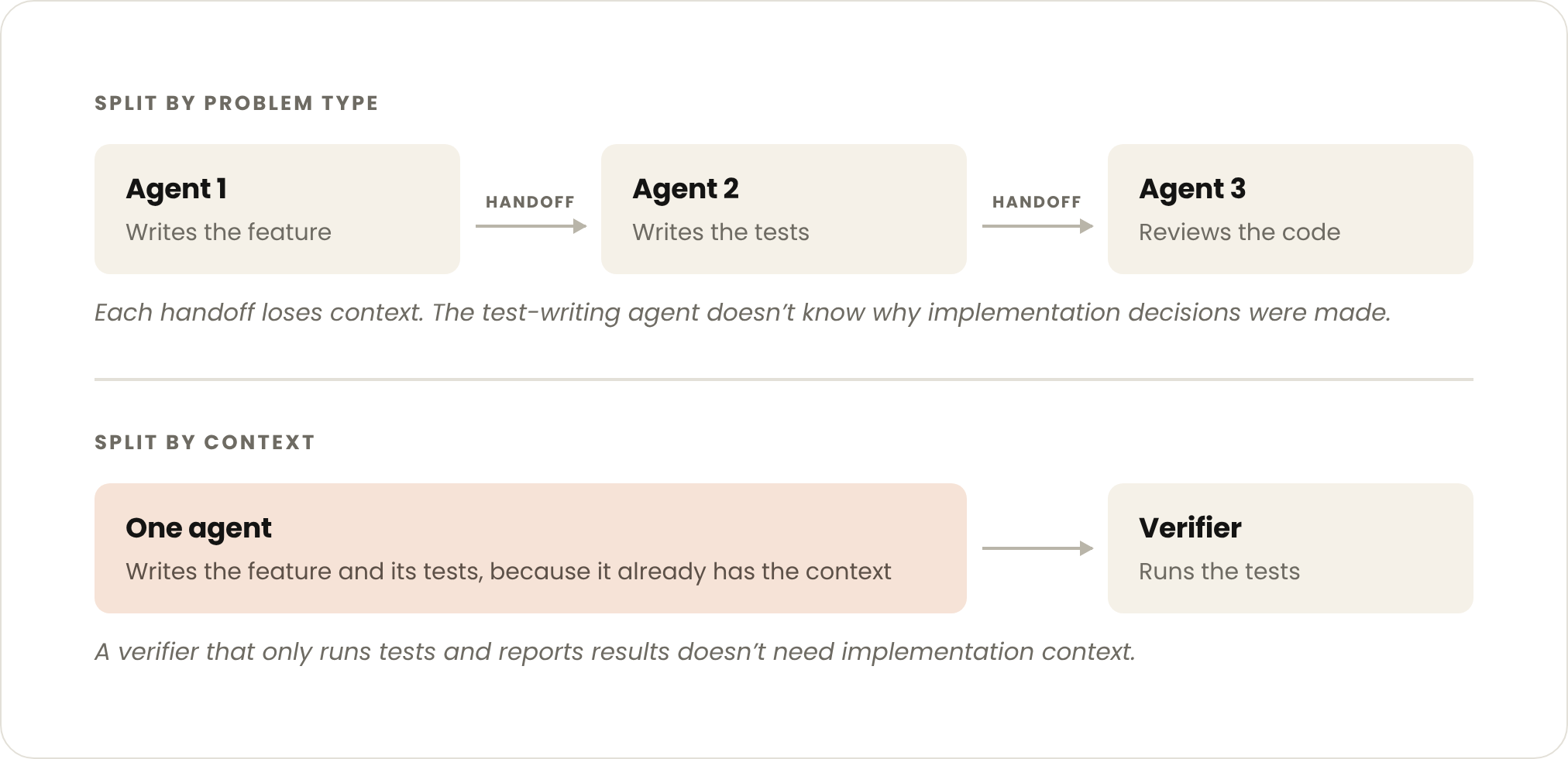
This advice comes from Anthropic's practical experience across several enterprise deployments. The company's Applied AI team found that one agent using what Anthropic calls skills often produced better results than either a single large prompt or a system with multiple sub-agents. For example, one company had 12 specialized sub-agents inside its customer-facing agent. This made it difficult to provide a consistent brand experience and made the system harder to use because responses took too long.
The model can now do much of the coordination work itself
Anthropic says many AI agent systems follow a similar design. They detect what the user wants, follow a fixed series of steps, group users into categories, use separate paths for different recommendations, and rely on a coordinator to manage everything. For many tasks, the model can now handle much of this work itself.
Anthropic calls this pattern "Conway's Law" for agents. The system starts to copy the company's organizational chart, with each team building its own sub-agent. Over time, hundreds of agents with overlapping jobs can pile up, without shared rules or standards. This can lead to what Anthropic calls a "Frankenprompt": a system prompt that becomes a jumble of rules added by different teams, some of which conflict with each other. Anthropic says a clear system prompt, four or five simple data tools, and fixed rules for the required output can handle much of the work.
For example, Anthropic cut the system prompt for Claude Code by more than 80 percent for newer models. One reason was that skills and tools now load only when they are needed. Newer models can also describe their own progress and check their own work. This can make some extra layers of control unnecessary.
Anthropic says sub-agents are still useful in some situations. They can help when tests show that an agent performs worse as its context window fills up, when several tasks need to run at the same time with separate context windows, or when one agent has trouble choosing the right tools.
Anthropic has published a migration kit on GitHub to guide teams through the change. It helps them find the patterns in their current systems, compare other options, and check which approach works best. Anthropic warns teams not to combine agents without testing first. In one test involving a customer support agent, merging a sub-agent made responses faster but broke a process that had worked before. The main agent began answering questions by itself instead of asking the right specialist for help.
Teams should stop skill libraries from growing too large
Instead of giving every team its own agent, Anthropic recommends turning workflows into skills and loading tools only when needed through a tool search. A small central team should manage the main system prompt and overall quality. Anthropic also says a model's ability to choose the right tool tends to get worse when it has more than 30 to 50 tool definitions. Teams should therefore appoint people to maintain their skill libraries and stop them from growing too large.
For reference information, such as guidelines, product details, or definitions of measurements, Anthropic recommends using knowledge bases that the agent can search when needed. This information can also be stored in reference files within a skill. Anthropic advises against using code to fetch information and insert it directly into prompts.
Anthropic's findings agree with recent research. A study by Vals found that groups of AI agents can work faster than a single agent but do not produce better results. Increasing the number of agents from 10 to 30 or 100 did not improve quality, but it did raise costs significantly, according to the study. OpenAI developer Eric Provencher has also questioned whether groups of agents are useful, saying they are "almost certainly" a waste of money.
Source: Anthropic