OpenAI's secret math model spent three hours of compute per answer
OpenAI's unreleased model needed roughly three hours of machine thinking per result in its new math release. That inference bill is the real story for anyone trying to figure out if the AI spending boom still makes sense.
On October 6, OpenAI opened a GitHub repository called openai/math and initially dropped 722 manuscripts onto it at once, organized into 372 families of results. After three withdrawals, the repository now lists 719 manuscripts. The company says an unreleased internal model produced the collection after being posed roughly 4,000 candidate research problems and publishing the subset it judged significant enough to show. Some of those results overlap with high-profile open-problem trackers, including an LLM-ranked list of 500 open math problems. According to OpenAI's own disclosures, each result used about three hours of ChatGPT Pro-grade compute on average.
Here's why the timing matters. OpenAI CFO Sarah Friar said in November 2025 that the government could help backstop financing for AI infrastructure, a comment she later walked back, and the remark has stayed relevant as skepticism about AI capital spending has kept running hot. Nvidia CFO Colette Kress has said the industry could see $3 trillion to $4 trillion in annual AI infrastructure spending by the end of the decade. A math model that needs three hours of inference per result is exactly the kind of workload that spending is supposed to justify, or exactly the kind of workload that makes the spending look reckless, depending on which side of the bubble argument you're already standing on.
Three hours of ChatGPT Pro compute isn't cheap, and OpenAI has never published a hard dollar figure for it. But ChatGPT Pro itself costs $200 a month for high-allowance use by a human being asking normal questions. Running a frontier model at that intensity for three straight hours, on a single result, implies an inference cost that would make most SaaS unit economics look absurd. Put next to roughly 4,000 problems posed during the evaluation, it also shows why OpenAI needed its own dedicated compute allocation to run the experiment.
That's the bet infra investors are actually making. Not that AI will get smarter. That it's worth paying for AI to think for hours at a stretch on problems a human expert might also spend hours or days on. If that bet pays off in enterprise settings, drug discovery, materials science, chip design, the spending looks prescient. If it doesn't generalize past math olympiad-style problems with clean verifiable answers, the hundreds of billions of dollars that tech giants are expected to pour into AI capex this year starts looking like infrastructure built for a narrower use case than the valuations assume.
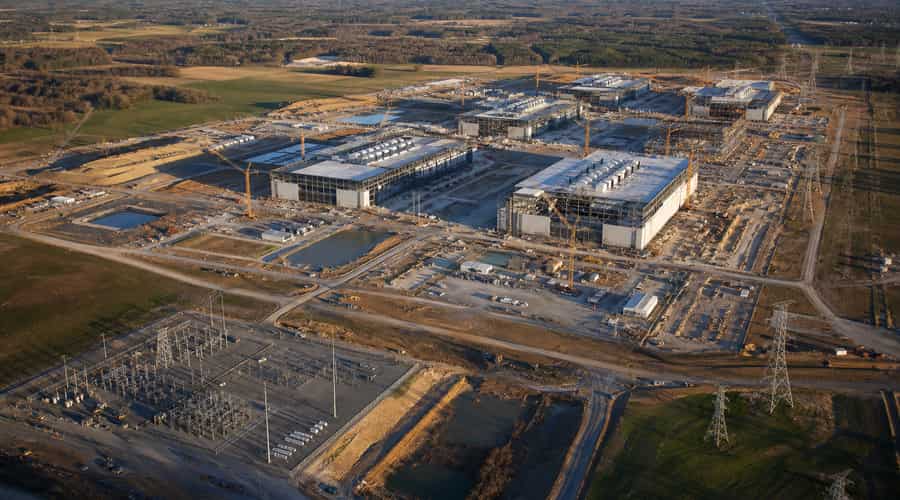
OpenAI has raised its compute spending target through 2030 to $750 billion, encompassing deals with Microsoft, Oracle, AWS, and CoreWeave plus its own $20 billion Project Camellia data center in Georgia. But CFO Sarah Friar has privately warned leadership the company may not be able to honor those contracts if revenue growth doesn't accelerate... - OpenAI compute spending 2030 - can OpenAI afford compute costs
And there's a credibility problem sitting right underneath the compute numbers. The repository now says about 42% of top-line results are formalized in Lean, the programming language mathematicians use to get a proof checked by computer rather than by eye. The rest went out without that independent verification. A day after the drop, OpenAI pulled three manuscripts after a sign error invalidated one argument and broke two papers that depended on it. Mathematicians reacted with a mix of genuine excitement and open irritation at being handed hundreds of unverified claims to grade for free.
That irritation has a recent precedent. In September, OpenAI said an internal system had produced a proof for the Navier-Stokes problem, one of the Millennium Prize problems, only for NYU mathematician Tristan Buckmaster to say the company sought a call with him days before the announcement and then published a solution built on the same broad line of attack he and collaborator Levent Alpöge had been pursuing privately. Fortune reported on the dispute, which raised a sharper question than anything about model capability: can researchers safely use frontier labs' tools on unpublished work if the lab might turn around and publish a rival result built on what it learned from watching you use its product.
None of this settles the AGI-timeline argument either way, and it shouldn't. A model that spends three hours chewing on a single, cleanly specified problem with a checkable answer is a different animal from one operating in the messy, underspecified world most businesses actually run in. Math problems have the rare property of being gradeable. Most of what founders need AI to do doesn't. The gap between "claimed progress on hard math problems with extended thinking time" and "can run your customer support or your supply chain" is still enormous, and nothing in this release closes it.
What the release does prove is narrower and more useful: frontier labs can now buy raw capability by spending more compute per answer, not just more training data up front. That's a real lever, and it's the lever every infrastructure dollar flowing into Nvidia, into data centers, into power contracts is ultimately betting on. Whether it's a lever worth trillions of dollars a year is still an open question, same as the many math problems OpenAI didn't solve.
Wall Street's loudest commodity bulls say the AI-driven rally has barely started • How to Build an AI Agent Data Deletion Request Process Before Your DPA Demands It • Maas Group Loses $340 Million After Firmus AI Data Center IPO Collapse
This article is posted in AI News, check it out for more related stories.
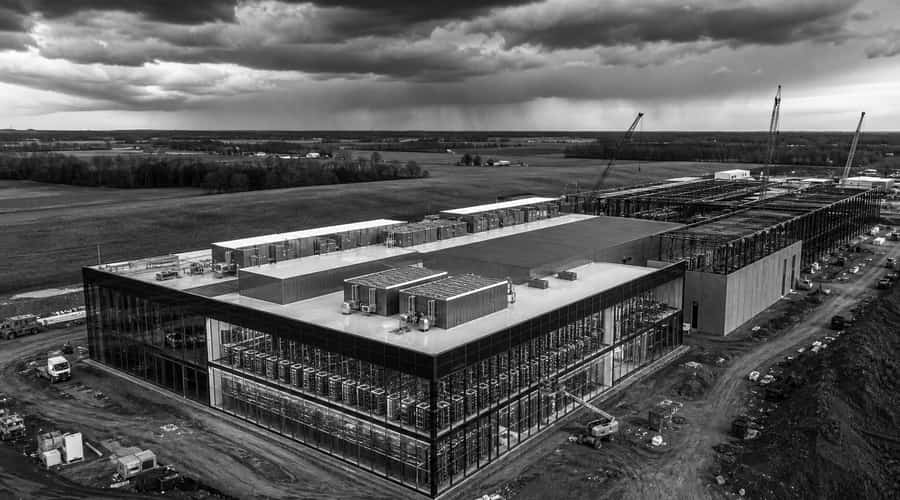
Nvidia is in talks to guarantee up to $250 billion for OpenAI's data center buildout in Ohio, with separate discussions covering $350 billion more in chip financing. The deal reignites circular-financing concerns as Nvidia's total AI deal exposure crossed $750 billion last week. - nvidia financing openai infrastructure deals - gpu supplier funding data center buyers