
How an IIT Madras student with little coding experience made it to a Tokyo AI lab
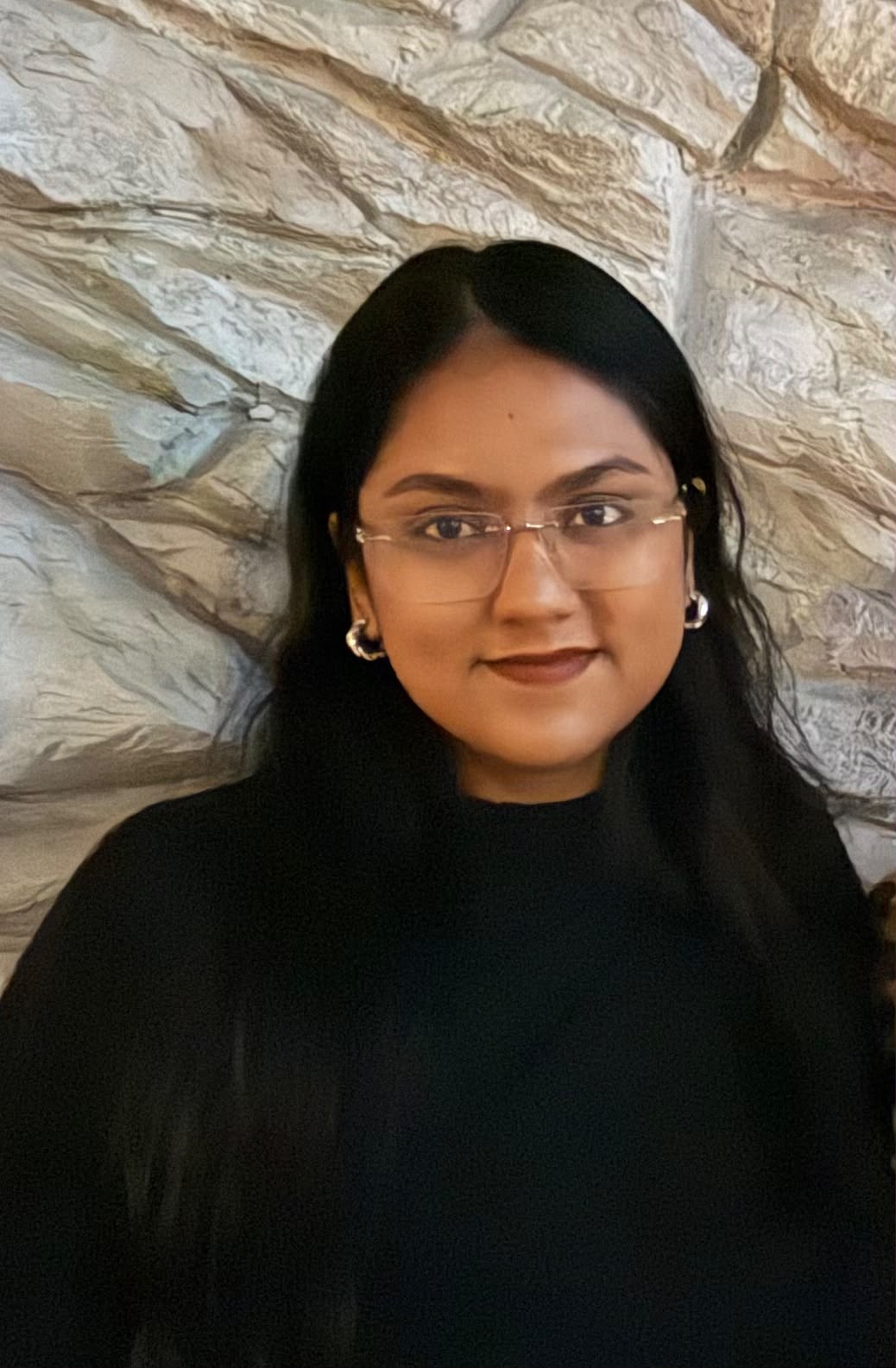
Despite lack of prior preparation being regarded as a significant obstacle, Shudhanshu Kumar Yadav, a student of the BS programme at the Indian Institute of Technology (IIT) Madras, demonstrated that disciplined effort and structured learning can overcome any disadvantage.
With a background in Physical Science and negligible programming exposure, Yadav has progressed to research-oriented work in Artificial Intelligence (AI) and has earned recognition from institutions in both India and Japan.
Shudhanshu Kumar Yadav’s education qualifications
Yadav completed his bachelors degree in Physical Science at the University of Delhi, which gave him a grounding in mathematics, physics and chemistry. However, programming, data science and AI were unfamiliar to him. He is presently enrolled in two programmes concurrently which include a BS in Data Science and Applications at IIT Madras, and an MSc in Artificial Intelligence and Data Science at the Central University of Andhra Pradesh. He says the IIT Madras programme provided the structured environment that allowed him to build his skills progressively and to apply theoretical concepts to practical problems.
His early practical work took place during an internship with Infosys Springboard, where he developed a crop yield prediction system. The project required the analysis of environmental and agricultural variables, including rainfall, temperature, humidity and soil nutrient levels. Yadav carried out data preprocessing, feature engineering and exploratory data analysis, and implemented machine learning models such as XGBoost and Random Forest.
He says that this project steadily increased his confidence in addressing real-world problems with data-driven methods.
Yadav’s research
Building on this foundation, Mr. Yadav secured a paid eight-week summer research internship at Dhirubhai Ambani University, Gandhinagar, under the supervision of Professor Ankit Vijayvargiya. His work investigated the application of Large Language Models (LLMs) to human activity recognition using signals from smartphone inertial measurement units. The research analysed how LLM-based reasoning might be integrated with sensor signal processing and machine learning, and drew on Retrieval-Augmented Generation, QLoRA fine-tuning and multi-agent systems built with LangGraph. The internship furthered his understanding of generative AI and complemented his independent work on AI applications, backend systems and APIs.
Recognition and opportunities
His efforts led to a number of notable outcomes. In addition to the Gandhinagar internship, he received internship offers from Jamia Millia Islamia and the Indian Institute of Management Bangalore. He has also been selected for the Matsuo & Iwasawa Laboratory at the University of Tokyo and for GCI World 2026, which marks an international step in his academic development.
Yadav's development has not been limited to just the tech sector. At Deen Dayal Upadhyaya College, University of Delhi, he served as president of the Vivekananda Study Circle, leading a student body of more than eighty members. Within the IIT Madras BS programme, he acted as a group leader at Saranda House, which gave him experience in teamwork and coordination. Reflecting on his progress, he identifies the greatest change as a growth in self-assurance, something he considers especially meaningful for a student from a non-technical background.
Looking ahead, Shudhanshu intends to pursue opportunities in Generative AI, LLM applications, machine learning and AI research, with an emphasis on practical, AI-powered solutions.