
Four AI leaders, including Jan Le Kung, "Physical AI, Opportunity for manufacturing powerhouse South Korea."
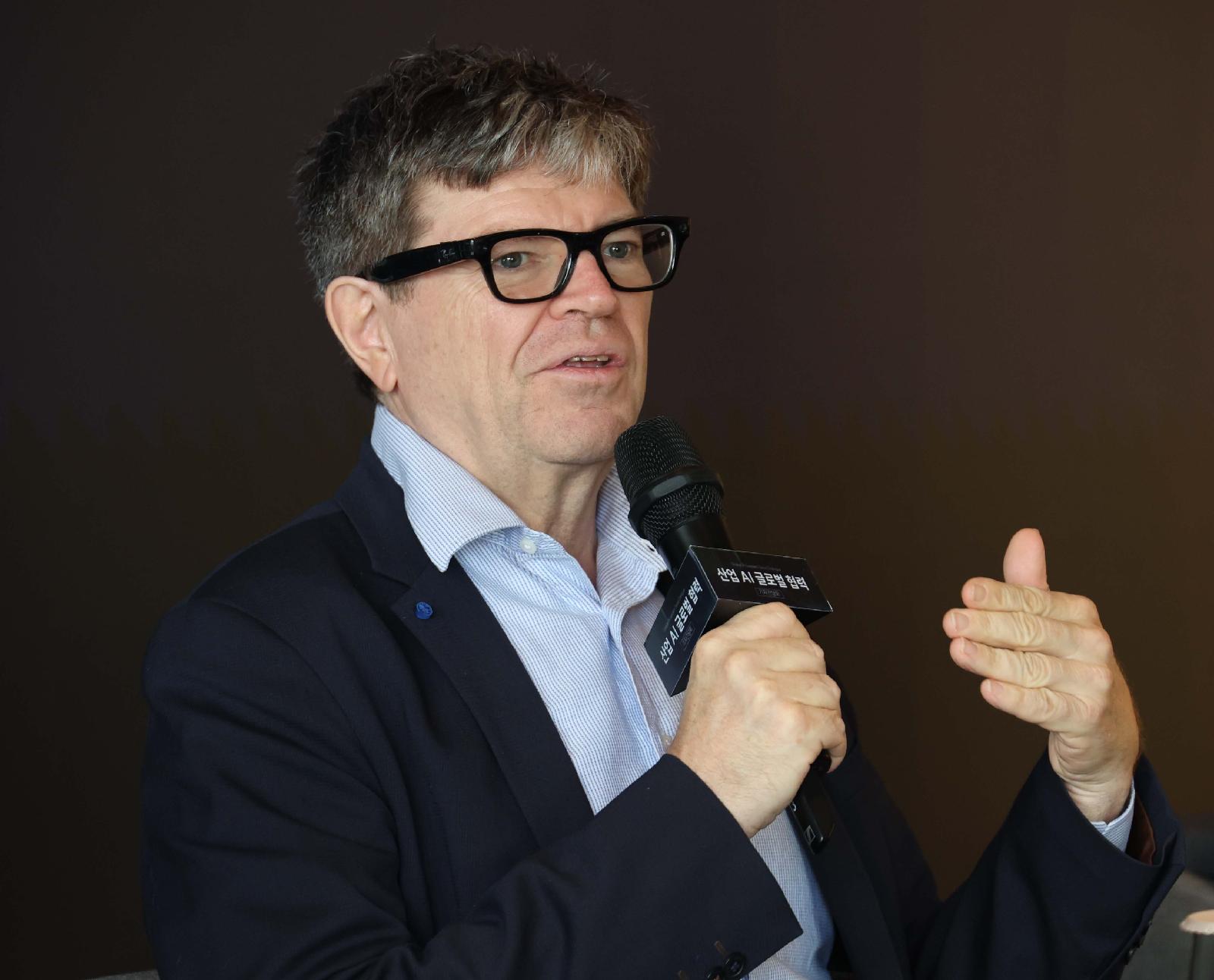
rköng "The theory of AI out of control is SF...Next is World Model"
Nguyen "South Korean factories and shipyards are living laboratories"
Anun Jiata "AI-based is together, differentiation is individual"
Jimiri "South Korea is a data inheritance…"If you hesitate, you'll be late"
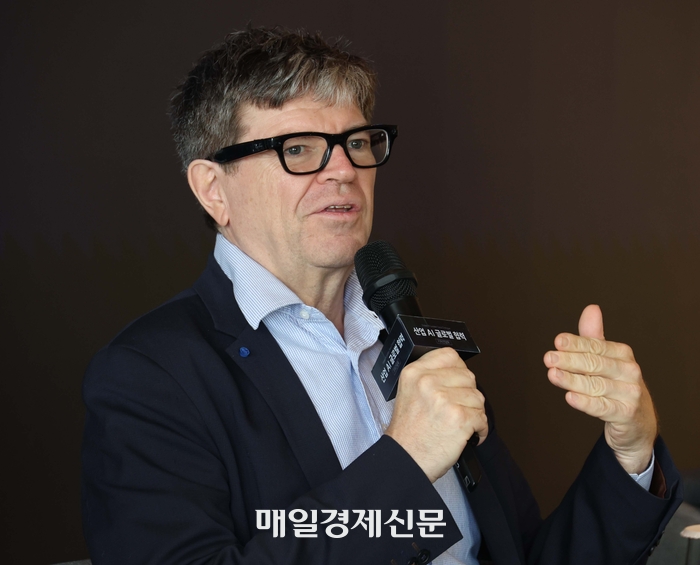 사진 확대
Four global artificial intelligence (AI) leaders, including AMI Labs Chairman Jan Le Köng (founder), agreed that the field experience accumulated by the Korean manufacturing industry in the era of physical AI will be a key competitive edge. Source-based models that cost a lot of money are created together across borders, and data and know-how accumulated at industrial sites are each owned as a solution.
At the 'Industrial AI Global Cooperation' press conference held at Westin Chosun Seoul in Jung-gu, Seoul on the 12th, Chairman Le Kung, CEO of Atomatic (CEO and Co-founder), AI Alliance Co-Chair Anthony Anunjita (Co-founder), and ASI Foundry Chairman Jimmy Lee were on the panel. The discussion was conducted by Lim Yong, an associate professor of law at Seoul National University (SAPI director). The meeting was co-hosted by U.S. industrial AI company Atomatic and IIAC 2026 Organizing Committee ahead of the 5th International Industrial AI Conference (IIAC) in Tokyo, Japan, on the 13th, and co-hosted by global open AI alliance AI cooperation platform ASI Foundry.
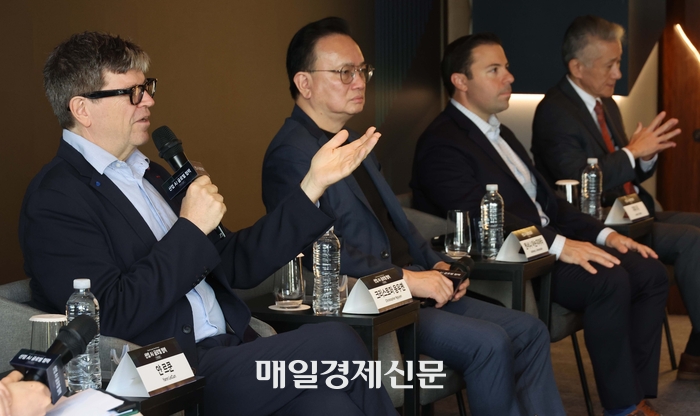 사진 확대
"There are AIs that prove mathematical theorem and pass the bar exam, but there are no robots that can do what a 10-year-old child does without learning separately," said Chairman Le Köng, one of the "four major godfathers" who contributed to AI innovation around the world. "It turns out that understanding language is easy, but understanding the real world is not." Taking self-driving as an example, he said, "There have been a lot of self-driving car demonstrations that taught people to imitate human driving 10 years ago, but there have not been fully self-driving cars yet, even though the driving data is billions of hours. This means that this method (imitation learning) is not enough."
He cited unpredictability as the cause. "Unlike language, most information in the real world is unpredictable," he said. "If you slowly illuminate this room with a camera, then stop and ask AI to complete the next scene, there is no way to predict what you will look like or where you will be."
Chairman Le Ceng's solution is the 'World Model'. It is a model that predicts how the world will change if certain actions are performed in the current state, and AI equipped with this can plan for itself the order of actions necessary to achieve the goal. It is a technology being developed by AMI Labs. "It is a new blueprint that is very different from the Large Language Model (LLM)," he said. "How can we be sure that AI will act properly and safely if we fail to predict the outcome of our actions?"
In the Q&A session, he drew a line over concerns over AI's out of control. Asked if AI safety and security issues have resurfaced due to the recent AI hacking in the domestic financial sector, he replied, "The accident in recent months is due to carelessness in the process of distributing agents by AI companies," adding, "There was a gap in the quarantine execution environment (sandbox) that locks up agents." He added, "It's a problem that can be easily fixed, and it's not because you can't control AI."
Regarding the more fundamental question of whether humans can control AI, he pointed to the structural limitations of LLM, saying, "AI now is at the level of collecting and repeating most of the known human knowledge except for narrow areas such as mathematics and coding." LLM controls every possible question by fine-tuning it to give non-dangerous answers, but the questions are infinite, which is completely unrealistic, he said. "So it's relatively easy to 'get out' LLM to come up with an answer that they shouldn't do."
As an alternative, it proposed 'purpose-oriented AI' with a world model. "If you give a goal, AI can only perform the goal within the guardrail (safety rules), and the guardrail must be met in the execution stage, so it cannot be broken," he said. If it's a housekeeping robot, it's like planting a rule that "don't swing your arm if there are people around you with a knife." "I don't mean it's an easy engineering problem, but AI safety is an engineering problem," he said. "It's probably simpler than making turbojet engines safe."
He dismissed the scenario in which AI suddenly takes over the world one day. "It is a science fiction scenario that robots dominate the world by discovering the secrets of human-level intelligence," he said. "AI development is not an event, but a process in which several innovations are accumulated, and from a distance, it will look like a continuous evolution."
He cited opening up as the future of the AI ecosystem. "In my view, the future of AI will inevitably be that the base model will be released as open source and open weight, and the industry will have its own system on top of it," he said. "AI is becoming an essential infrastructure, and historically, infrastructure has always been open." Internet software infrastructure and mobile communication were like that.
He then emphasized, "Information is increasingly transmitted through AI, and it is unacceptable for democracies such as Korea, France, and India that citizens' entire information diet depends on AI, which is very few companies in the western United States or China." It is explained that there is a growing demand to protect openness and sovereignty together, and that the global AI joint development project "Tapistry", which he was the chief scientific advisor, was created for this purpose.
It also pointed out the value of Korean data. "Most of the Internet public texts used for LLM learning are in English, so we cannot create LLM that understands all languages and cultures in the world now," he said. "There are many undisclosed data in Korea, such as cultural contents in the National Library, which can be used to contribute to learning global models that understand Korean culture and language, rather than handing it over for free to Western companies in the United States." Countries must also work together to share costs.
He also pointed to job changes. "It is highly likely that workers will have to change their jobs during their careers due to rapid technological development," he said. "The lifelong workplace tradition in Korea and Japan can also change." He also predicted, "In the near future, almost all workers will become managers who manage the AI system team working for them."
On Korea, he presented both opportunities and tasks. Referring to Korea's major manufacturing industries such as semiconductors, shipbuilding, and automobiles, he said, "These industries will be deeply affected by the advent of physical AI." He added, "The next revolution is related to physical AI and robotics, and Korea has a long tradition of contributing to this field, so there is an opportunity to play an important role."
He cited the change of talent policy as a task. "The hardest thing for the country to get is talent, and Korea, which has a higher education system for science and technology, already has it," he said. "Today's product innovation stems from basic research 10 to 20 years ago, so we need to invest in education and innovation ecosystems." The United States and recent Switzerland and Singapore are the only countries that have created a research ecosystem where foreign talents come, suggesting that high-quality talents who want to leave China be actively accepted. Just as Japan, which was extremely closed in the past, recently changed its policy to encourage the immigration of highly educated science and technology talents, Korea can make a similar shift. Chairman Le Kung is co-director of the "Global AI Frontier Lab" jointly operated by the Korean government and New York University (NYU).
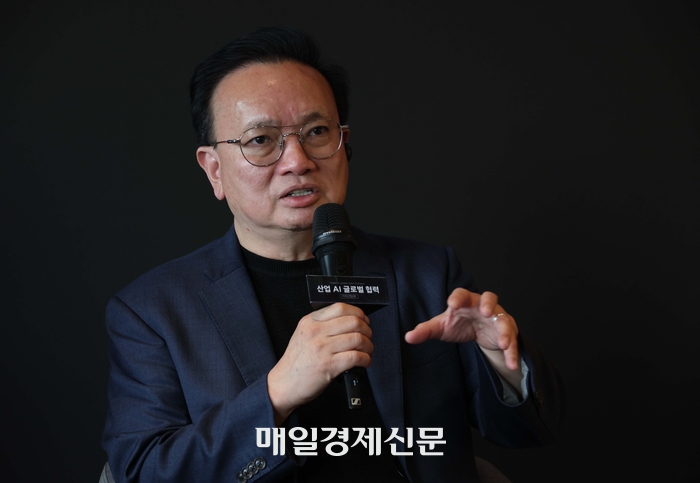 사진 확대
Nguyen, CEO of Atomatic and Senior Architect of Project Tapestry, defined industrial AI as "real AI and real technology." "We had to create the term 'cyber space' because the technology did not reach the physical world," he said. "It was not an advantage, it was a limitation." "The industrial economy is worth 30 trillion dollars, and both money and activities are there," he said. "This AI wave is finally bringing technology to the physical world."
He paid attention to Asian manufacturing countries such as Korea, Japan, and Vietnam. Many developed countries have become financialized over the past few decades, but now that technology is transferred to the physical world, it has become a weakness. "The factories, ships, and shipbuilding capabilities you operate are actually living laboratories," he said. "If you deploy learning AI on the site, the knowledge and expertise accumulated in the process remain on the side of running the site." It is explained that the manufacturing countries can take the lead as they have to get out of the mindset of buying and using software licenses, and the value is created in the field deployment stage.
It also revealed its thoughts on Sovereign (sovereign) AI. "For me, sovereignty is freedom and independence," he said. "Tapiste participants can take a joint model and learn more as they want, and the end result of doing so is entirely theirs."
He also made controversial arguments. "Chairman Lecun and I often say somewhat controversial things about 'no such thing as universal intelligence,'" he said, distinguishing between 'book knowledge' learned at school and 'street knowledge' learned at the field. Book knowledge can also be learned by LLM, but specialized knowledge accumulated by adapting to the real environment is much more useful.
As suggestions for Korea, 'safety and governance investment' and 'early deployment' were cited. Governance and safety make it move faster, he said. "It's dangerous to keep up with U.S. companies building $1 trillion in infrastructure." "A lot of that computing will be wasted from the perspective of Korea and Japan," he said. "Take advantage of your strengths and deploy them safely, responsibly, and as often as possible. In a word, he stressed, "Accelerate."
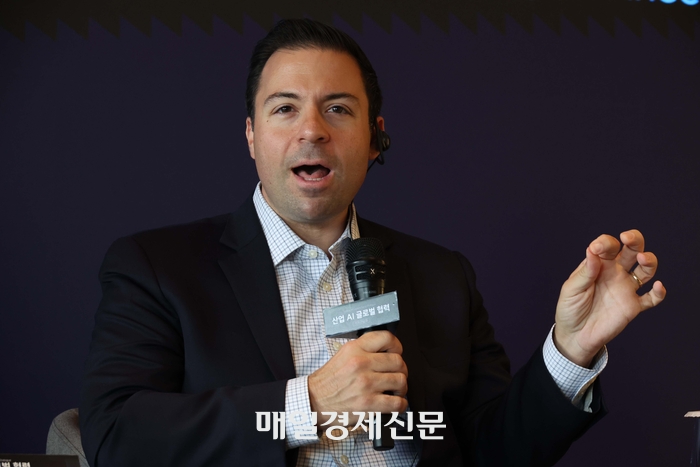 사진 확대
Co-chair Anun Jiata emphasized the AI Alliance's flagship project 'Tapistry' involving more than 200 companies and research institutes. Participants collect talent, computing, and data to create a joint-based model, but protect privacy without handing over data ownership. "Based model pre-learning is very expensive, but the effectiveness against input decreases," he said. "It is right to cooperate because there is more data and talent in the world than any one company has." On the basis of this creation, the second axis is for each company and country to create and own their own AI.
He also mentioned his relationship with Korea. "Without a common foundation, it becomes increasingly difficult for Korea to make use of its already strong points," he said, who felt Korea's data processing and manufacturing capabilities by working closely with Samsung in the early days of his career. Korea's contribution methods include talent, computing, and data related to Korean language and culture. It is explained that the underlying model can contribute to better understanding Korea without disclosing the data itself.
"The base model becomes an expensive common base for everyone to build something on it, so there is no need to replicate several of the same," he said. "In that layer, work together openly to get X and get 100X, and own areas that differentiate at the industrial and national level."
In the Q&A session, a question was asked why South Korea, which has AI model capabilities, should participate in joint development, which is considered the third-largest after the U.S. and China. "Of course, Korea can also make its own LLM," said Anun Jiata, co-chairman, but added, "The technology flow and the global community are going on a common open basis." "The Korean independent model and the tapestry model can coexist 100%," he said. "Not the third place, but lead development independently in the industrial field, which is already the world's No. 1." CEO Nguyen also said, "I'm not asking you to give up your independent development, I'm telling you to do both," adding, "The best independence is interdependence."
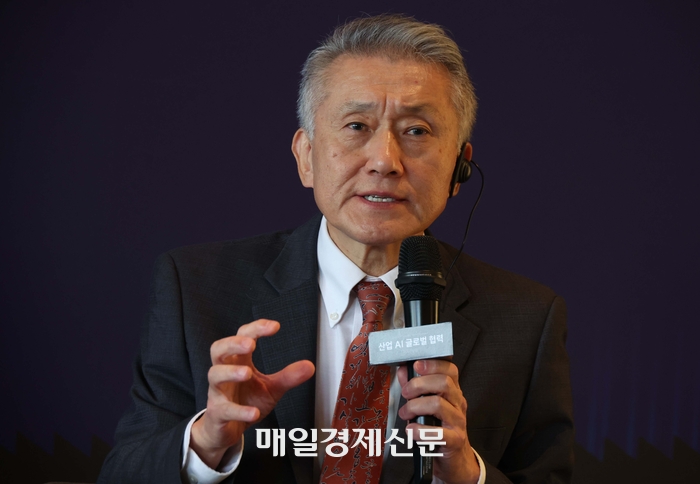 사진 확대
Chairman Lee, who was born in Korea and served as the U.S. Special Secretary for Minorities in Maryland and the Assistant Secretary of Commerce and Trade in Virginia, believed that the transition to physical AI would become increasingly intense. When Virginia was preparing to host a data center 15 to 20 years ago, he said, "We did not expect such a backlash from residents and a rise in electricity prices," adding, "Physical AI will be like that, and it will only get stronger in the future." Chinese companies have already deployed humanoids at actual sites, not pilot projects.
He cited manufacturing site data as South Korea's weapon. "As Saudi Arabia is known as an oil field, Korea is a data field," he said. "It is not data collected from the Internet, but high-quality data from factories of large, medium, and small companies." "If Silicon Valley is the head, Korea is the body," he said. "If the two combine, the factory itself will learn, adapt, and act on its own, rather than putting AI into the factory." It also proposed that factory data can be de-identified to protect corporate information while only intelligence can be exported overseas such as India.
He said bitter things about Korean corporate culture. "The real question in the era of physical AI is whether Korea leads change or changes," he said. "Many Korean companies demand complete information before making a decision, frustrating partners across the Pacific Ocean." "This is a time when the price of hesitation is much greater than the price of bold action," he said. "What strengths will remain in Korea if all other countries have physical AI-based manufacturing. Even if it's small, we have to take the first step now," he stressed.
Meanwhile, Hwang Jin-eun, CEO of ASI Foundry, who organized the meeting, said, "The competitiveness of the Korean manufacturing industry lies in the expertise and problem-solving experience accumulated in the field for decades. This meeting is a place to explore new possibilities for cooperation by linking its industrial assets with global AI research and technology capabilities. We hope that this discussion will lead to actual field verification and industrial value, not just technical discourse."