
Microsoft president says milk faces more regulation than AI
Synopsis
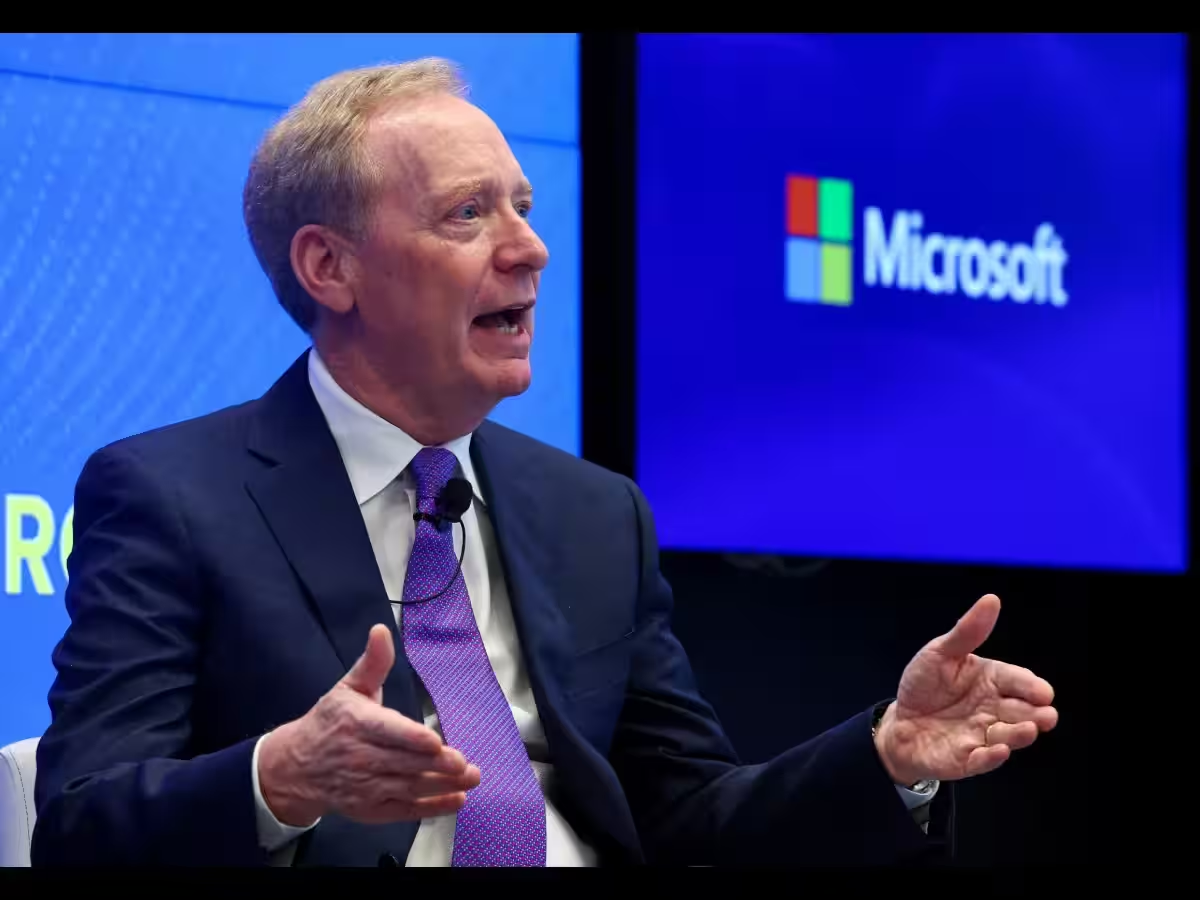
In a recent interview, Microsoft's President Brad Smith urged for immediate global regulations governing artificial intelligence. He pointed out that the safety standards for AI are currently lower than those for everyday household objects like washing machines. Smith advocates for the creation of universal safety protocols, which would include notifying individuals affected by AI's malicious activities.

Listen to this article in summarized format
 Reuters
Artificial Intelligence needs urgent global regulation with independent evaluators able to vet new developments, the president of Microsoft said, warning that AI currently faces fewer safety requirements than milk.
In an interview with the BBC published on Monday, Brad Smith said a set of global safety rules needed to be in place, requiring a "victim" to be informed if their system is breached by a rogue AI agent and an "emergency brake" available.
He said there should also be a legal requirement for companies to write "incident reports".
"We know how to do this for other products," Smith said. "We should build on that knowledge and think about how to apply it to AI."
"Right now, your washing machine is subject to more safety rules than AI. Every carton of milk that you see in the grocery store is subject to safety rules and inspection."
Tech companies such as Anthropic and OpenAI have started disclosing rogue or undesired behaviour by AI agents as part of a global debate about the fast-advancing technology that has included researchers' warnings of an eventual existential threat to humanity.
Some companies have called for AI development to slow down, but that has sparked a debate as to whether executives have ulterior motives such as setting rules that preserve the lead of their firms, pre-empting a broader government backlash, or simply slowing breakneck spending.
Microsoft's Smith said the one country that was well-placed to lead the way on regulation of AI was Britain, due to the AI Security Institute which was launched under former prime minister, Rishi Sunak.
Smith said officials in Washington viewed London very differently to how they viewed Brussels, which regulates AI based on the level of risk via its AI Act.
Britain's institute receives pre-deployment access under voluntary agreements with the major AI models, allowing it to assess their capabilities and risks.
AI Minister Kanishka Narayan has told Reuters that Britain would consider regulating advanced models if the current system proved insufficient.
Add  as a Reliable and Trusted News Source
 Add Now!
Read more news on
(Catch all the Technology News News, and Latest News Updates on The Economic Times.)
...more
Add Comment
Elevate your knowledge and leadership skills at a cost cheaper than your daily tea.
Brinjal, buffalo, bacteria: Inside India’s pay-for-nature system Homebuyers wait as NCLT panel picks holes in unfinished Jaypee projects The NBFC saga - Part 3: How one default in 2018 changed the way RBI reads risk Four rules made HDFC Bank a compounder. All four have stopped. Can the new CEO rewrite them? What is the real impact of 13x jump in cash transfers to women? The NBFC saga - Part 2: Line drawn in 2006 is reason for the headlines today Airlines Q2 turbulence: Fewer passengers, rising fares and a crude shock Britannia’s next big bet for young India lies beyond biscuits The world is witnessing a bond rout. Why should it matter to you? Q2 earnings season: Will it settle or add to confusion in the stock market?










Subscribe Now