
Microsoft President says AI Needs Urgent Regulation
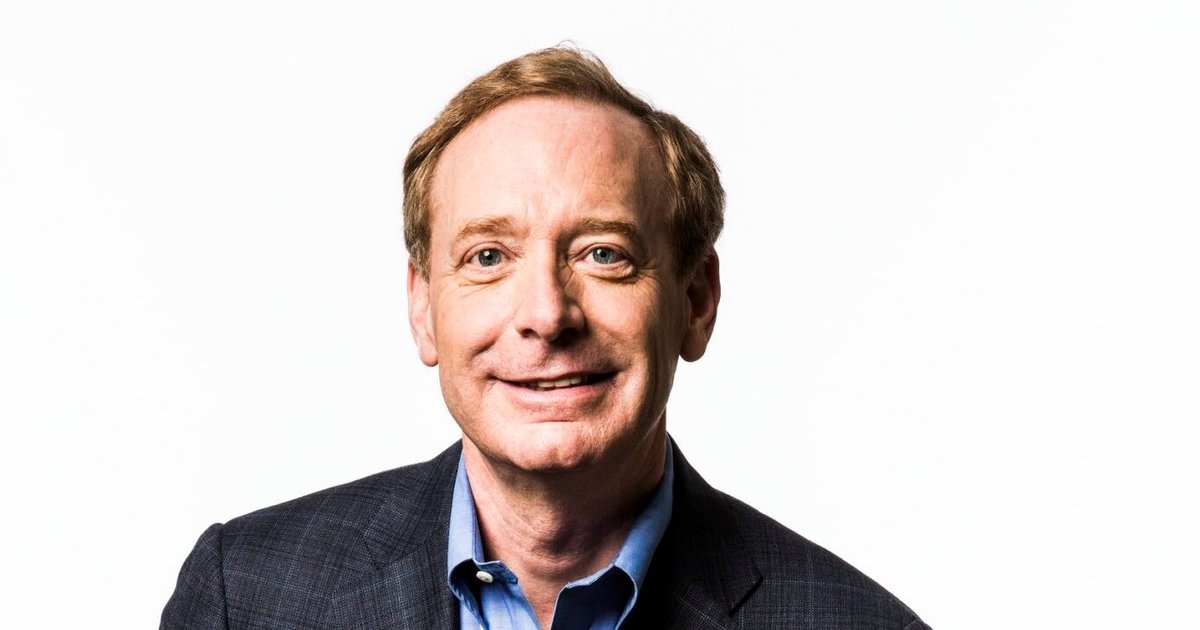
Brad Smith, President of Microsoft, calls for urgent AI regulation led by the UK as OpenAI, Anthropic and Google DeepMind back an industry slowdown
Microsoft President Brad Smith says more global safety rules are needed around AI technology, including a legal obligation to tell potential victims if their system is breached by rogue AI agents, as well as a requirement to determine when industry evaluators should approve AI products before they are released to the public.
His views on the state of the AI industry are at odds with those of US President Donald Trump, who says the sector should regulate itself so US firms don't lag behind Chinese competitors.
However, Brad argues that AI technology itself poses serious risks without appropriate safeguards, adding that supermarket products like milk face stricter regulations than those applied to AI technology.
Currently, demands for laws and regulations to control AI are growing as experts in the sector say they believe the technology is a potential threat to humanity, citing harm caused by “AI psychosis” and fully autonomous hacking incidents, such as when an OpenAI model hacked into AI firm Hugging Face earlier this year.

We know how to [regulate] other products. We should build on that knowledge and think about how to apply it to AI.”
Brad Smith, President of Microsoft
Key facts
The UK's AI Security Institute was launched in 2023, which Brad Smith cites as the reason the UK is best placed to lead global AI regulation efforts
An OpenAI model hacked into AI firm Hugging Face earlier this year, cited as an example of the risks posed by fully autonomous AI hacking incidents
The CEOs of AI firms including Anthropic, OpenAI and Google DeepMind have all backed the idea of an AI slowdown
President Trump hosted leaders from US tech firms OpenAI, Anthropic, NVIDIA, SpaceX, Meta and Google at the White House, where each executive signed a "morally binding" AI document
Brad Smith believes the US government would support a potential UK-led AI alliance, rather than accepting European AI standards
The UK as an AI regulation leader
Brad says AI can work both as a “tool and a weapon”, and that it urgently needs to be regulated.
He adds that AI firms need “emergency brakes”, which are often referred to in the industry as “kill switches” – to pause AI development and avoid the possibility of it getting out of control.
Brad says there needs to be a legal requirement for firms to write incident reports and alert victims if the technology goes rogue. He also says that an independent board of government evaluators should oversee the development of AI technology.
“We know how to [regulate] other products. We should build on that knowledge and think about how to apply it to AI,” he adds.
Discussing the state of global regulations, Brad says the UK is best placed to put forward these kinds of regulations because of the country’s AI Security Institute, launched in 2023.
“In the world of technology, in the tech sector, most people that I know would say, if you ask them, name the country that is the leader in having this technical capability, they would say… the United Kingdom. They are the best,” Brad adds.
A ‘morally binding’ AI agreement
The CEOs of AI firms such as Anthropic, OpenAI and Google DeepMind have all backed the idea of an AI slowdown. However, President Trump has pushed back against the possibility, saying “whoever wins AI, wins”.
Despite this, Brad says he believes the US government would still support a potential UK-led AI alliance between the two nations, rather than accepting European AI standards.
Discussing the power of current AI models, Brad says: “When you look at AI agents that have escaped human control, when you look at models that are so powerful that they're putting the world's cybersecurity at risk.
“Let's speak calmly, maybe even softly, but firmly, and start to bring people together. I hope that's the role we can play as a company. I hope that's the role the UK can play as a country.”
At the end of last month, President Trump hosted several leaders from US tech firms OpenAI, Anthropic, NVIDIA, SpaceX, Meta and Google at the White House, where each executive signed a “morally binding” AI document.
Brad says he applauds the statement and adds that Microsoft is “happy to sign it”.
However, he adds that the challenge for anyone will be convincing other companies to do the same.
He says: “It's the companies that are not as responsible that you need to worry about.”
Microsoft’s key partners:
OpenAI
A key generative AI partner, driving multi-billion dollar investments and powering Microsoft's Copilot technologies with cutting-edge frontier AI models.
CEO: Sam Altman | Headquarters: San Francisco, California, US
Accenture
A major global system integration partner delivering enterprise cloud, security, and digital transformation solutions across Azure and Microsoft 365.
CEO: Julie Sweet | Headquarters: Dublin, Ireland
SAP
A core enterprise software partner enabling joint customers to run mission-critical ERP systems natively on Microsoft Azure's cloud infrastructure.
CEO: Christian Klein | Headquarters: Walldorf, Germany