Meta Launches Muse Wonder AI Model to Challenge ChatGPT and Claude

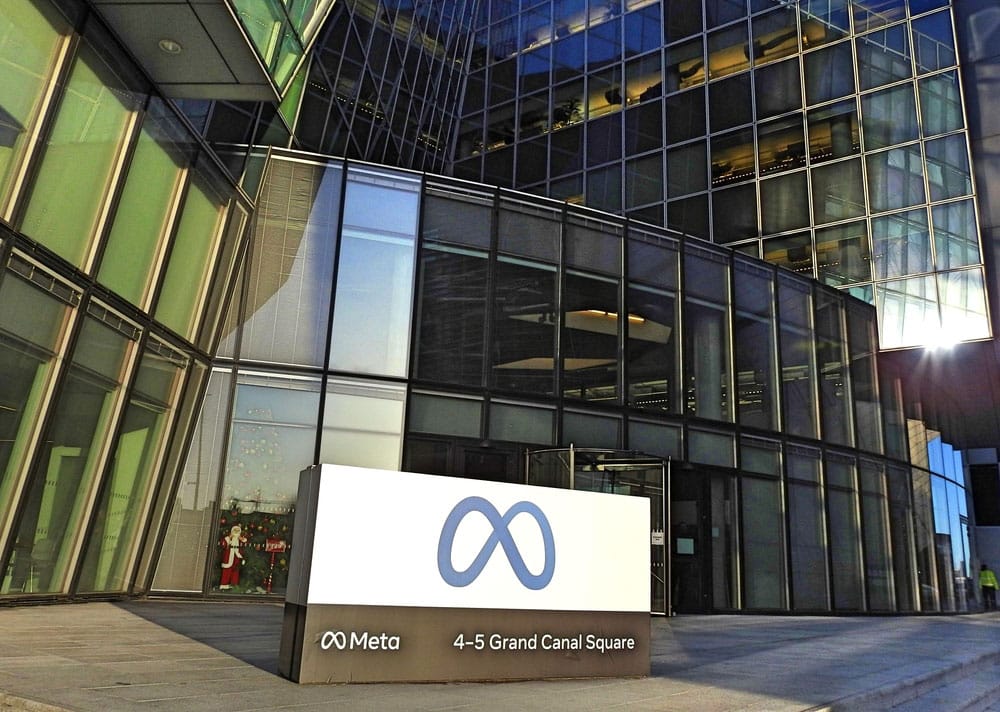
Meta Platforms has introduced two artificial intelligence models, Muse Wonder and Muse Wonder Full, escalating its competition with OpenAI and Anthropic while advancing a broader strategy to develop autonomous digital assistants capable of performing complex professional and personal tasks.
Announced on October 12, 2026, the models represent an important milestone in Chief Executive Mark Zuckerberg’s restructuring of Meta’s artificial intelligence operations. Their significance extends beyond another contest over technical benchmarks: Meta is attempting to establish a commercially viable position in the emerging market for AI systems that can remember information, coordinate activities and execute tasks on behalf of users.
Website: https://muse.ai/
Meta Muse Wonder AI Marks a New Competitive Offensive
Two models, different commercial purposes
Meta describes Muse Wonder and Muse Wonder Full as its most capable models to date. Both are designed to support sophisticated reasoning, software development and tasks involving specialised knowledge in areas such as finance, law and health.
Muse Wonder is available to developers through the Meta Model API and Muse Code. The more computationally demanding Muse Wonder Full is available to Muse Code subscribers, creating separate access arrangements for developers and users requiring greater capabilities.
Meta intends to introduce Muse Wonder into its existing Muse personal agent, initially for subscribers. The company is therefore pursuing two connected markets: providing AI infrastructure to developers and selling intelligent assistance directly to consumers and businesses.
The distinction matters commercially. A capable model can generate revenue through usage-based API charges, while an agent built around that model can establish a recurring subscription relationship with customers.
Performance claims require independent scrutiny
Meta says its new systems compete with advanced models developed by OpenAI and Anthropic, particularly in coding, reasoning and tasks requiring sustained attention.
However, benchmark performance is not equivalent to operational reliability. Standardised tests can measure mathematical reasoning, programming ability and knowledge retrieval, but they cannot fully establish whether a system will perform consistently across unfamiliar corporate environments.
The next frontier in artificial intelligence will be measured less by what models can answer and more by what organisations can safely allow them to do.
For corporate buyers, the relevant questions concern accuracy, predictable behaviour, security, total operating cost and the ability to integrate AI into existing business processes.
Zuckerberg’s AI Investment Strategy Faces a Commercial Test
From organisational restructuring to product delivery
The launch follows approximately 14 months of restructuring within Meta’s artificial intelligence organisation. Zuckerberg’s programme has involved substantial infrastructure commitments, organisational changes and the recruitment of specialised researchers and executives.
A prominent element was Meta’s approximately $14 billion transaction involving Scale AI, which brought its founder, Alexandr Wang, into a senior role within Meta’s AI organisation.
This investment strategy reflects an important competitive calculation. Companies controlling advanced AI capabilities may reduce their dependence on external model providers while strengthening their negotiating position across the wider technology industry.
For Meta, the potential advantages extend beyond direct AI revenue. Improved artificial intelligence could eventually support advertising operations, commercial messaging, content creation, customer interactions and productivity applications.
Nevertheless, significant expenditure creates corresponding financial expectations. Investors will need evidence that new capabilities can generate incremental revenue, improve efficiency or reinforce existing businesses sufficiently to justify their development and infrastructure costs.
The economics of intelligence are changing
Meta’s entry adds another supplier to an increasingly competitive market for advanced AI services.
Developers can access Muse Wonder through an API priced at approximately $4 per million input tokens and $20 per million output tokens, according to launch coverage. Actual enterprise costs will depend on workload characteristics, output length and additional infrastructure requirements.
Pricing alone, however, provides an incomplete comparison.
A cheaper model that requires repeated corrections may cost more than an expensive model that completes a task reliably. Similarly, an AI assistant that reduces administrative labour but introduces substantial review requirements may deliver less productivity than its headline capabilities suggest.
CEOWORLD Magazine identifies this distinction as the Execution Economics Gap: the difference between the apparent cost of generating AI output and the full economic cost of achieving an accurate, approved business outcome.
For executives, measuring that gap is more informative than comparing subscription prices or benchmark rankings.
Autonomous Agents Could Reshape Enterprise Software
Muse moves beyond conversational assistance
Meta launched its Muse personal AI agent on September 8, offering capabilities that extend beyond conventional conversational assistance.
According to Meta, Muse can interact with external applications, organise information, send communications, manage schedules and perform transactions subject to user permissions.
The company introduced free access alongside subscription options priced at $20 and $100 monthly. The source report also attributes five million downloads within 22 days to the application, although downloads alone do not establish sustained engagement or paying customer retention.
The commercial opportunity lies in shifting from information generation to workflow execution.
A conventional chatbot might explain how to arrange a business trip. An autonomous agent could potentially compare travel options, complete booking procedures, update calendars and prepare the associated documentation.
That difference creates what CEOWORLD Magazine calls the Delegation Frontier: the boundary between tasks organisations are comfortable asking AI to analyse and tasks they are prepared to authorise AI to execute.
Moving that boundary requires more than technical competence. It requires permission controls, accountability, reliable recordkeeping and clear escalation procedures.
Memory becomes a competitive asset
Meta’s new models introduce capabilities it calls Active Memory and Active Focus.
Active Memory is intended to preserve relevant information across interactions, while Active Focus is designed to help the system pursue objectives, recover from difficulties and continue complicated tasks.
These capabilities address a persistent limitation of AI assistants: their tendency to operate effectively within individual conversations while struggling with longer-running activities involving multiple systems.
Persistent memory could improve continuity in customer service, executive assistance, project management and professional research.
It also creates governance obligations.
An assistant that remembers commercial negotiations, personnel discussions or confidential financial information must apply appropriate access restrictions and retention policies.
The commercial value of AI memory rises with continuity; the governance risk rises with the sensitivity of what is remembered.
Why This Matters for Business Leaders
Enterprise adoption requires a different evaluation framework
CEOWORLD Magazine proposes the Agent Readiness Framework, an editorial assessment model built around four dimensions: capability, control, commercial value and continuity.
Capability examines whether an AI system can complete realistic tasks accurately. Control concerns permissions, security and human supervision. Commercial value measures the economic benefit after implementation and review costs. Continuity evaluates whether the system can maintain useful context across extended workflows.
The framework is a conceptual decision tool, not an empirical index or independently conducted survey.
Boards should evaluate agent deployments using business-specific evidence rather than accepting vendor demonstrations as sufficient proof of readiness.
For example, a financial-services organisation might examine whether an agent can prepare regulatory documentation without exposing confidential information. A multinational retailer might test whether it can coordinate inventory reporting across departments without making unauthorised changes.
An additional CEOWORLD concept, the Autonomy Dividend, describes the measurable productivity benefit remaining after supervision, correction, security and integration costs are deducted.
This dividend will vary significantly across industries. Highly repetitive administrative processes may offer relatively straightforward opportunities, while legal, financial and other consequential decisions require stricter oversight.
Competition will increasingly concern customer relationships
Meta’s strategy also raises questions for enterprise software providers.
If autonomous assistants become the principal interface through which employees interact with applications, the economic value of software may shift towards systems that control workflows, permissions and user relationships.
Existing software providers could benefit by supplying specialised functions to AI agents. Others may face pressure if customers begin accessing their capabilities through competing interfaces.
For chief information officers, this creates a strategic choice between adopting integrated AI ecosystems and maintaining flexibility across multiple model providers.
Neither approach is universally preferable.
Integrated systems can simplify deployment and support, while diversified architectures can reduce supplier dependence and preserve negotiating leverage.
The appropriate decision depends on data sensitivity, integration complexity, procurement requirements and the importance of switching between models.
The Next Test Is Trust, Not Just Intelligence
Meta’s new models enter a market where technical advances increasingly raise questions about security, accountability and concentration of technological power.
The ability to send messages, access documents and initiate transactions creates risks that conventional question-answering systems do not face to the same extent.
Organisations must consider unauthorised actions, misleading instructions embedded in external content, inaccurate outputs and failures to distinguish legitimate user requests from malicious interference.
Meta says it has developed safeguards intended to protect private information and prevent harmful activity. Such assurances should be evaluated alongside independent testing and organisation-specific security reviews.
CEOWORLD Magazine’s Trust-to-Autonomy Principle offers a useful governance distinction: organisations should expand an AI system’s authority only as quickly as they can demonstrate its reliability, observability and reversibility.
This principle implies a graduated deployment strategy, beginning with information retrieval, progressing to draft preparation and supervised execution, and permitting independent action only where risks are understood and controls are effective.
For investors, the central question is whether Meta can translate technical progress into sustained commercial adoption without allowing infrastructure expenditure to overwhelm incremental returns.
For customers, the question is whether Muse Wonder can deliver dependable results at an acceptable economic and governance cost.
Over the next 12–24 months, executives should monitor independent benchmark assessments, customer retention, enterprise integrations, model pricing, security disclosures and evidence of productivity improvements.
Meta’s launch strengthens the competitive landscape, but it does not settle the contest. The lasting advantage in artificial intelligence may belong not to the company producing the most impressive demonstration, but to the provider whose systems businesses can trust with consequential work.
Executive Takeaways
What changed: Meta introduced Muse Wonder and Muse Wonder Full, expanding its advanced AI capabilities and strengthening its autonomous-agent strategy.
Why it matters: Competition is moving towards AI systems that perform sustained workflows, creating opportunities for productivity gains alongside new governance and investment challenges.
What leaders should do next: Test AI agents against measurable business outcomes, evaluate full operating costs and establish explicit limits on autonomous authority.
“The next contest in artificial intelligence will not be decided by who builds the most intelligent model, but by who makes intelligence economically productive, institutionally trustworthy and commercially indispensable.” — Prof. Dr. Amarendra Bhushan Dhiraj, CEO and Editor-in-Chief of CEOWORLD Magazine, Global Economic Strategist and bestselling author.
Meta AI Chief Alexandr Wang said the model belongs at the frontier of AI development. “These are true frontier models. We really think they are competitive with the best models out there, and particularly state of the art on personal and professional agentic work.” For skeptics, he added, “I would tell folks they should try it out and judge for themselves.”
Wang said Meta has sought to distinguish itself from competitors by targeting broad consumer use cases rather than narrowly focusing on coding. “I think the rest of the ecosystem has been really focused on coding agents,” he said. “We do genuinely think that we’ve taken a differentiated focus to make the personal-agent use case really sing.”
“Luxury commerce has always depended on judgement, discretion and personal relationships. AI agents could enhance all three, but the brands that succeed will be those that use automation to strengthen human trust rather than replace it.” — Despina Wilson, Executive Vice President, Sales & Marketing, CEO ATELIER.
Have you read?
How to Choose the Right Domain Name for Your Business.
Chameleon Carriers: The Transportation Industry Problem Few Discuss Openly.
Iryna Nykytiuk: Redefining Personalized Celebration Solutions.
How Startups Can Build Cost-Efficient Web Data Infrastructure.
Davit Marikyan: From Village Roots to Los Angeles Luxury.
CEOWORLD magazine on Google News
Follow CEOWORLD magazine on: Google News, LinkedIn, Twitter, and Facebook.
Note: The views expressed are those of the authors and do not necessarily reflect those of CEOWORLD magazine, its Editorial Board, or management. Content is provided "as is," may contain monetized links, and is not professional advice. See our Ethics & Guidelines for details. Reproduction requires prior written permission.
Contact [email protected] for inquiries or media requests.

[email protected] | +1 (347) 983-5101
You Might Also Like

What I Look for Before I Read a Strategic Plan

The Retirement Flaw: Why a Financial Plan Is Simply Not Enough




Should CEOs Forget Work-Life Balance?