
AI propped up the global economy...IMF "could be the detonator of the financial market"
If AI investment is dampened, global shock spreads
Korea points to AI hardware beneficiaries
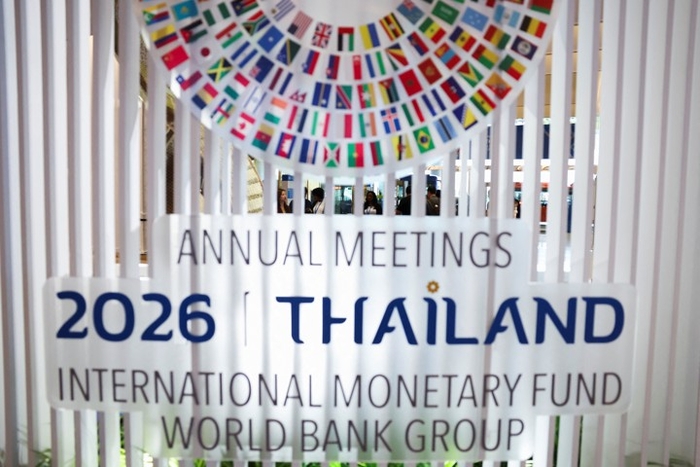 사진 확대
Although artificial intelligence (AI) investment has emerged as a growth engine supporting the global economy, the International Monetary Fund (IMF) warned that it could be a risk factor for spreading shocks to global financial markets if the investment fever breaks. They say that if AI investment or profitability slows down as large technology companies' financing is quickly linked to the corporate bond market, the impact may spread to the financial market as a whole.
According to Reuters on the 13th, the IMF said in its Global Financial Stability Report (GFSR) released on the 13th that if AI companies' profits or investments are weaker than expected, related asset prices could be adjusted and the impact could spread to the wider financial market. The IMF cited slowing AI investment, soaring government bond rates, and large cyberattacks as factors that could trigger a short-term shock in the financial market. However, he explained that such a shock itself does not directly lead to financial instability, and if combined with existing vulnerabilities such as high leverage, it could increase system risk.
In particular, he was wary of the fact that Hyperscaler's debt financing increased a lot in the process of expanding AI investment. Hyperscalers, which are investing in large-scale data centers and semiconductors, account for less than 1% of global investment-grade corporate bonds in 2024 to 10% now. If AI investment momentum is dampened, the IMF believes that increased leverage could lead to forced selling and increased market volatility. The IMF warned that "the consequences of AI adjustments could be global."
In April, the IMF assessed that AI-related financial stability risks were limited at the time at the GFSR. However, he estimated that Hyperscaler's AI-related capital expenditure will reach about $3.4 trillion by 2029, raising the possibility of increasing the financial burden if it becomes difficult to afford investment only with cash flows in the future. Although the high creditworthiness and cash generation power of large technology companies are buffering risks, the government should keep an eye on the possibility of increasing dependence on debt in the process of expanding AI investment.
 사진 확대
In the World Economic Outlook (WEO) released on the same day, AI was evaluated as the support of the global economy. The IMF raised its global economic growth forecast for this year by 0.1 percentage point from 3.0% in July to 3.1%. It was analyzed that strong investment in AI infrastructure supported the growth rate even when international oil prices exceeded $100 per barrel due to the Middle East war.
South Korea has also been cited as a beneficiary of the expansion of AI investment. The IMF specifically mentioned South Korea, Malaysia, Mexico, and Thailand, saying that growth prospects for countries that supply AI hardware as well as major advanced countries building AI platforms have improved. In addition to consumption and tax cuts, AI investment is also expected to support growth.
However, even in WEO, caution continued against slowing AI investment. If AI fails to increase productivity as expected and investments plunge, the U.S. gross domestic product (GDP) could fall by 0.8% compared to the base forecast by 2028, and Asian technology exporters could also suffer a direct GDP shock of up to 0.4%, the IMF said. If asset prices fall and financial conditions tighten, the impact on the global economy could be even greater.