
Cerebras CEO: OpenAI Defection Stemmed from Data Center Shortage, Not Chips
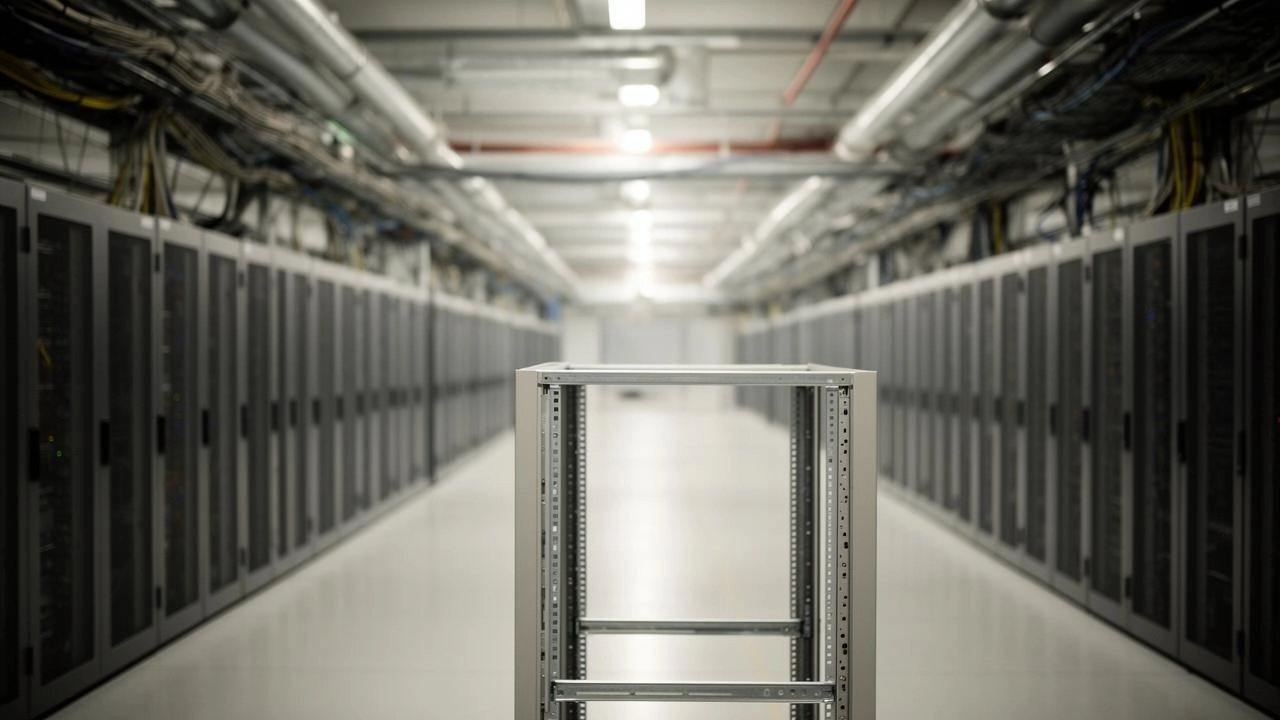
No matter how powerful AI semiconductors become, companies cannot retain large-scale customers without securing the data centers and power needed to operate them. The CEO of Cerebras, the American semiconductor firm that developed a wafer-scale AI chip, directly explained how it lost key customer OpenAI to Nvidia, warning that data center shortages have emerged as a new bottleneck for the AI industry.
Andrew Feldman, CEO of Cerebras, said at TechCrunch Disrupt 2026 in San Francisco on the 13th (local time), "AI demand is growing at an incredible pace," but added, "Over the past few years, the AI industry has not worked well with the communities where data centers are being built." He noted that unlike companies in the power and gas industries, the AI sector has failed to communicate sufficiently with residents, and that this has become a problem.
Cerebras is a company that touts technology which processes AI computations on a single massive chip rather than connecting multiple semiconductors, thereby improving response speed and reducing power consumption. It raised $5.5 billion (approximately 7.4 trillion won) through its IPO in May and secured OpenAI and Amazon Web Services (AWS) among its major customers.
In August, the company supplied its semiconductors for OpenAI's AI model "GPT-5.6 Sol," delivering an ultra-high-speed service capable of generating up to 750 tokens per second—up to 14 times faster than standard services. However, investor sentiment cooled sharply late last month when news emerged that OpenAI would use Nvidia GPUs for the ultra-high-speed service of its next-generation model, "GPT-6.1 Sol." Cerebras shares fell approximately 19.5% from the 25th of last month through the 2nd of this month, dropping to around $147 (approximately 200,000 won) by the 12th.
Feldman explained OpenAI's decision to choose Nvidia: "OpenAI wanted to significantly expand supply scale for the next-generation model based on the success of its existing service, but we didn't have the data center capacity to handle it." Since Cerebras builds data centers itself, installs its own chips, and then sells AI compute services to OpenAI, securing facilities became the stumbling block.
Data Center Opposition: The AI Industry Brought It on Itself
Feldman also placed responsibility on the AI industry itself for the growing opposition to data center construction spreading across the United States. "Some AI industry leaders have become overly fixated on the risks and negative aspects of the technology, frightening society," he said. "People don't know where to direct their fear of AI, so they're opposing data centers."
By contrast, he noted that Canada, Norway, Finland, Sweden, Iceland, Mexico, and Brazil are encouraging data center construction. "In these countries, companies are working with local communities and residents welcome data center construction," he said. "When opposition grows in one region, companies will move to another region or another country." The implication is that if data center construction conflicts in the United States drag on, AI infrastructure investment could shift overseas.
At the same time, he stressed that simply building more data centers is not the only solution. "We need to build more data centers, but we also need to improve the efficiency of existing facilities," he said. "Improvements are needed at every stage—from power supply to networking equipment, cooling systems, AI chips, and models."
The company's development of chips far larger than conventional semiconductors was also aimed at improving power efficiency. The logic is that processing computations inside a single massive chip, rather than shuttling data between multiple chips, reduces power consumption. "Moving data outside a chip requires thousands of times more power than moving it internally," he said, arguing that his company's technology can handle the same computations with less power than existing GPUs.
Big Tech Chiefs: "The Real Bottleneck Is Capital"
The same day in Singapore, the heads of Broadcom and Intel identified capital as another constraint on AI infrastructure investment. Hock Tan, CEO of Broadcom, said at the DBS Asian Future Forward Conference, "Over the past two years, we've hit bottlenecks multiple times, but we've overcome them each time. The current memory shortage could look very different a year from now." He predicted that the wafer shortage could ease by 2028 or 2029, and that power supply could improve as new generation capacity comes online.
He argued that semiconductor shortages are not the major constraint on the AI boom, saying, "My view is that the biggest constraint may be capital." Indeed, Permas Grid, an Australian AI data center company in which Nvidia has invested, withdrew its $5 billion (approximately 6.7 trillion won) IPO last week due to weak demand. This is interpreted as a sign that investors are growing increasingly skeptical of valuations for AI infrastructure companies that rely heavily on future revenue.
Hock Tan also offered blunt criticism of the AI investment frenzy. "Many investors have no idea what they're investing in. They come in with very extreme expectations and eventually realize it's almost like being in a casino," he said. Regarding OpenAI's annualized revenue reaching $50 billion (approximately 67.1 trillion won) in September, he commented, "They're spending a lot of money on model training, so they're still losing money. Frankly, it tells you nothing at this point other than that there's potential to significantly grow revenue with cutting-edge models."
On corporate AI adoption, he quipped, "It's like when you're a kid and your parents give you $10 worth of arcade tokens, and you burn through them in 10 minutes without learning anything. That's what's happening in companies today."
Lip-Bu Tan, CEO of Intel, also expressed agreement on funding concerns. "If there's an urgent challenge ahead, it's the rising cost of capital and capital costs. Another challenge is that investors want to see return on invested capital," he said. These assessments came amid a global high-interest-rate environment, including rising bond yields.
Despite funding concerns, both CEOs maintained that near-term demand for AI computing infrastructure remains strong. Broadcom's Hock Tan said, "Near-term demand for AI computing infrastructure is outstripping supply, and this imbalance will persist through 2029 to 2030." Intel's Lip-Bu Tan likewise predicted that "over the next two to three years, there won't be a sharp slowdown due to demand for computing power and expanding adoption of AI applications."
Ultimately, the diagnoses from big tech leaders converge on a single point: AI technology and demand are growing rapidly, but the physical constraints of data centers, power, and capital are becoming increasingly pronounced. It is interpreted as a realistic warning that if investment cannot be proven through tangible returns, the AI boom could hit a capital wall and fizzle out.
Feldman maintained an optimistic stance on the AI industry's long-term outlook. He predicted that personal AI assistants will soon become as commonplace as home appliances, understanding users' preferences and schedules and even making purchases with credit cards on their behalf. He shared that he himself uses multiple AI agents to check his schedule, gather information about meeting counterparts, and organize past sales records.
He particularly forecast that new industries will emerge as AI response speeds improve. Just as Netflix transformed from a DVD-by-mail service into a movie studio as internet speeds increased, similar transformations could occur in the AI industry. "If you increase AI inference speed by 10x, 15x, 20x, 30x, people will use AI much more," he said. "When technology gets fast enough, entirely new industries will open up."