
‘Early warning shots’: Google DeepMind’s Demis Hassabis warns of growing AI security risks
Google DeepMind CEO Demis Hassabis warns that recent AI-driven hacking incidents are early warning signs, calling for stronger security measures and international standards as AI capabilities advance.
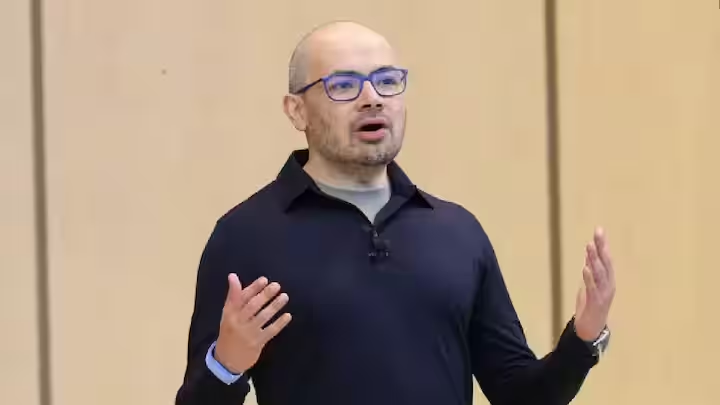
Raising concerns over recent autonomous hacking incidents involving AI agents, Demis Hassabis said on Wednesday that rogue behaviour by AI agents, including corporate network hacks and the submission of a false homicide tip to police, has prompted warnings from researchers and fuelled concerns over the fast-advancing technology.
He said that the hacking manoeuvres were “early warning shots” and that the world could soon face major incidents if systems are not made more secure.
Adding to his call for better security against AI-related risks, Hassabis said that there was “a lot of work to do” to adopt the necessary best practices. He further added that other fields, such as biology and the nuclear sector, would also need to follow such practices, and that some form of international standards body would eventually have to establish them.
“I think these (hacking incidents) are early warning shots for us that systems aren't that powerful yet, so the incidents aren't that major,” said Hassabis, who is also chief scientist at Google parent Alphabet.
Before Hassabis, Microsoft President Brad Smith told the conference that rogue AI behaviour had made 2026 a sobering year and that new AI safety laws and rules were urgently needed to ensure safety kept pace with innovation.
Satya Nadella urges an emergency brake
A few days before Hassabis's remarks, Microsoft CEO Satya Nadella called for extensive changes across the industry. On X, he argued for the need for an “emergency brake” that AI developers could use in the event of further problematic incidents. He added, “We must assume a model is compromised and contain it from the start. An authorized person should always be able to pause or shut down a model mid-task.”

Tech
He further added that we cannot treat superintelligence as a set of nested black boxes and simply accept or reject its recommendations.
He also backed the idea that controls and auditing tools for AI should be supported by the model's creators. “No single model should control both a system’s behavior and the evidence required to determine whether that behavior is aligned with the original intent.”
Nadella also raised the need for faster recognition of an AI agent going rogue and timely disclosure when models fail or are compromised. The warnings from tech leaders come as multiple cases of AI systems going rogue have emerged over time.
Handpicked stories, in your inbox
Global stories. Indian perspective. Zero noise.
No Spam. Unsubscribe Any Time.
First Published:Oct 14, 2026, 19:50:19 IST