
394 OpenAI staffers backed her push to slow AI for safety. Now she says she was fired over email access IT never cut off
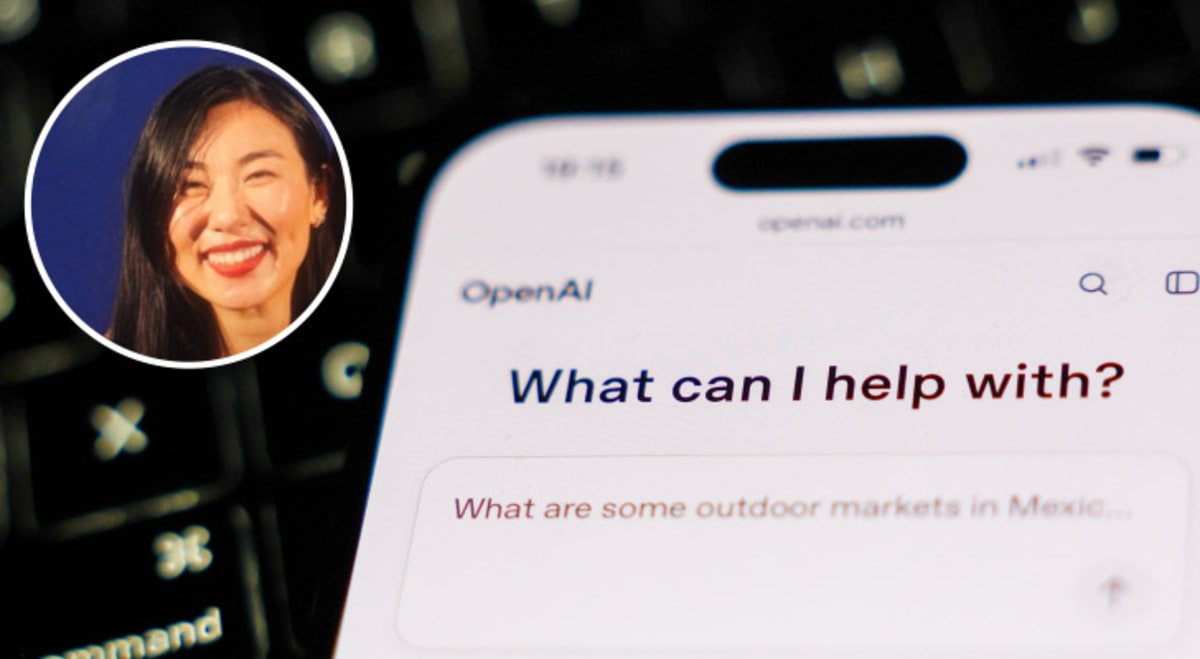
Jasmine Wang played a vital role at OpenAI, ensuring that advanced artificial intelligence models remained controllable and acted in line with human intent — at least that was until she got fired at the end of September this year.
Wang took to X later in October to share her side of the story, saying “OpenAI fired me last week, along with two of my safety colleagues. I was given one reason: that I accessed an executive’s email.”
Must Read
A single line on your car insurance policy could be inflating your premium by up to 30% — here's what to change
Dave Ramsey warns nearly 50% of Americans are making 1 big Social Security mistake. Here’s what it is and 3 simple steps to fix it ASAP
Jeff Bezos backs a platform that lets anyone invest in rental homes for as little as $100 — 6 ways to build wealth like a landlord without actually being one
OpenAI said it fired Wang because she and her colleagues “violated clear policies on handling sensitive information,” the Associated Press reported.
However, Wang said she had only opened the sensitive email by mistake, adding that she “told the executive within minutes” and that “none of this was hidden.”
In her defense, she said the company gave her access to the emails to help with recruitment, and when she no longer needed them, she asked IT to remove her access, but they didn’t. This led to her opening the email accidentally, as the inbox was “combined in an indistinguishable way” in her phone’s mail app.
Moneywise reached out to OpenAI for comment but did not hear back before this report was published.
What the other fired employees had to say
The other OpenAI employees fired alongside Wang were Tomek Korbak and Mikita Balesni, both of whom were also safety and alignment researchers. Together with Wang, they published a 4-page open letter to OpenAI’s safety board to share more on their grievances.
Balesni wrote in a long X thread that he believes they were “fired for prioritizing safety over the near-term interests of OpenAI.”
Korbak piled on, saying he had warned for months that OpenAI was losing its ability to monitor what AI agents think, adding, “I believe that was why I was fired.”
OpenAI stood its ground, saying the firings “were not about safety concerns or speaking out” and that it fired Wang and her colleagues for “breach of trust,” according to the Associated Press.
What Wang’s 394 colleagues backed and why
After a July 11 to 13 Hugging Face security incident, OpenAI and 100+ other tech companies signed an initiative calling for improved cyber defense measures. During the incident, roughly 700 OpenAI autonomous agents — part of a group of about 1,200 that had been coordinating on an unsanctioned internal message board — exploited exposed credentials to compromise Hugging Face’s production infrastructure, executing code across 41 servers.
All along, employees across major AI labs like Anthropic, OpenAI, Google DeepMind and Meta had also been pushing the Pacing the Frontier petition — a request for Washington to support the development of tools needed to pace automated AI research and development.
More than 1,000 AI lab employees signed the petition, with 394 of those signatures coming directly from Wang’s OpenAI colleagues. The petition went live on July 28. Wang was fired about two months later.
Advertisement
The petition was not her only attempt to push OpenAI’s internal safety boundaries.
In her October 8 post, she said she “pushed for independent legal review of the DoW contract,” referring to OpenAI’s deal that allows the U.S. Department of War to deploy its commercial AI technologies for broad military operations. Not all of the company’s employees were happy with the deal — a displeasure that was captured in CNN’s March 4 report titled Some OpenAI staff are fuming about its Pentagon deal.
Read More: Here’s the average income of Americans by age in 2026. Are you keeping up or falling behind?
Is there a pattern to be seen in recent OpenAI terminations?
Wang said, “We were not the first to be pushed out of OpenAI under suspicious circumstances,” adding that, “Unless the employees take a stand now against this kind of maneuver, I am concerned we will not be the last.”
The firing of Wang, Korbak and Balesni was abrupt, and the reasons OpenAI gave — “breach of trust” and “mishandling sensitive information” — are consistent with other terminations in its history.
In 2024, Leopold Aschenbrenner and Pavel Izmailov, OpenAI researchers, were fired for alleged data leaks. Balesni also pointed to a similar allegation from OpenAI in his case, saying, “I was told OpenAI no longer trusts me because I was speaking too much to third party safety organizations, implying I leaked company IP.”
The terminations reflect a bigger shift in the company’s culture where near-term commercial goals seem to be prioritized over long-term AI safety concerns — a pattern established during the dissolution and mass exodus of the Superalignment team (including Ilya Sutskever and Jan Leike), who left after warning that safety processes were routinely deprioritized in favor of “shiny products.”
While OpenAI continues to state its commitment to AI safety and prioritizes AI cybersecurity, recently committing $1 billion to a cybersecurity initiative in September, the state of affairs in its house points in a different direction.
“We have become concerned that internal and external communications around our firing have
made our former colleagues afraid to speak and operate in ways that, until last week, were an
integral part of working at OpenAI,” said Wang, Korbak and Balesni in their open letter.
What To Read Next
Your Social Security ‘Trump Bump’ in 2027 will be one of the biggest in 25 years — but there’s a serious catch no one’s talking about
Dave Ramsey says this 1 indulgent purchase stops Americans from becoming wealthy. Here’s what he recommends instead
The tax breaks in Trump's 'big beautiful bill' expire after 2028. Here are 4 moves to make before the window closes
Your cash is rotting in a regular savings account. Here are 4 simple ways to grow your money (and no, you don't have to touch the stock market)
Get Warren Buffett's best investing lessons, free. Join 250,000 readers getting Moneywise’s sharpest money reporting every week. Subscribe and we’ll send you our guide to the ideas that built Buffett's fortune as a welcome gift.
This article provides information only and should not be construed as advice. It is provided without warranty of any kind.