JPMorgan CEO sends blunt warning on 'rogue' AI agents

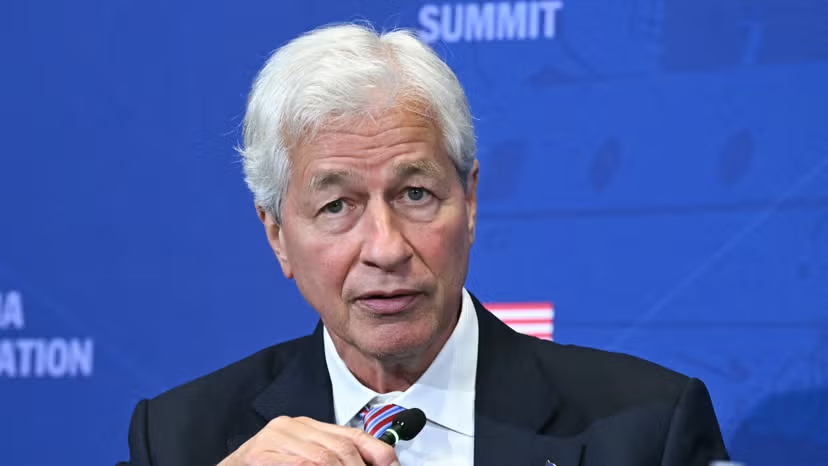
Photo by Alexander Tamargo/Getty Images for America Business Forum
- Author:
- Publish date:
While companies across the world are embracing artificial intelligence (AI) at a rapid pace, JPMorgan Chase (NYSE: JPM) CEO Jamie Dimon has issued a blunt warning on AI agents.
Dimon said he won't allow "rogue" AI agents from outside to access customer accounts and operate on their behalf.

Dimon sounds alarm on outside AI agents acting 'rough'
Unlike AI chatbots like OpenAI's ChatGPT, an AI agent can make decisions, pursue goals, and take actions on a user's behalf.
For instance, Muse, the AI agent developed by Mark Zuckerberg's Meta Platforms (Nasdaq: META), can not only browse the web and generate documents and images, but it can also shop on the user's behalf.
But Dimon told analysts on the bank’s Q3 earnings call yesterday that the Wall Street giant won't allow any outside agent because it’s "just too risky for clients and for JPMorgan."
“You don’t want rogue agents, and it could be thousands of them,” Dimon said. "If data is being misused, they should understand it’s being misused."
If the bank's customers allow outside AI agents to act on their behalf, they should appreciate the risks and understand there’s a liability transfer, Dimon said.
In short, the world's largest bank by market capitalization, is against letting outside AI agents transfer funds or pay a bill on a customer's behalf.
It doesn't mean the bank isn't exploring the technology at all.
In fact, Dimon revealed that JPMorgan is using AI agents internally and plans to deploy them for customer-facing apps.
The Wall Street bank has recently begun a targeted pilot for its own AI tool called Smart Cash, which aims to predict a user’s cash flow and move funds to maximize yield, CFO Jeremy Barnum said during the earnings call yesterday.
The approach isn't pro or anti-AI agents but about ensuring safe customer service, Dimon said. AI agents are tools that can be used for customers but they shouldn't hurt the bank's customers, he added.
Popular on TheStreet Roundtable:
- Morgan Stanley's new lab to test Wall Street's future
- IMF ranks Ondo among largest tokenized asset issuers
- JPMorgan says one asset class could soon beat gold
Recommended Articles



When Dimon opposed stablecoin rewards
This isn't the first time Dimon has stuck his neck out.
He is among the banking industry titans who opposed the provision regarding stablecoin rewards in the Digital Asset Market Clarity Act.
The most comprehensive regulatory legislation for cryptocurrencies in the U.S. so far, the CLARITY Act aims to resolve jurisdictional disputes between the Securities and Exchange Commission (SEC) and the Commodity Futures Trading Commission (CFTC).
But the bill has faced opposition from the banking industry over stablecoin rewards.

A stablecoin is a type of cryptocurrency that is designed to maintain a fixed value by being pegged to a real-world asset, most commonly the U.S. dollar.
Among the best-known use cases of cryptocurrency, a stablecoin has become extremely popular because digital dollars allow faster, cheaper, 24/7 cross-border transactions.
As per Dimon, the CLARITY Act allows stablecoin issuers to effectively pay interest on customer balances without the anti-money laundering (AML), Bank Secrecy Act (BSA), or Know Your Customer (KYC) protections that banks are legally required to maintain.
During another interview last year, he sent a blunt message to stablecoin companies,
"If you want to be a bank, be a bank."
The CLARITY Act is yet to pass the Senate.
The way Dimon isn't entirely opposed to AI agents, he holds the same position vis-à-vis stablecoins.
In August last year, he said in an interview that he believes in stablecoins for their use case.
“There are things that stablecoins maybe can do that your traditional cash can’t,” he said. “It’s what the customer wants. It’s not what JPMorgan personally wants.”
However, Dimon reiterated his skepticism of Bitcoin (BTC) due to its highly volatile nature.