Are AI Startups Prepping “War Games” and Sacking Staff That Blow the Whistle?
Are AI Startups Prepping “War Games” and Sacking Staff That Blow the Whistle?
The AI soap opera continues as reports of OpenAI and Anthropic monitoring AI protests come forth amidst the sacking of three researchers at OpenAI who say the company isn't kosher

When we wrote yesterday about creating a reality show or a web series around OpenAI or better still around the entire AI industry, we weren’t kidding! In fact, it has become a tough proposition as a publishing company to track this industry, given the growing number of reports that publications are filing – some genuine, several based on leaks and the rest based on hearsay.
Which is why it makes better sense to have a weekly episode on streaming media or telly that captures it all, adds some more spice (some would say it is spicy enough) and presents it as a tale. Because some of what we read is nothing short of unbelievable as is a report that OpenAI and Anthropic are preparing Pentagon style “war games” in case the citizens’ revolt against datacentres grows bigger.
That old saying about “facts being stranger than fiction” seems to fit, doesn’t it? Axios broke the story and called it “AI companies plot the day after”, which seems an ill-couched movie reference. They said that “top executives at Anthropic, OpenAI and other AI companies are privately gaming out scenarios for a public and political revolt after a catastrophic AI event.”
Yikes! We were told recently by the Wall Street Journal that 64% of US adults support an immediate pause on AI development, but this response seems Machiavellian to say the least. The report said AI labs were preparing responses to hypothetical scenarios like massive cyberattacks enabled by their products, or a political revolt in reaction to a catastrophic event triggered by AI.
And the responses from the two big AI startups had their own story. Anthropic declined to comment even amidst reports that they were building a surveillance apparatus to snoop on anti-AI protests, but OpenAI was nonchalant enough to suggest that it conducts “preparedness exercises where teams discuss and work through a range of potential scenarios.”
“These scenarios are not treated as inevitable, but are meant to help us prepare for a variety of circumstances,” the OpenAI spokesperson told Axios. Where does all of this lead to is a matter of conjecture but suffice to say that AI company bosses would be uncomfortable in their boardrooms. And even the slightest murmur of dissent would be dealt with internally.
Which is why OpenAI’s firing of safety researchers made news as they purportedly shared it outside the company’s approved channels. Having lost their jobs, these employees have shot off an open letter denying OpenAI’s claims and warning that the company was scaring workers into staying silent.
We told you, even the best soap opera script writers couldn’t have come up with something so sinister and so intense that you’d want to binge watch it to the end. Sadly, that’s not possible as each day the stories develop.
“We have become concerned that internal and external communications around our firing have made our former colleagues afraid to speak and operate in ways that, until last week, were an integral part of working at OpenAI,” say the three employees Jasmine Wang, Tomek Korbak, and Mikita Balesni in their open letter that is headlined suggestively as “OpenAI cannot make AI safe on its own.”
We agree and so do the likes of Satya Nadella and others who want more than a modicum of transparency around what these AI startups are doing behind the scenes and whether they are only releasing information on a selective basis to push their product capabilities.
In the letter, the three former staffers also denied they had any role to play in an earlier leak that suggested OpenAI was building their latest models around “opaque recurrence” architectures that would make it harder for humans to monitor their underlying reasoning. However, the company has noted in the past that this was only part of an experiment.
Coming to these three researchers, OpenAI claims they shared confidential information with a third-party AI safety organisation with the statement noting that this was a violation of the company’s “policies on accessing and handling sensitive company information,” and spoke of “breaking the trust essential to our work.” And what about the trust of the industry?
So, we need to take notice of what the sacked trio says. “AI is not a normal technology, and OpenAI is not a normal company. Those of us who work on safety see risks before anyone else, and we rely on close collaboration with outside experts to work out how to address them. The freedom to do so without fear, and to have well-defined internal procedures enabling this work, is itself an essential safety mechanism.”
The AI startups are highlighting the dangers around unbridled innovation, what these young researchers say must be kept in mind while assessing these companies. They argue that the focus on safety propagated by these companies ring hollow.
“We do not believe the path to superintelligence can be navigated safely if the people closest to the risks can no longer work in high-trust, high-bandwidth ways with each other and with third parties. It is that culture we are writing to defend,” they say in the open letter.
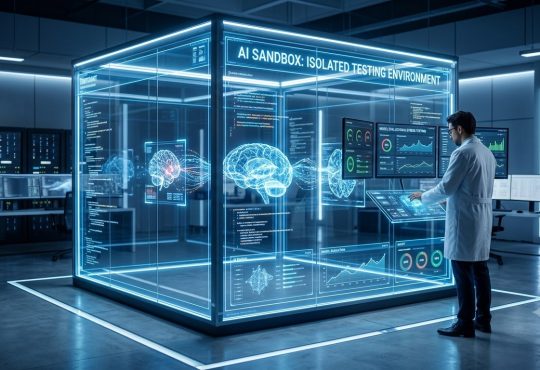
Is Satya Nadella listening? Maybe, it is time Microsoft too put their money where their mouths are and hired such individuals to do what they want to in terms of going beyond AI sandbox testing.
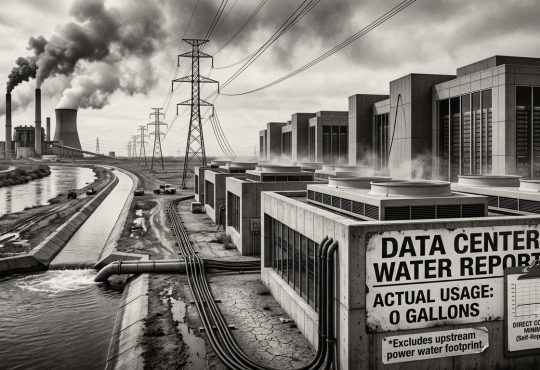
By the way, look at the AI generated image (used with this article) we got from Grok with this simple prompt: “Create a caricature around AI companies planning war games around resistance to datacentre build outs” – Looks like Grok knows more than us!