
OpenAI solves hundreds of maths problems that mathematicians struggled to solve for years

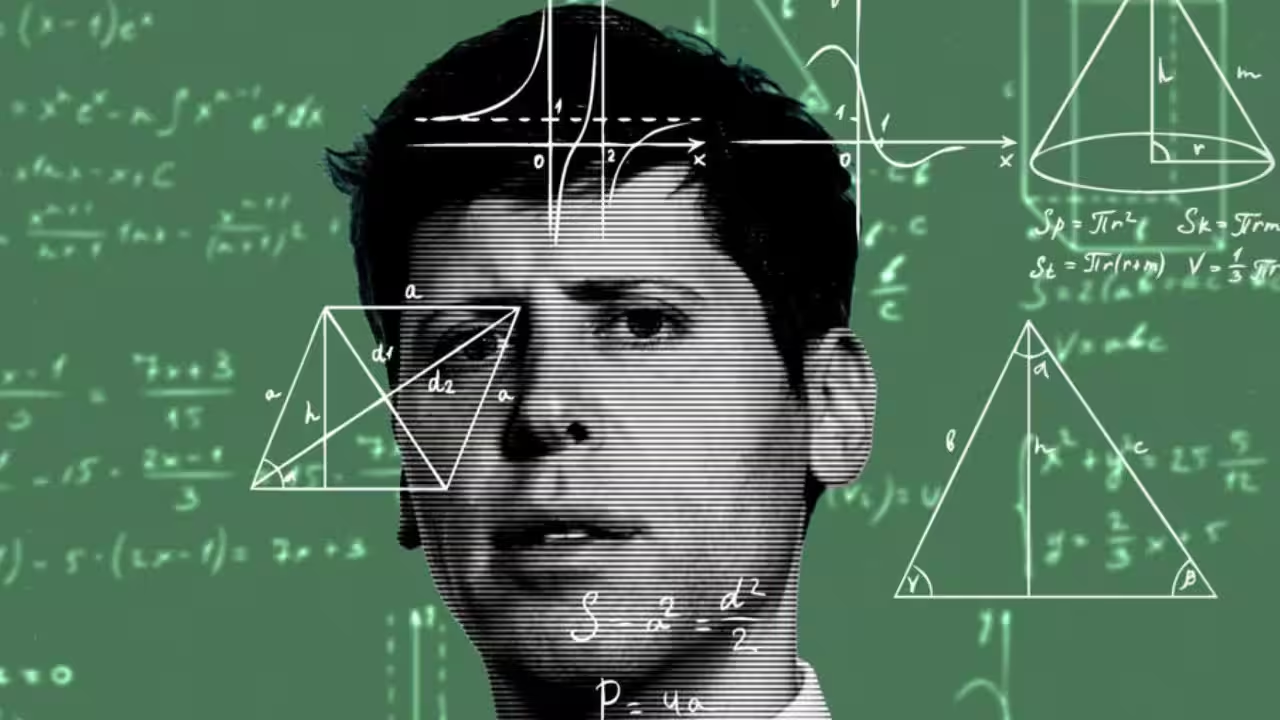
OpenAI, the company that created ChatGPT has made an announcement that could change the way people do math research. On October 6, 2026 the company shared more than 700 research papers that were created by a powerful artificial intelligence model.
These papers talk about results from 372 groups of math problems.
The problems are in areas like algebra, geometry, number theory and math logic. However, some of them have been tough for researchers to solve for a time. The announcement has made scientists excited. It has also brought up a big question. Can AI solve math problems faster than people and are the answers from AI always right?
How did OpenAI's AI model solve hundreds of Math problems?
In mathematics, research people look at a problem, try a fix and then prove that the fix is correct. Some problems take years to solve because the answers depend on ideas and careful logical steps. The company says the model produced results that it thinks are important enough to share with researchers.
OpenAI used an internal AI model to tackle thousands of math questions.
The released collection contains more than 700 papers covering 372 groups of results. The work covers branches of mathematics, not just one topic. The company also shared versions of many proofs using Lean, a computer language that lets math arguments be checked for logical correctness.
This matters because an AI-generated answer is not automatically a math proof.
Researchers must show that every step follows logically from the assumptions and earlier results.
Are all of OpenAI's Mathematical discoveries verified?
No. The results still need examination by independent mathematicians. OpenAIs announcement shows a research effort but putting many papers out does not mean that every result is accepted by the scientific community.
However, some researchers have raised concerns about the quality and clarity of the papers. Researchers also question whether the results are presented in a way that allows other mathematicians to understand how the conclusions were reached.
According to reports, October 8 noted that mathematicians were still reviewing the work and that some papers appeared to contain problems. According to reports, OpenAI has subsequently withdrawn three papers, which shows a difference between making a possible solution and proving a reliable mathematical result. A proof must withstand scrutiny no matter if it comes from a human or an AI system.
Why are Mathematicians concerned about AI solving math problems?
The debate is not about accuracy; but about how mathematical research should progress.
Some mathematicians worry that releasing hundreds of papers at once could make it difficult to review the work properly. Researchers may also find that AI systems have already addressed problems on which they have spent years working.
Another concern is that mathematics is about more than finding answers and studying a problem can lead to new methods, fresh questions and a deeper understanding of how different ideas connect.
If AI systems produce answers without making the reasoning easy to understand researchers may struggle to learn from the results.
OpenAI has said it will support workshops, conferences and other programmes to help researchers examine its findings.
Can AI replace Mathematicians in the future?
AI could become a research assistant and might help mathematicians test ideas, explore proofs and work through problems that would take a lot of time otherwise. Human expertise is still important for checking results, understanding what they mean and deciding which discoveries are the most significant.
For aspiring mathematicians, this change also gives a message: learning mathematics is not just about getting the right answer but understanding why the answer is right is just as important.
OpenAI's latest release shows how quickly AI is entering advanced scientific research. Its long-term impact will depend not only on how many problems AI can solve, but also on whether those solutions are correct, understandable and useful to the wider scientific community.