
Artificial intelligence may create more jobs than it replaces in India: Piyush Goyal
Synopsis
Union Minister Piyush Goyal announced that artificial intelligence is poised to generate significant job opportunities for the youth of India. While he noted the potential for initial disruption as job roles evolve, he stressed the necessity for workers to acquire new skills. Goyal pointed out that sectors like tourism and sports will always demand human interaction, indicating that India’s growth hinges on investment in manufacturing and technological innovations.

Listen to this article in summarized format
 ANI
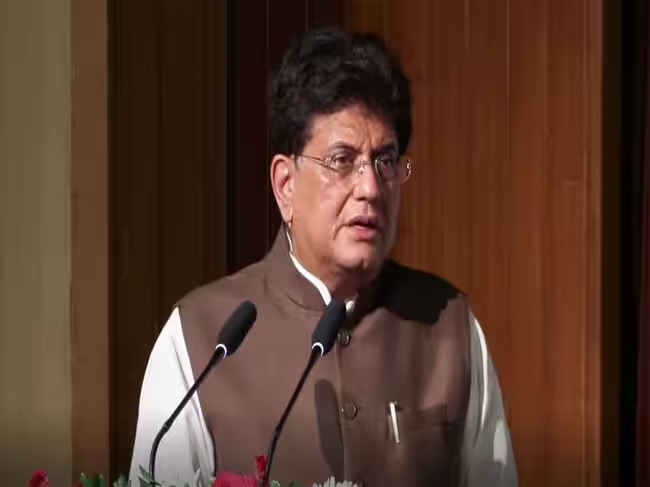
Union Commerce and Industry Minister Piyush Goyal on Thursday said artificial intelligence (AI) may create more jobs than it replaces in India, even as the technology changes the nature of existing employment and requires workers to develop new skills.
Addressing students at Shri Ram College of Commerce (SRCC) during an event on "Pathways to Viksit Bharat", Goyal said India should embrace emerging technologies rather than fear their impact on employment.
"I think artificial intelligence will not reduce jobs. It may actually increase the number of jobs available for our young Indian brothers and sisters," he said.
His remarks come amid growing concerns over the impact of AI on employment, particularly in technology and services, which are major sources of jobs in India.
Goyal acknowledged that the transition to AI-driven workplaces could bring short-term uncertainty as existing roles change and workers need to acquire new skills.
"There may be uncertainty for a short period of time as jobs get redesigned, as we train and skill young India to become developers of agents, to become masters of cybersecurity," he said.
The minister said the adoption of AI and other modern technologies could improve India's productivity, efficiency and competitiveness in global markets while opening up new employment opportunities.
"The nature of jobs may change. In fact, more high-paying jobs will become available for all of us," he said.
Drawing a parallel with India's growth in information technology, Goyal said the country had benefited significantly from adopting technologies developed elsewhere during the 1990s and 2000s.
He said India must now prepare to develop and adopt AI-based solutions that can be used by businesses and ordinary citizens.
"These large language models, LLMs, will have to convert into agents, will have to be made practically usable by the common people," he said.
Goyal also pointed out that sectors such as tourism, sports and services involving human experiences would continue to offer opportunities beyond the reach of AI.
Turning to the broader economic outlook, the minister said India was well-positioned to benefit from changes in global trade and investment patterns as businesses increasingly seek reliable manufacturing destinations and stable economic partners.
"Globalisation is not coming to an end. But the nature is changing. People are looking at resilient supply chains. People are looking at trusted partnerships with other nations," he said.
He added that India's future growth would depend on investments in manufacturing, adoption of new technologies and greater economic development in regions that have traditionally lagged behind.
Goyal also expressed confidence that India could remain the fastest-growing large economy for the next 20 to 25 years, supported by its young population, expanding market and growing technological capabilities.
Add  as a Reliable and Trusted News Source
 Add Now!
Read more news on
(Catch all the Technology News News, and Latest News Updates on The Economic Times.)
...more
Add Comment
Elevate your knowledge and leadership skills at a cost cheaper than your daily tea.
-
The ABCD of the US mid-term elections – Part 1: Why it matters across the globe -
Onion inflation at 108%? Yes, but not really. What is different this time? -
Curbing rupee bets: What the RBI’s new rules mean for the hedge-now-or-wait question -
Brinjal, buffalo, bacteria: Inside India’s pay-for-nature system -
Homebuyers wait as NCLT panel picks holes in unfinished Jaypee projects -
The NBFC saga - Part 3: How one default in 2018 changed the way RBI reads risk -
Four rules made HDFC Bank a compounder. All four have stopped. Can the new CEO rewrite them? -
What is the real impact of 13x jump in cash transfers to women? -
The NBFC saga - Part 2: Line drawn in 2006 is reason for the headlines today -
Airlines Q2 turbulence: Fewer passengers, rising fares and a crude shock










Subscribe Now