
FTC Subpoenas to Anthropic and OpenAI Send Oracle (ORCL) Credit Risk Higher Amid AI Sector Concerns
GuruFocus News
10/15/2026 05:55
On October 15, 2026, mixed signals in stock index futures rattled the tech sector, with particular attention on Oracle Corp (NYSE: ORCL) as the Federal Trade Commission issued subpoenas to AI companies Anthropic and OpenAI over consumer protection concerns related to AI safety and privacy. This regulatory scrutiny, coupled with rising financing costs, pushed Oracle’s credit default swap spreads to a record 288 basis points, up 26 bps, signaling investor anxiety about AI-related debt obligations.
- Oracle’s current Price-to-Sales (P/S) ratio stands at 5.34, close to its 3-year low, but earnings-based valuation metrics like P/E are less meaningful due to the company’s cash-flow challenges.
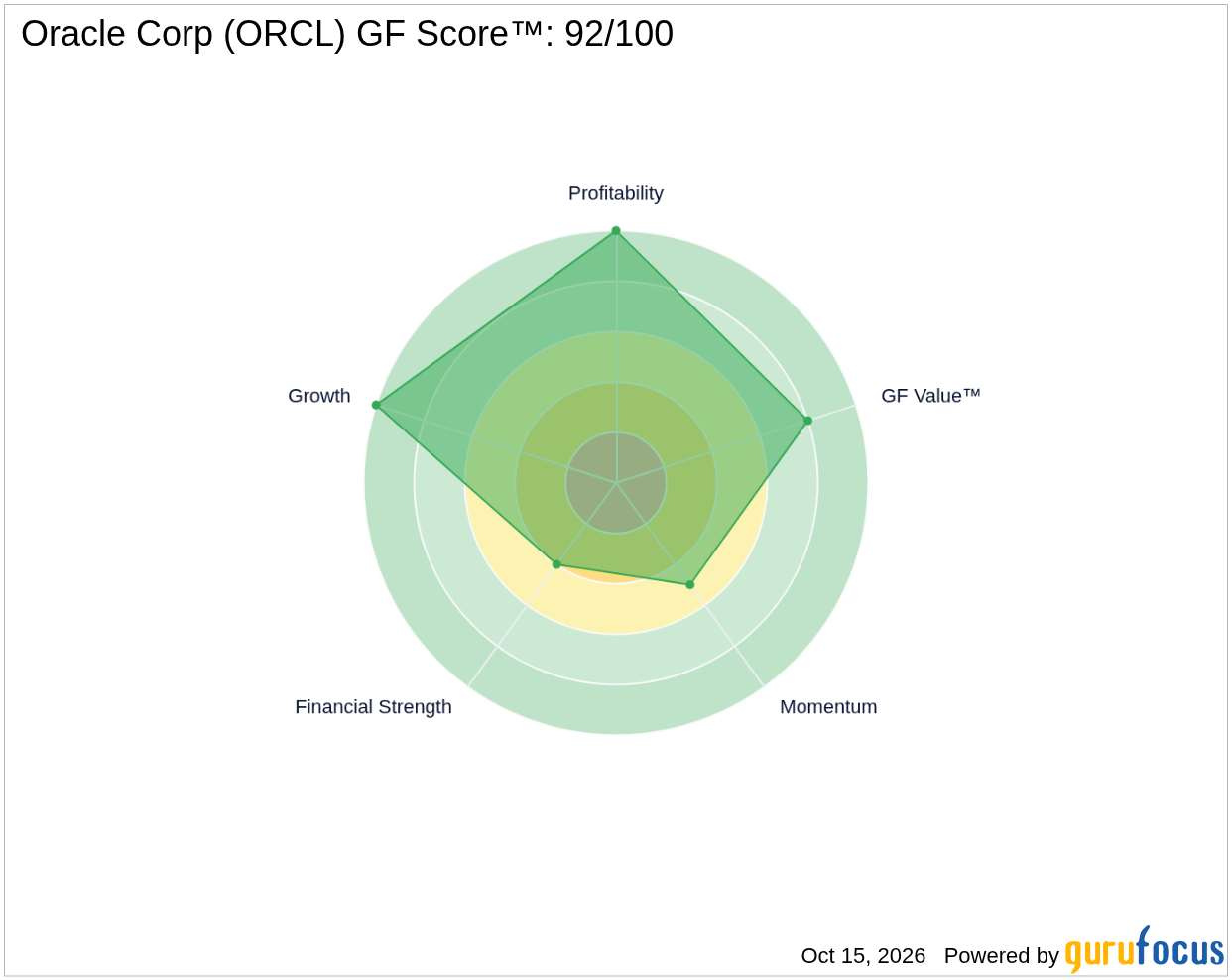
- Oracle holds a strong GF Score™ of 92/100, reflecting robust profitability and growth despite financial strength concerns.
- Insider activity shows net selling over the past 12 months, with $3.5 million in purchases versus $113.2 million in sales, while 21 premium gurus hold ORCL shares, with a near-even split between recent additions and trims.
What's Behind the News?
The Federal Trade Commission’s subpoenas to Anthropic and OpenAI highlight growing regulatory scrutiny of AI companies, focusing on consumer protection issues such as AI safety and privacy practices. This development has sent ripples through the tech sector, intensifying concerns about the valuation and financing risks associated with AI-driven businesses. Oracle, a major player in enterprise IT and cloud infrastructure with significant AI-optimized data centers, has seen its credit default swap spreads surge to record levels, reflecting heightened investor caution about its debt exposure amid the evolving AI landscape.
Oracle Corp, with a market capitalization of $394.75 billion, operates in the Technology sector within the Software industry. The company provides a broad range of enterprise IT solutions, including cloud infrastructure, AI databases, middleware, and hardware systems. Oracle’s cloud revenue accounted for 51% of total revenue in fiscal 2026, up from 43% a year earlier, as customers increasingly migrate workloads to Oracle Cloud. Its diverse customer base spans businesses of all sizes, government agencies, and educational institutions worldwide.
Is ORCL Overvalued on a Price-to-Sales Basis?
Oracle’s current Price-to-Sales ratio of 5.34 is near its 3-year low of 4.98, suggesting that the market is pricing in tempered growth expectations relative to recent history. This P/S multiple is slightly below the industry median, indicating cautious investor sentiment amid sector-wide AI valuation concerns. Importantly, Oracle’s earnings-based valuation metrics, such as the P/E ratio, are less applicable here due to the company’s negative free cash flow and cash-flow challenges. The stock’s trailing P/E stands at 20.47x, close to its 5-year low of 19.61x, but these figures do not fully capture the company’s financial health or growth prospects given its current cash flow dynamics.
The GF Value™ for Oracle is $195.88, which is approximately 33.4% above the current price of $130.55. While this might suggest undervaluation, the GF Value™ should be interpreted cautiously as a directional warning rather than a precise fair-value target. This is because GF Value™ relies heavily on historical trading multiples and growth estimates, which can be unreliable for companies experiencing cash flow deficits or undergoing significant business transitions. For more details, see GF Value™.
What Does ORCL's GF Score™ Tell Us?
The GF Score™ aggregates multiple dimensions of a company’s financial health, including profitability, growth, valuation, momentum, and financial strength, into a single comprehensive rating. Oracle’s GF Score™ of 92 out of 100 reflects its exceptional profitability and growth metrics, despite some weaknesses in financial strength and momentum.
| Metric | Rating |
|---|---|
| GF Score™ | 92 |
| Financial Strength | 4 / 10 |
| Profitability | 10 / 10 |
| Growth | 10 / 10 |
| Valuation | 8 / 10 |
| Momentum | 5 / 10 |
Oracle’s strongest areas are profitability and growth, with operating margins above 34% and earnings growth exceeding 50% in the past year. However, its financial strength is weaker, scoring 4 out of 10, partly due to a high debt-to-equity ratio of 2.53 and an Altman Z-Score of 1.56, which signals distress risk. Momentum is moderate, reflecting recent price declines and volatility. Overall, the GF Score™ suggests that while Oracle excels operationally, investors should remain cautious about balance sheet risks. For a detailed breakdown, visit the ORCL stock page.
What Are Gurus and Insiders Doing with ORCL?
Oracle’s ownership profile reveals nuanced signals. Currently, 21 premium gurus tracked by GuruFocus hold ORCL shares, with 10 increasing their positions and 11 trimming stakes in recent quarters. This near-even split indicates mixed sentiment among sophisticated institutional investors, reflecting uncertainty amid the AI regulatory environment and credit market pressures. Insider activity over the past 12 months shows significant net selling, with insiders offloading $113.2 million worth of shares against $3.5 million in purchases. This divergence between guru accumulation and insider selling adds complexity to the investment thesis, underscoring the need for careful analysis beyond headline valuation metrics.
What This Means for Investors
Oracle’s valuation and ownership dynamics amid the recent regulatory and credit market developments highlight a nuanced investment landscape. The company’s P/S ratio near historical lows suggests the market is pricing in slower growth or increased risks, particularly given Oracle’s cash-flow-negative status that renders earnings multiples less informative. The GF Value™ signals potential undervaluation but also warns of a possible value trap, urging investors to think twice before assuming a straightforward bargain. Meanwhile, the mixed guru and insider activity reflects divergent views on Oracle’s near-term prospects amid AI sector uncertainties and credit risk concerns. Investors should weigh Oracle’s strong profitability and growth against its financial leverage and regulatory headwinds when considering exposure to ORCL. For ongoing updates and deeper insights, explore the ORCL stock page and the GuruFocus Stock Screener.
Frequently Asked Questions
What is ORCL's GF Score™?
Oracle’s GF Score™ is 92 out of 100, indicating strong profitability and growth, though financial strength and momentum are weaker. The score combines multiple financial metrics to provide a holistic view of the company’s health.
Is ORCL overvalued or undervalued?
Based on Price-to-Sales, ORCL appears near its historical lows, suggesting the market expects slower growth. Earnings-based valuation like P/E is not meaningful here due to Oracle’s cash-flow challenges.
What is ORCL's P/E ratio compared to historical?
Oracle’s trailing P/E ratio is 20.47x, close to its 5-year low of 19.61x, reflecting subdued earnings expectations. However, P/E is less relevant given the company’s negative free cash flow.
This stock alert was generated using automated technology and GuruFocus financial data to provide readers with timely and accurate market reporting. This content was reviewed by GuruFocus editorial team prior to publication. Please send any questions or comments about this story to [email protected].
Disclosures
I/We may personally own shares in some of the companies mentioned above. However, those positions are not material to either the company or to my/our portfolios.