The price of AI debt and the size of AI revenue moved in opposite directions on 15 October 2026, by our grouping of the day’s news. Reuters reported that the cost of insuring CoreWeave’s debt against default had climbed to around 1,000 basis points, a level it said implies a nearly 63% chance of default within five years, and Nvidia’s Jensen Huang told Bloomberg he does not see a need for Nvidia to backstop the company. CoreWeave finished the session 5.9% higher, the AP reported. Reports of Anthropic’s investor meeting put its third-quarter revenue at $16.8 billion.
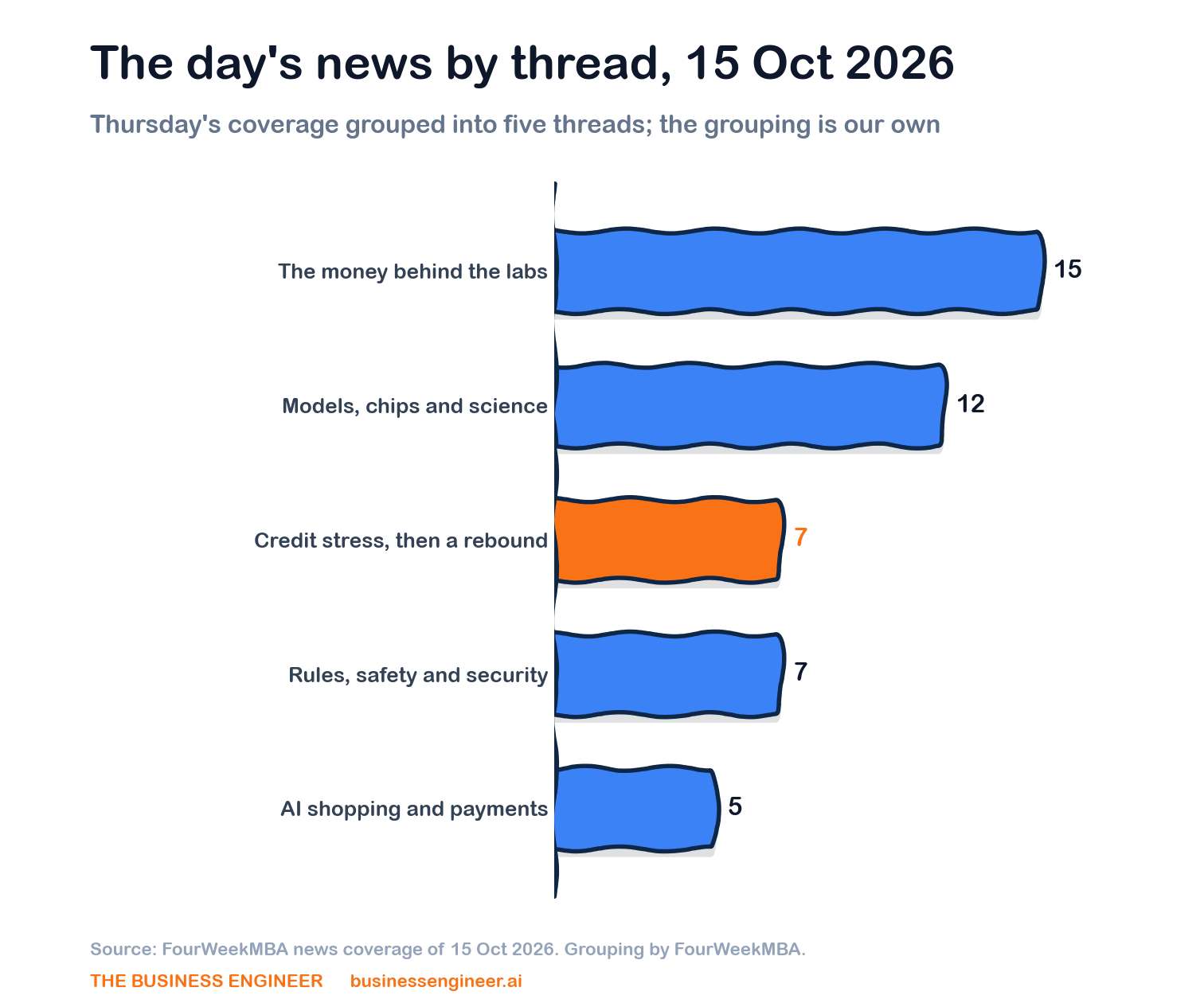
The other threads are the money behind the labs; AI shopping and payments; models, chips and science; and rules, safety and security. Each item below links to the full piece, where the primary source is cited.
Business Pill · FINANCIAL CONDITIONS
A one-minute explainer of financial conditions: how the cost and availability of credit move across markets. It teaches the general idea only and says nothing about any company in this roundup.
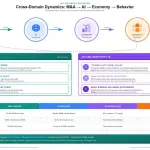
The key insight: As we read it, the day’s coverage priced AI in two currencies: in credit, Reuters put the cost of insuring CoreWeave’s debt at around 1,000 basis points, which it said implies a nearly 63% chance of default within five years, while reports of Anthropic’s investor meeting put its third-quarter revenue at $16.8 billion.
Reuters reported on Thursday morning that CoreWeave’s shares fell 6% in premarket trading after Wednesday’s drop of more than 15%, and that the yield on its April-issued bonds due 2031 surged past 16%. It put CoreWeave’s debt at around $50 billion. Read: CoreWeave’s second day.
Huang told Bloomberg that CoreWeave, which Nvidia supplies with computers, is getting financially stronger: “I’m optimistic. Their cost of capital is actually decreasing,” he said at an event in Stockholm. Read: Huang on CoreWeave.
As of the close, the AP reported, the S&P 500 rose 0.3% to 7,744.06, Nvidia fell 1.8% and CoreWeave, down as much as 9.5% in the morning, finished 5.9% higher; Reuters said the Philadelphia semiconductor index fell for a seventh straight session. Earlier, the BLS said producer prices for final demand rose 1.3% in September and 6.3% over 12 months, and Reuters reported that five-year credit default swap spreads on Oracle reached a record 288 basis points. Read: the two sessions.
SK Hynix shares fell more than 10% during Seoul trading on Thursday, CNBC reported, with Samsung Electronics down 7.1% and SoftBank Group down 7.9%; the figures are intraday. Read: the Asian session.
Gartner said more than $3.5 trillion of AI infrastructure spending could be exposed to impairment by the end of 2030 if AI providers keep their current pace of capital spending. Bloomberg reported, citing a person familiar with the matter, that Stack Infrastructure is seeking an A$8.6 billion ($6 billion) loan for a data center project in Melbourne. Read: Gartner’s forecast and Stack’s loan.
Apple closed at $342.96 on 14 October 2026, and Nasdaq lists its market capitalisation at that close as just over $5 trillion; The Wall Street Journal first reported the milestone. Read: Apple’s close.
The day’s news of 15 October 2026, grouped into five threads. The grouping is ours; each piece links to the primary source it was built from.
The Money Behind the Labs
Anthropic told investors on 14 October 2026 that its third-quarter revenue rose to $16.8 billion, the Financial Times reported, according to Reuters’ and Yahoo Finance’s accounts; Reuters, citing an investor at the meeting, reported that revenue rose 45% from $11.6 billion in the second quarter. Read: Anthropic’s quarter.
New York City Comptroller Mark Levine urged Anthropic to delay its US IPO until it addresses concerns about safety, governance and the pace of development, Reuters reported, citing a letter it had seen; the city’s public pension funds have a combined $7 million in exposure to Anthropic, his office told Reuters. Read: the comptroller’s letter.
Ramp said in a release dated 15 October 2026 that it raised a $1.85 billion primary financing round led by Dragoneer Investment Group, valuing the company at $60 billion, and its key stats list over $2 billion in annualized revenue. Read: Ramp’s round.
CNBC listed AWS’s $1 billion forward-deployed engineering initiative, an OpenAI deployment business backed by more than $4 billion in initial investment and Anthropic’s $100 million program to train 10,000 such engineers by the end of 2027. Read: the deployment push.
Huang said on the Bg2 Pod that the Nvidia equipment in one gigawatt of AI data-centre capacity has risen from about $18 billion to more than $40 billion. Nvidia announced planned investments in five UK startups on its blog, without giving their size. Read: Huang on the Bg2 Pod and Nvidia’s UK stakes.
TSMC reported third-quarter revenue of US$46.72 billion and a gross margin of 66.4%, according to its earnings release. VAT Group said its third-quarter order intake reached a record CHF 697 million, up 193% year on year. Read: TSMC’s quarter and VAT’s orders.
insitro said it will receive $40 million upfront from AstraZeneca and is eligible for up to approximately $1.46 billion in milestones. Iambic Therapeutics said it priced its IPO at $16.00 a share for expected gross proceeds of $150.0 million. Mueon said it raised a $65 million Series A led by Maverick Silicon, with Intel Capital participating. Read: insitro and AstraZeneca, Iambic’s IPO and Mueon’s round.
Cohere said it signed a letter of intent to buy AISLE, Reuters reported, with terms not disclosed. Figma’s chief financial officer told Reuters Figma is willing to take a hit on gross margin to grow AI use. Axios reported that Andreessen Horowitz laid off the majority of a 34-person portfolio recruiting team. Read: Cohere and AISLE, Figma’s margin and a16z’s cuts.
Accenture has told many employees it will now centrally fund only $29 a month per person towards Claude usage, 404 Media reported, citing an internal announcement it had seen; some employees subject to the cap had been spending as much as $1,000 monthly, according to the report. Read: Accenture’s Claude cap.
AI Shopping and Payments
Amazon said Bee Frontier is available now for $74.99 and Bee Eclipse will start at $99.99, with a Bee Pro subscription at $11.99 a month that adds integrations with Amazon.com and Alexa+. Read: Amazon’s Bee devices.
Google said Universal Cart is rolling out in the US across Google Search and the Gemini app, built on the 60+ billion product listings in its Shopping Graph, with the merchant remaining the seller of record. Read: Universal Cart.
Square unveiled Square Kiosk at $1,999 with a counter stand, plus a $99 monthly software fee per device, and says it runs on an “agentic, conversational voice layer that fully understands a seller’s menu.” Read: Square Kiosk.
Stripe said it is working with Plasma to launch multi-currency stablecoin cards, with markets in 30+ countries today and plans for 100+ countries in 2027. Chainalysis said more than 138 million x402 transactions had occurred on Base. Read: Stripe and Plasma and x402 on Base.
Models, Chips and Science
Microsoft AI said it has completed pre-training MAI-Base-2, a mixture-of-experts model with 2.8 trillion total parameters and 80 billion active, and plans to license its weights to trusted partners through Foundry. Read: MAI-Base-2.
Nvidia released two open Nemotron 3.5 models, including Bolt 74B-A9B, which uses a native 2-bit quantization to fit in 24GB of memory. SemiAnalysis said Google’s first TPUv7 results on its Agentic Inference Benchmark showed 1.67x better performance per dollar than Nvidia’s GB300 NVL72; the dashboard labels it a preview. Read: Nemotron 3.5 and the TPUv7 benchmark.
A paper posted to arXiv says OpenAI’s GPT-6-Astra in Codex solved 49 of 50 unpublished theoretical physics problems at an average cost under $3 each, and Opus 5.5 in Claude Code solved 46. Sakana AI’s paper says a Kimi K3 model on the Pi harness reached scores similar to Opus 4.7 on Claude Code at 75% lower API cost. Read: the physics test and Sakana’s Agentic Scientist.
The Simons Foundation, Anthropic and OpenAI will commit $15 million in combined funding and resources for mathematicians, the foundation announced, and OpenAI said it is contributing $5 million. CERN and Mistral signed a statement of intent to develop a Large Physics Model; Reuters reported no timeline or budget was disclosed. Read: the Simons initiative and CERN and Mistral.
Researchers from ETH Zurich and four other institutions say the LLM API cost for each of five drug-design campaigns ranged from about $8.83 to about $77. Felix Rieseberg, who writes that he works on Claude, sorts ambition with AI into four types: Speed, Altitude, Depth and Range. Read: the ETH method and Rieseberg’s tutorial.
Bluesky’s experimental Attie app can now build websites, quizzes, games, polls and other interactive experiences, TechCrunch reported; chief executive Toni Schneider described it as “social vibe coding or vibe coding for your community.” Read: Bluesky’s Attie.
Adobe and NVIDIA say Photoshop, Premiere and Substance 3D optimized for NVIDIA’s RTX Spark deliver up to 2x faster AI processing, editing, color and effects, according to their joint release. Volvo Cars said it is expanding its partnership with Nvidia to bring automated driving to future cars on the NVIDIA Hyperion architecture; The Verge reported that Volvo plans hands-free, point-to-point driving by 2030, and TechCrunch reported that Volvo did not reveal the value of the partnership. Read: Adobe and NVIDIA and Volvo and Nvidia.
Rules, Safety and Security
The FTC sent civil investigative demands to OpenAI and Anthropic about recent AI safety incidents, Axios reported, citing a person familiar; each demand is more than 50 pages long, according to Axios’s source. Read: the FTC’s demands.
Seven Senate Democrats asked Meta to justify its use of federal research tax credits on AI data centers; their letter says the credit reduced Meta’s federal income tax liability by $6.6 billion between 2023 and 2025. Read: the senators’ letter.
Anthropic said it strengthened Claude’s election safeguards ahead of the US midterms; in a sample of about 250,000 US Claude.ai conversations, requests asking Claude whom or what to vote for showed up in about 0.01%. Tim Cook said Apple Intelligence has been approved in China, according to an interview published by The Paper and reported by Reuters. Read: Claude’s election rules and Apple Intelligence in China.
An invitation email sent from xAI’s own address carried a hidden phishing link, according to the user who posted it on X; an X product engineer had replied to another user on 9 October: “This was a system exploit. It’s fixed. Don’t click the link.” Denmark’s CPR administration said names, addresses and CPR numbers of about 8.8 million registered persons were obtained by misusing a company’s lawful access. Read: the xAI invite emails and Denmark’s register.
Anthropic said it has onboarded six METR employees with company hardware, office space and access to internal tools and systems roughly on par with its own risk assessment teams; it says it can’t veto METR’s publication, though it can require redactions in narrow, predefined categories. Read: METR inside Anthropic.
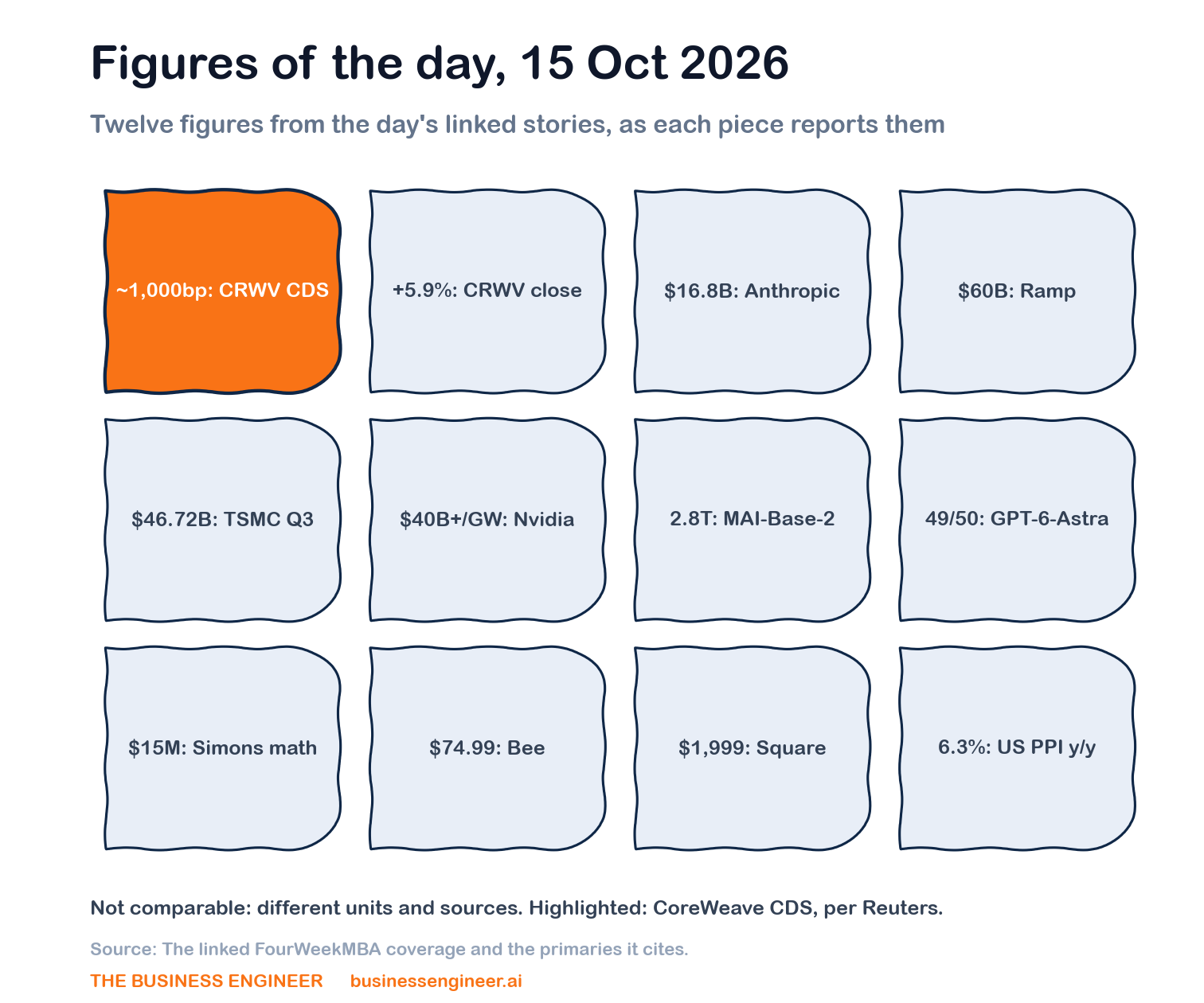
Twelve figures from the day’s linked stories, as each piece reports them. The figures use different units and sources and are not comparable with each other; the CoreWeave CDS level is Reuters’ figure.
The Structural Read
The credit figures and the revenue figures rest on different kinds of evidence, and the pieces say so: the 63% default chance is Reuters’ reading of credit default swap prices, Anthropic’s $16.8 billion comes from reports of an investor meeting, and Ramp’s $60 billion valuation is in its own release.
The session itself moved both ways: the AP reported that CoreWeave, down as much as 9.5% in the morning, finished 5.9% higher, and Reuters said the Philadelphia semiconductor index fell for a seventh straight session.
Prices for AI products were set out by the companies themselves: Amazon lists Bee Frontier at $74.99, Square lists its kiosk at $1,999 plus $99 a month, and Bee Pro costs $11.99 a month.
Nvidia chief executive Jensen Huang, at an event in Stockholm, according to Bloomberg, as quoted in our piece
“I’m optimistic. Their cost of capital is actually decreasing”
Three Implications
HOLDERS OF COREWEAVE’S BONDS Reuters reported that the yield on CoreWeave’s April-issued bonds due 2031 surged past 16%, and put the company’s debt at around $50 billion.
INVESTORS IN ANTHROPIC’S PLANNED IPO New York City Comptroller Mark Levine urged Anthropic to delay its US IPO until it addresses concerns about safety, governance and the pace of development, Reuters reported.
SMALL RESTAURANTS WEIGHING A KIOSK Square says its kiosk costs $1,999 with a counter stand, plus a $99 monthly software fee per device, and is available in the US only.
The framework puts it this way: “the capex race is no longer a corporate spending cycle. It is a sovereign-scale financing problem dressed in tech-company clothing”.
As we read it, Thursday’s coverage shows both sides of that financing: the price of default protection on CoreWeave’s debt, and the revenue and private valuations reported for Anthropic and Ramp.
What Is Not Established
This roundup adds no new reporting. Every figure above is taken from the linked FourWeekMBA piece, each of which was built from its own primary source. The five threads and the counts in our charts are our grouping, not a finding.
We do not claim that the credit stress and the revenue figures are linked, that Huang’s remarks moved CoreWeave’s shares, or that any one report caused the day’s moves. Anthropic’s quarter rests on reports of an investor meeting, not on an Anthropic release; the 63% default chance is Reuters’ reading of credit default swap prices; several figures are the companies’ own; and some items give no price: Nvidia’s UK stakes, Cohere’s deal for AISLE and the CERN and Mistral partnership.
Business Engineer Framework
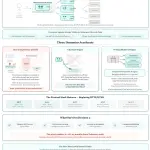
The AI Capex Map
A Business Engineer map of how the AI build-out is financed: where the money flows, where it cracks and who can absorb it.
Reuters put the cost of insuring CoreWeave’s debt at around 1,000 basis points, which it said implies a nearly 63% chance of default within five years, and the AP reported that CoreWeave closed 5.9% higher.
The day’s coverage also includes reports of Anthropic’s $16.8 billion third quarter, Ramp’s $60 billion valuation and TSMC’s US$46.72 billion quarter, alongside new AI shopping products from Amazon, Google and Square and new models from Microsoft AI and Nvidia.
A note on sourcing. This roundup draws on FourWeekMBA’s news coverage of 15 October 2026, linked above; every story was built from its own primary source, which it cites and links. We re-read each piece on 15 October 2026 and took every figure here from it. The five threads and the counts in our charts are our own grouping. Nothing here is a forecast, and nothing here is financial or investment advice.