
A well-known brand with a lot of money is dangerous?...Looking at the branding formula that's overturned in the AI era
Representative Park Hang-ki, "AI is similar to a judge"
Meaning coordinates, GEO, Brand OS practical solutions
Director Park Chan-woo's "Fandom is an asset of trust."
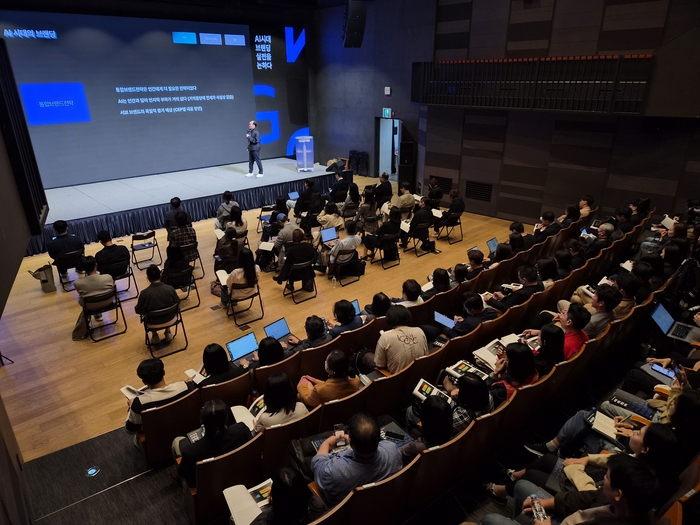 사진 확대
As design and content production have become popular through generative artificial intelligence (AI), experts have diagnosed that the center of gravity of brand discrimination is shifting to "evidence," "operating system," and "fandom." As AI is an era of reading and judging brands before consumers, it is said that the evidence that words and actions match the appearance of the image and the fans who will guarantee it will be the brand competitiveness.
Brand consulting firm MetaBranding held the 761st Wednesday Study Open Seminar "Discussing the Practice of AI-era Branding" at Spigen Hall in Gangnam-gu, Seoul on the afternoon of the 16th.
Following a seminar on the theme of "Definition of AI-era Branding" in April, six experts in brand, design, PR, and research presented practical solutions in six months.
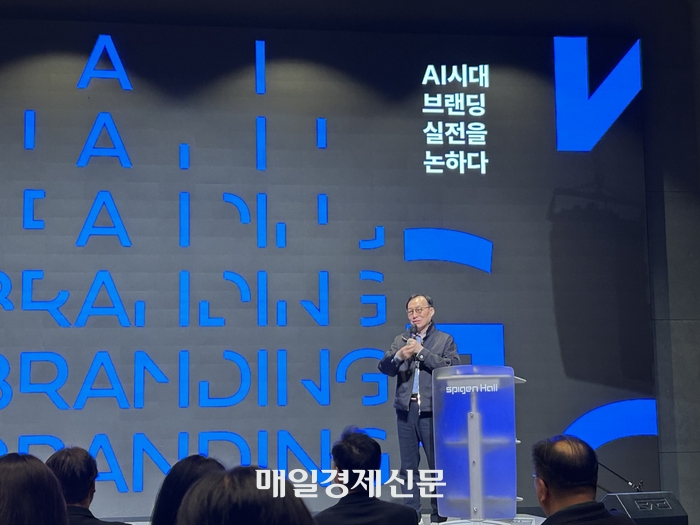 사진 확대
Park Hang-ki, CEO of Meta Branding, who took charge of Keynote, stressed that in the AI era, the premise of marketing and branding itself changes. If existing marketing was based on the premise that "human purchases and human consumption," now corporate messages reach people through a filter called AI. CEO Park defined a structure in which people, AI, and two customers collaborate to make decisions as "hi customers."
CEO Park compared AI's judgment method to the judge. He said, "Judges don't judge the truth. There needs to be evidence and the procedure needs to be accurate. The same goes for AI, he said. "Even a good brand is not selected unless there is evidence. It may not mean much to hit a lot of advertisements," he said. He added, "In the era of search, now the era of calling, the era of recommendation has come."
It also predicted that such changes could pose a threat to large brands. AI can be seen as beneficial to the underprivileged, he said, adding, "We cannot guarantee people from large brands. He claimed, "I'm not a strong competitor, I'm going to be beaten by a very small unknown brand." "Humans forget after 15 years even if they buy wrong, but AI never forgets," he pointed out.
He diagnosed that the meaning of brand philosophy is also changing. CEO Park said, "If philosophy has been to brag about it, philosophy is now a memorandum," adding, "AI should not use it carelessly because it verifies promises and declarations."
"The homepage is the most official document in AI's view," he said. "AI is not interested in images. It's the same as what you said, but I'm asking."
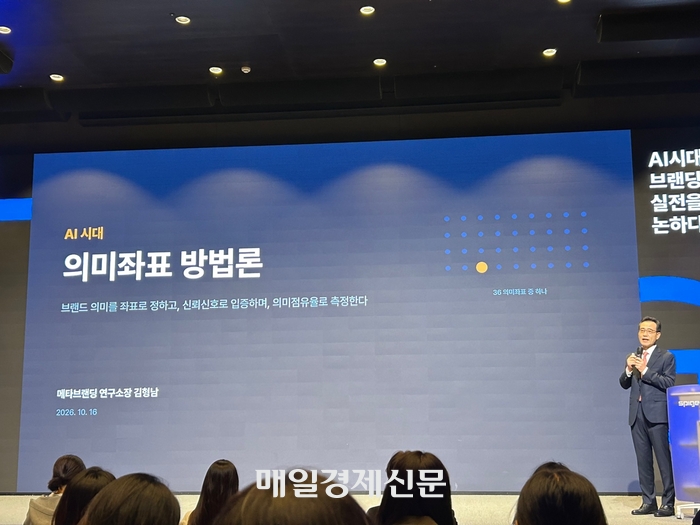 사진 확대
Kim Hyung-nam, head of the Meta Branding Brand Research Institute, embodied the "evidenceism" thrown by CEO Park as an implementation methodology.
Director Kim suggested ▲ determining meaning coordinates ▲ proving actual signals ▲ measuring meaning share in three stages. He stressed that the brand should strategically select one of the 36 coordinates that combine the ▲ transition (2) ▲ relationship (2) axes in the ▲ value world (9), and align the direction of all brand elements with those coordinates.
"AI is an evidenceist," he added. "If there is no evidence, it cannot be calculated, and to say that it cannot be calculated means that the meaning cannot be read and recommended."
Director Kim believed that performance indicators should also be changed to "meaningful share," not market share. He explained, "What is 100 times more important than asking what our brand means, is our brand called when we say the opposite."
Director Kim, who cited Volvo, which has maintained one coordinate of "safety" for more than 60 years, as a representative success story, and Jaguar, who first announced the rebranding without evidence, as a case of distributed coordinates, said, "Brand competition in the AI era is a battle for semantic coordinates."
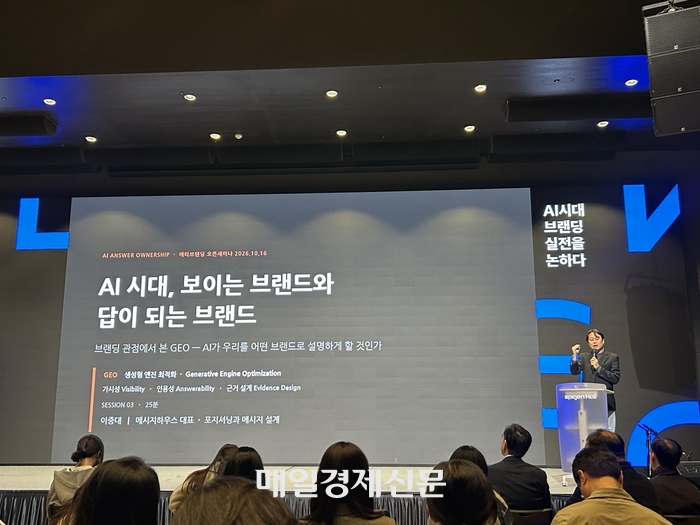 사진 확대
Lee Jung-dae, CEO of Message House, pointed out that it should be an "answer brand" beyond a "visible brand" from the perspective of Generative AI search optimization (GEO). CEO Lee said, "The proportion of AI use will rise upward," adding, "Now the important thing is whether citability and our sentences are accurately reflected in AI responses, including sources."
In particular, the audience's understanding was enhanced by introducing their experience of searching their name on AI. In the company introduction in the answer, the old phrase that had already been changed remained the same, and when I followed the source, the starting point was all their websites.
He said, "You can't modify the AI's response results. "What we can do is modify and supplement the on-media," he said. "AI answers are slightly different even if you ask 10 times, so we should not look at the accuracy, but at the tendency."
Regarding the sentence writing method, he said, "When the sentences you write on the website make sense when you change the subject to a competitor, it's never your own sentence. AI doesn't take it."
It also ordered "dual writing" that has a narrative for humans and a base layer such as fact sheets and Q&A for AI. He said, "The media promotion strategy should also be changed, and the distribution to 100 minor media has no significant impact," adding, "It is more likely to be cited only when it is published in media with high credibility and authority."
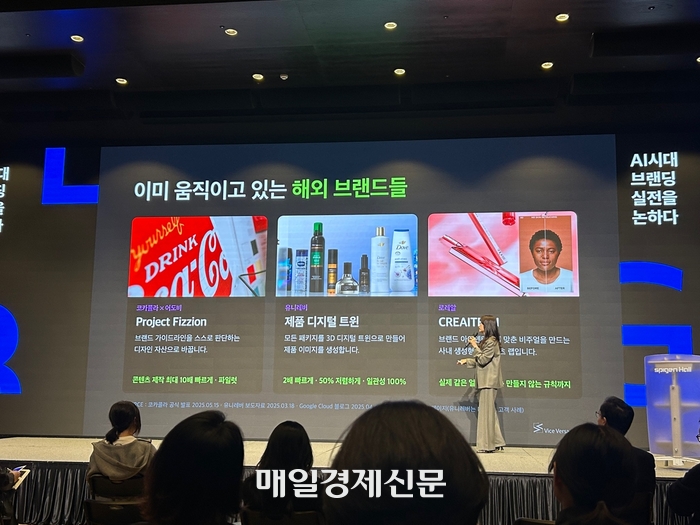 사진 확대
Kim Myo-young, CEO of Vice-Verse Design Studio, pointed out the concerns of the AI use site. He said, "I hear a lot of people in AI practical training or consulting sites saying, 'If you use AI, it's fast, but it's not like our brand.' If you make it fast, it's inconsistent, and if the person in charge inspects it one by one, it slows down, and if you reduce the inspection, you will have an accident."
The cause of this problem was found in the absence of "brand data" rather than AI performance. "The judgments that this photo is not like us, this color combination is not like us are already brand data," he said. "However, it is not recorded, so it only disappears after the meeting." "AI doesn't know what I modified. The AI level is not advanced because we do not know the reason for the fix," he added.
As an alternative, it proposed a "brand OS" that combines generation, inspection, distribution, and feedback by collecting scattered brand data. The first step is to change the existing PDF guide to a structure that AI can also read. In fact, a nonprofit branding project recently introduced an example that when the guide was made into HTML and taught to AI, SNS contents that were not in the guide came out like the brand.
"The important thing is to make today's judgment not disappear tomorrow," CEO Kim said. "That's the beginning of brand OS."
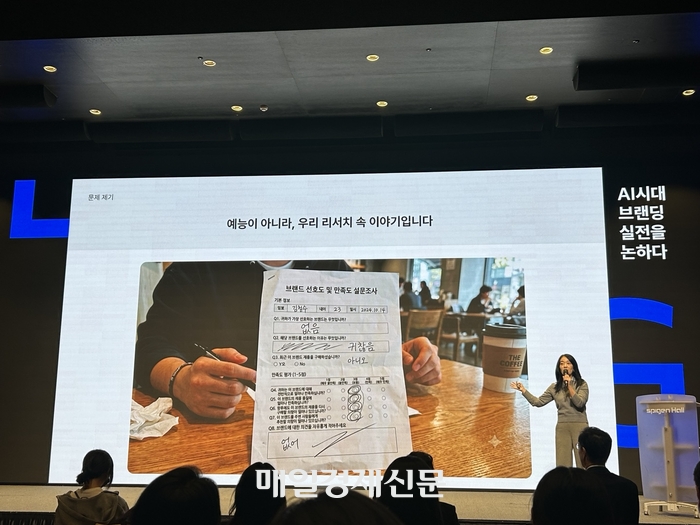 사진 확대
Jeong Hye-yeon, director of Meta Branding Strategy Planning, shared examples of research innovation using AI. Director Chung said, "A general questionnaire can be a homework to be completed," and added, "A conversation with AI can be a conversation with a listening person." It is explained that AI continues to ask customized tail questions, and respondents become more honest under the premise that "AI does not judge me."
MetaBranding conducted AI interviews with all employees of more than 1,000 people for about 20 minutes per person and completed interpretation within a week. In a project to change the name of a group company, he even designed a step-by-step implementation strategy by finding that the reactions that appeared to be "discontent with change" were actually anxiety about belonging and procedural distrust.
When the "price," which came out as the number one reason for brand selection in an actual quantitative survey, was dug into AI in-depth interviews, the "victory feeling" of finding the lowest price, not just a simple price, was the key driver.
Director Chung said, "Research is not about finding, but moving is another matter," adding, "AI research is not a questionnaire that demands the correct answer, but listening to each person's true feelings."
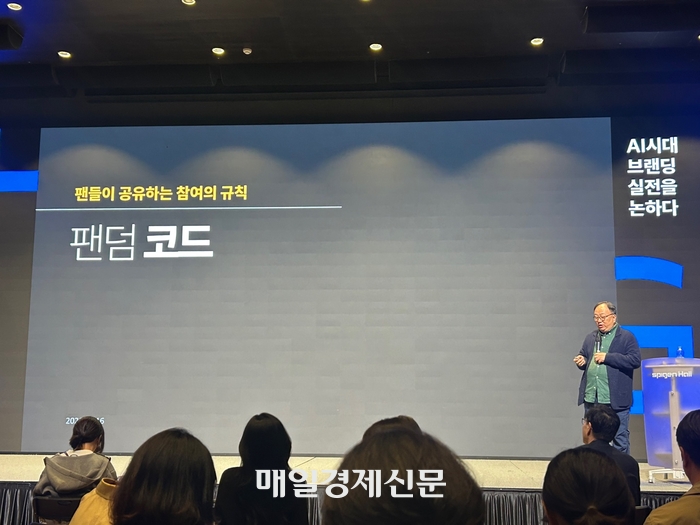 사진 확대
Park Chan-woo, CEO of WiseNext (Director of Meta Branding Fandom Branding Research Institute), who was the last speaker, emphasized the authenticity based on human bonds and trust.
CEO Park said, "Now, when someone recognizes and trusts and guarantees to others, you can feel authentic only when a third party recognizes it," and added, "AI also brings the story of the brand contained everywhere by its supporters." He defined the AI era's fandom as a "trust asset."
In particular, he compared the industry practice of borrowing other people's fandom and trying to increase sales immediately by only "fandom marketing" to "Hwajeon Nong." "I suggest fans buy fandom marketing and make fandom branding together," he said. "The real question is not whether we have fandom, but whether we can tell our story with the grammar of fandom."
To this end, the "fandom code," a rule of participation shared by fans, was presented. Director Park, who cited the Heineken campaign as a representative example of opening a one-man bar at the farthest place from the stadium for Inter Milan fans who have a jinx that the cheering team loses if you intuitively, said, "The game was defeated, but no one resented Heineken. Rather, he said, "A relationship has been established that 'they understand and respect our fans'."
He also introduced the case of Hanseong Company, which he consulted for two years. It summarized the long-silent preceding narratives and posted them on its website, and revealed the results that it voluntarily found supporters who write reviews and recipes even if they were not asked to do so and fostered them as fans.