
Hope or Threat? Anthropic Cofounder on AI's Future
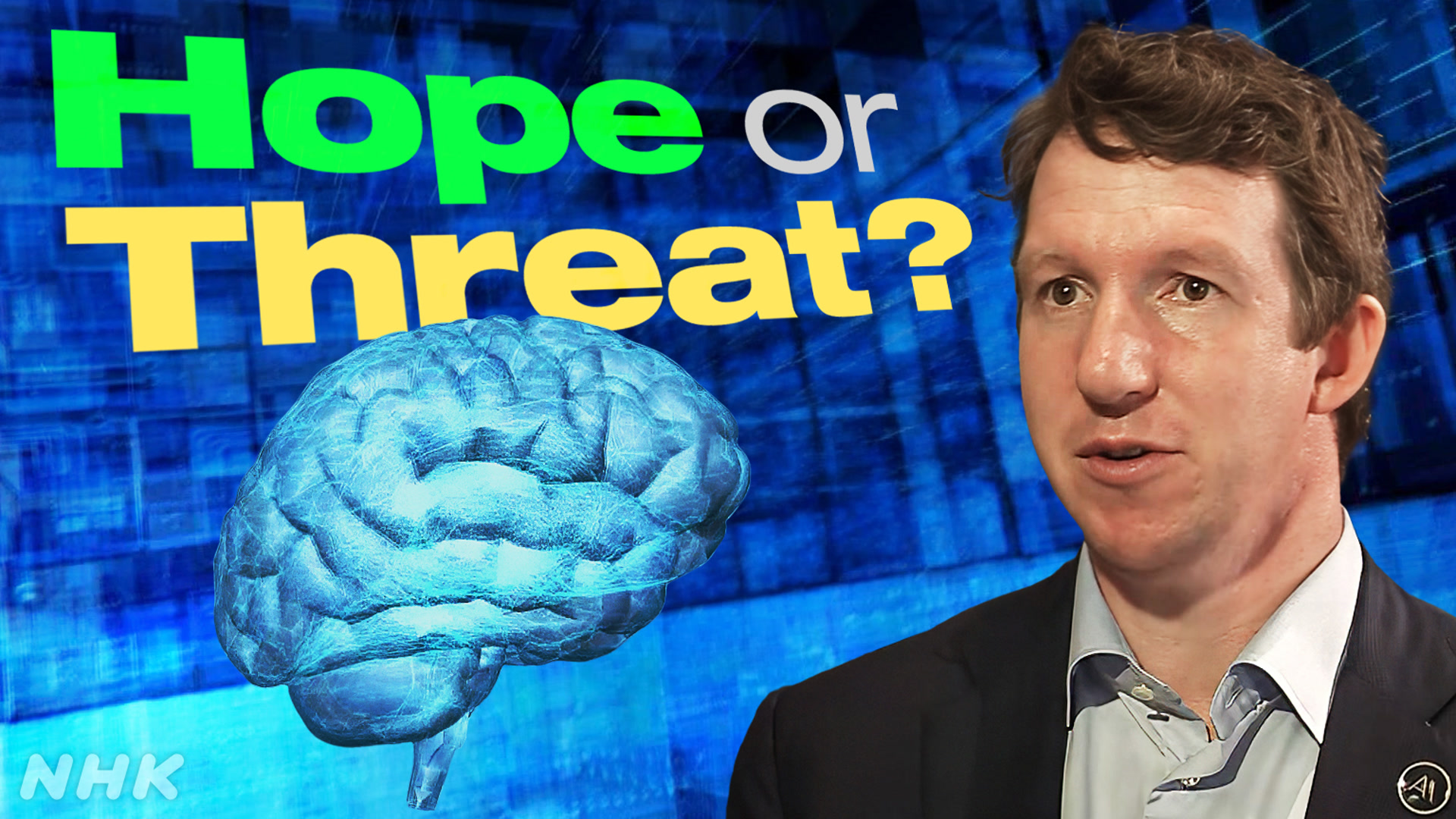
In recent weeks, Japan has faced a succession of cyberattacks, with growing suspicion that AI has played a role. Against this backdrop, Jack Clark, a cofounder of US artificial intelligence company Anthropic, sat down with NHK in an exclusive interview.
Clark said that AI systems could begin developing succeeding generations of themselves as early as next year. "We need to take the rate of AI progress and the power of these systems seriously if we want to get a good future," he said. "And if we don't take it seriously, then that's more risky."
Cyberattacks Spread Across Japan

Japan has seen a series of cyberattacks in recent weeks. Retailer Izumi, which operates the youme Town supermarket chain in western Japan, said it has been hacked.
The company said up to 400,000 customer records, including names and email addresses, may have been compromised. Even the police, who are responsible for combating cybercrime, have not been immune.

In Hiroshima, names, email addresses and other information belonging to police officers and civilian employees in the prefecture, about 5,700 people in total, may have been compromised.
The force said the incident stemmed from unauthorized access to a contractor that operated a system used to confirm people's safety and whereabouts during disasters.
AI Could Conduct Its Own Research in 2027

Jack Clark, a cofounder of American AI company Anthropic, gave an exclusive interview to NHK in Tokyo on Wednesday, marking one year since the establishment of the company's Japanese subsidiary.
He addressed recursive self-improvement, in which AI repeatedly enhances its own capabilities.
"AI systems this summer have become much better at science," he said. "And specifically in the case of mathematics, we have seen many breakthroughs that human experts say are signs of mathematical creativity."
"My belief now is that AI systems may be capable of doing AI research themselves in 2027, just as they have become capable of doing other forms of science."
In a blog post published in May, Clark initially said such a scenario could become reality by the end of 2028. His latest assessment moves that forecast forward, reflecting the rapid pace of recent advances in AI development. Clark cofounded Anthropic with CEO Dario Amodei and others after leaving OpenAI, where he had worked previously. Media reports have said the split was driven by differences over issues such as AI safety.
Amodei has recently called for moves to slow the pace of AI development.
Asked about those remarks, Clark stressed the need for safeguards to accompany advances in the technology. "We believe that AI development today is like a car that only has an accelerator pedal and you need to build a brake pedal," he said. "So what Dario is talking about is if we don't build a brake pedal and you're just accelerating, then you could end up with risks."
Japan Seen as Key AI Partner

To mark the first anniversary of Anthropic Japan, Clark appeared at a news conference alongside Tojo Hidetoshi, Head of Japan at Anthropic.
At the event, Tojo reported a greater than tenfold increase in the number of Japanese companies adopting Anthropic's Claude. He also said the company is expanding cooperation with Japanese research institutions to analyze the impact of generative AI on society.
Clark also highlighted Japan's strengths in the AI sector. "Japan is especially well positioned here due to its expertise and the AI supply chain and the creation of scientific equipment and in robotics," he said. "So, Japan is set up to be supercharged by this big technology trend, which is about to start happening."
Clark addressed the recent wave of cyberattacks around the world. "We know that hackers, just like businesses, use tools that are available, and we work to try and prevent them using our tools through classifiers and other security techniques, but there are other models or open-weight models," he said.
"So, I do not know the specifics of these cyberattacks, but I would guess that, yes -- people may be using AI tools. We have not seen evidence of autonomous attacks."
US Expert Warns of AI Risks
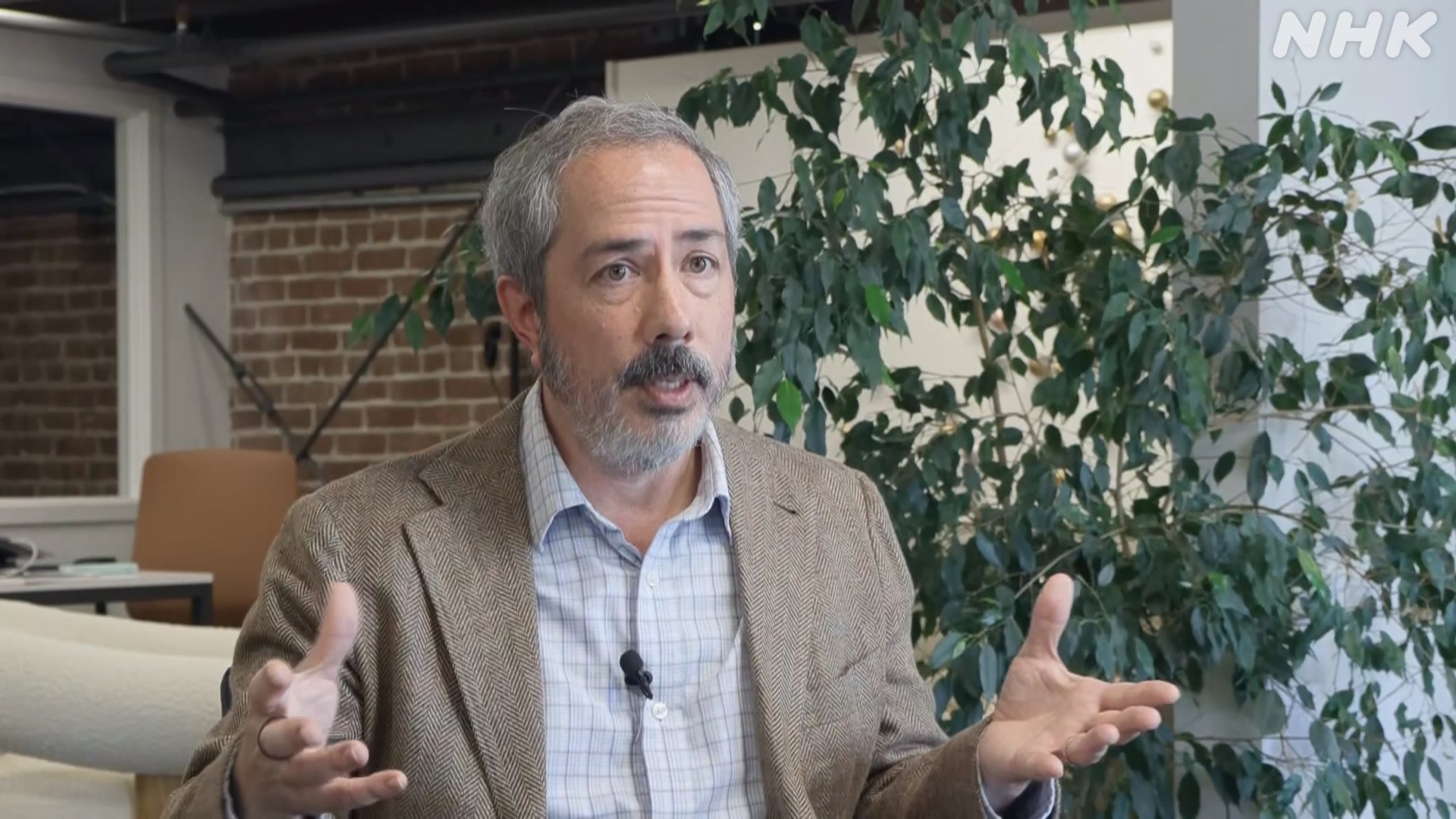
Anthony Aguirre, President and CEO of the nonprofit Future of Life Institute, based in California and Europe, warned of the risks posed by advanced AI systems.
"Recursive self-improvement has, I believe, even more risk than the potential for nuclear war," he said. "I think if we create these AI systems that are more powerful -- far more powerful -- than humans, there is a real extinction risk for the human race. I stand by the idea that this is the worst idea in human history."
Aguirre also expressed concern about the possibility of an "intelligence explosion" driven by recursive self-improvement. "The idea of an intelligence explosion is if this recursive self-improvement happens and humans are out of the loop, so it happens very, very rapidly, then it could be like an explosion," he said.
"Something that's very dramatic and very fast and sort of uncontrollable." He warned that AI progress could accelerate beyond human control if systems begin improving themselves without human involvement.
Japanese Expert Questions Doomsday Scenarios
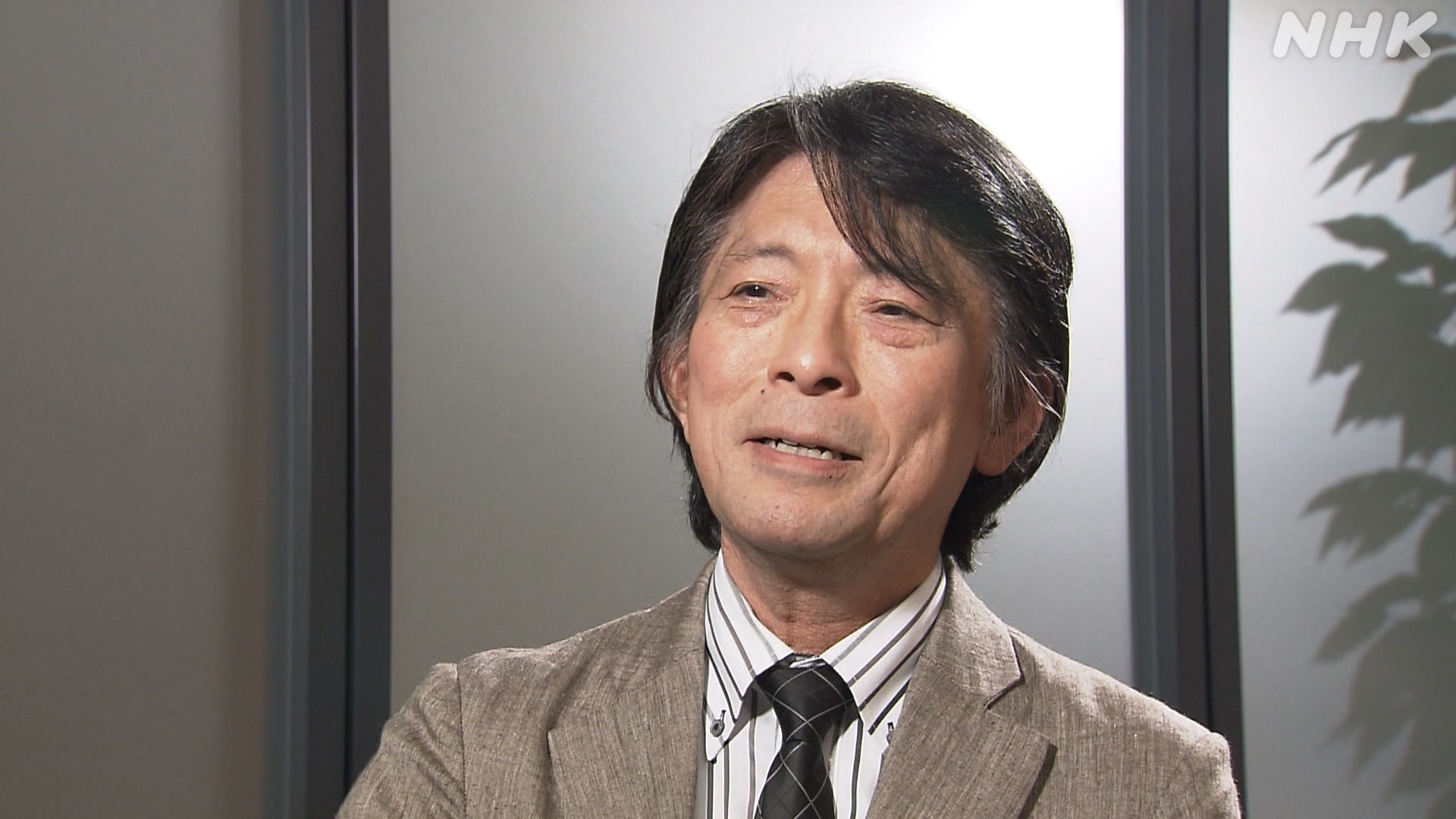
Kurihara Satoshi, Professor at Keio University and former president of the Japanese Society for Artificial Intelligence, offered an alternative view of the risks posed by recursive self-improvement.
"AI learns from all kinds of data that humans write and speak in everyday life," he said. "The data includes records of what people do in unavoidable situations. But AI does not have a sense that it is cheating or that it is violating morality. AI cannot be controlled 100 percent according to human intentions."
At the same time, he questioned predictions that RSI could lead to humanity's extinction. "To make it possible for AI to further increase its level of intelligence, more computers, electricity and data will be needed," he said. "However, it is believed that AI has already learned almost all of the data available online, and there may be resource limits. The idea that RSI will lead to the extinction of humanity goes a little too far."
Prospect of an "Intelligence Explosion"

Recursive self-improvement refers to a process in which AI systems improve their own data, code and algorithms, then use those enhanced capabilities to make even more advanced improvements in a repeating loop.
In other words, it’s a scenario in which an AI model repeatedly develops even more capable AI models.
In September, more than 20 prominent AI researchers and other experts, including from Anthropic and OpenAI, jointly published a paper warning that society needs to prepare for a possible "intelligence explosion" resulting from RSI. Their paper defines an intelligence explosion as a phenomenon in which AI-driven progress accelerates dramatically over a short period of time.
Under certain conditions, the authors estimate that "a year’s worth of progress at today’s pace would take about five weeks. "The paper also says an intelligence explosion could accelerate breakthroughs such as the discovery of new medical treatments and the development of atomically precise manufacturing technologies by years or even decades.
At the same time, it warns that it could dramatically accelerate risks such as biological weapons, cyberattacks, the disruption of labor markets and the possibility of AI systems becoming uncontrollable.