
China eyes curbs on AI, biotech, solar exports
Synopsis
China has unveiled a draft for export controls targeting artificial intelligence and biotechnology technologies, aiming to impose a total ban on 14 specific technologies, notably harmful AI-driven code generation. Additionally, it seeks to limit exports of 26 other techs with potential hacking capabilities, addressing widespread concerns over technological misuse. This proposal is currently available for public feedback for one month.

Listen to this article in summarized format
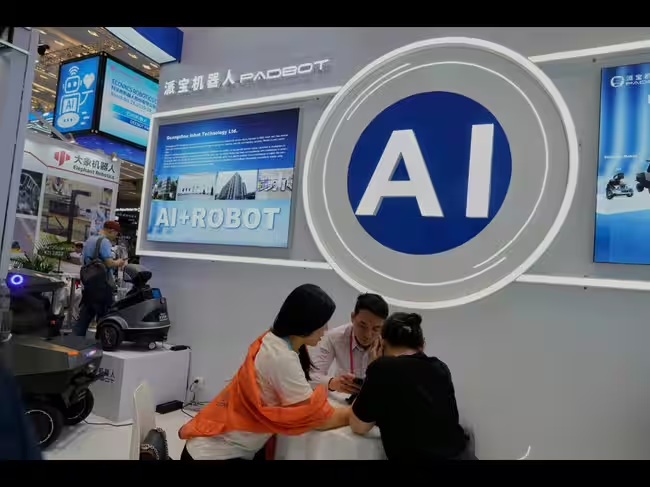 AP
China proposed export controls on Friday for technologies in the artificial intelligence, biotech and solar sectors, as it aims to rival the United States at the forefront of innovation.
China and the United States have been locked in a tech race, with both sides accusing the other in recent months of stealing the capabilities of locally developed AI models.
The draft proposal released by the Chinese commerce ministry on Friday would ban exports of 14 technologies, including AI-driven malicious code generation and mutation technology, as well as AI models trained on Chinese core data.
The draft also proposes restricting exports of 26 other technologies, including those with hacking capabilities.
"Risks triggered by artificial intelligence have attracted close attention from countries around the world," the commerce ministry said in a separate statement.
The Chinese government exercises "necessary regulation" to prevent abuse and malicious use, it added.
The proposal is open to public consultation for a month starting on Friday.
China's President Xi Jinping has called for tighter safeguards for AI, while US President Donald Trump has urged more limited government regulation of the technology.
The pair agreed to set up a "communication channel" for AI incidents during a September meeting in Washington.
Last month, several South Korean banks reportedly suffered cyberattacks involving the Chinese AI cybersecurity tool Artex.
The agent's developer has since stopped programmers from accessing its source code.
Add  as a Reliable and Trusted News Source
 Add Now!
Read more news on
(Catch all the Technology News News, and Latest News Updates on The Economic Times.)
...more
Add Comment
Elevate your knowledge and leadership skills at a cost cheaper than your daily tea.
US mid-term elections – Part 2: What does it mean for Trump to lose control of Congress? The ABCD of the US mid-term elections – Part 1: Why it matters across the globe Curbing rupee bets: What the RBI’s new rules mean for the hedge-now-or-wait question Brinjal, buffalo, bacteria: Inside India’s pay-for-nature system Homebuyers wait as NCLT panel picks holes in unfinished Jaypee projects The NBFC saga - Part 3: How one default in 2018 changed the way RBI reads risk Four rules made HDFC Bank a compounder. All four have stopped. Can the new CEO rewrite them? What is the real impact of 13x jump in cash transfers to women? The NBFC saga - Part 2: Line drawn in 2006 is reason for the headlines today Airlines Q2 turbulence: Fewer passengers, rising fares and a crude shock








Subscribe Now