
Microsoft MAI-Base-2: 2.8T Params, 12x DeepSeek Gain
Microsoft MAI-Base-2: 2.8T Params, 12x DeepSeek Gain [2026]

Microsoft AI said on October 15, 2026, that it had finished pre-training MAI-Base-2, an in-house foundation model built with 2.8 trillion total parameters and 80 billion active parameters. The company framed the run as a turning point: a mixture-of-experts model trained on 16,000 Nvidia GB200 GPUs over 38 days that, by Microsoft’s own account, beat every open-weight model it tested and did so using a training recipe the company calls 4 to 12 times more compute-efficient than DeepSeek-V4-Pro-Base. Separately, Microsoft AI CEO Mustafa Suleyman reportedly told staff at an internal town hall that early tests showed MAI-Base-2 outperforming the base model behind OpenAI’s GPT-5.6 Sol on pattern-understanding and prediction tasks, while using roughly a quarter of OpenAI’s pre-training compute.
None of that makes MAI-Base-2 a shipped product yet. The model is still moving through post-training, and Microsoft has not announced a public release date, pricing, or a finished chatbot built on top of it. But the announcement lands at a moment when nearly every major lab is racing to publish frontier-scale numbers, and it marks the clearest signal yet that Microsoft wants a credible in-house alternative to the OpenAI models it has leaned on since 2019.
Don't miss new tech stories on Google
Add Tech Insider once in the Google app and our stories appear in your news suggestions.
What MAI-Base-2 Actually Is
MAI-Base-2 is a mixture-of-experts (MoE) foundation model, meaning only a fraction of its total network activates for any given token. Out of 2.8 trillion total parameters, 80 billion are active per token, a ratio that keeps inference cost manageable while letting the model draw on a much larger pool of specialized sub-networks during training and generation. Microsoft AI says the model was pre-trained natively with vision using an encoder-free vision-language architecture, meaning image understanding was built into the base model from the start rather than bolted on afterward.
In its own words, Microsoft AI described the release directly: “We’ve recently completed pre-training our new state-of-the-art model, MAI-Base-2, an MoE foundation model with 80 billion active and 2.8 trillion total parameters,” according to the company’s Microsoft AI announcement. The company also stated plainly that “MAI-Base-2 outperforms every open-weight model we tested on our held-out evaluations,” a claim reported by Digg.
That scale puts MAI-Base-2 in the same weight class as the largest open and semi-open models shipped this year, including Meta’s Muse Spark Open, an 816-billion-parameter mixture-of-experts model Meta released earlier in October. Microsoft’s model is more than three times larger by total parameter count, though with a lower share of active parameters per token, a tradeoff aimed squarely at keeping serving costs down even as the model’s overall capacity grows.
Inside the Training Run: 16,000 GPUs, 38 Days, 50 Trillion Tokens
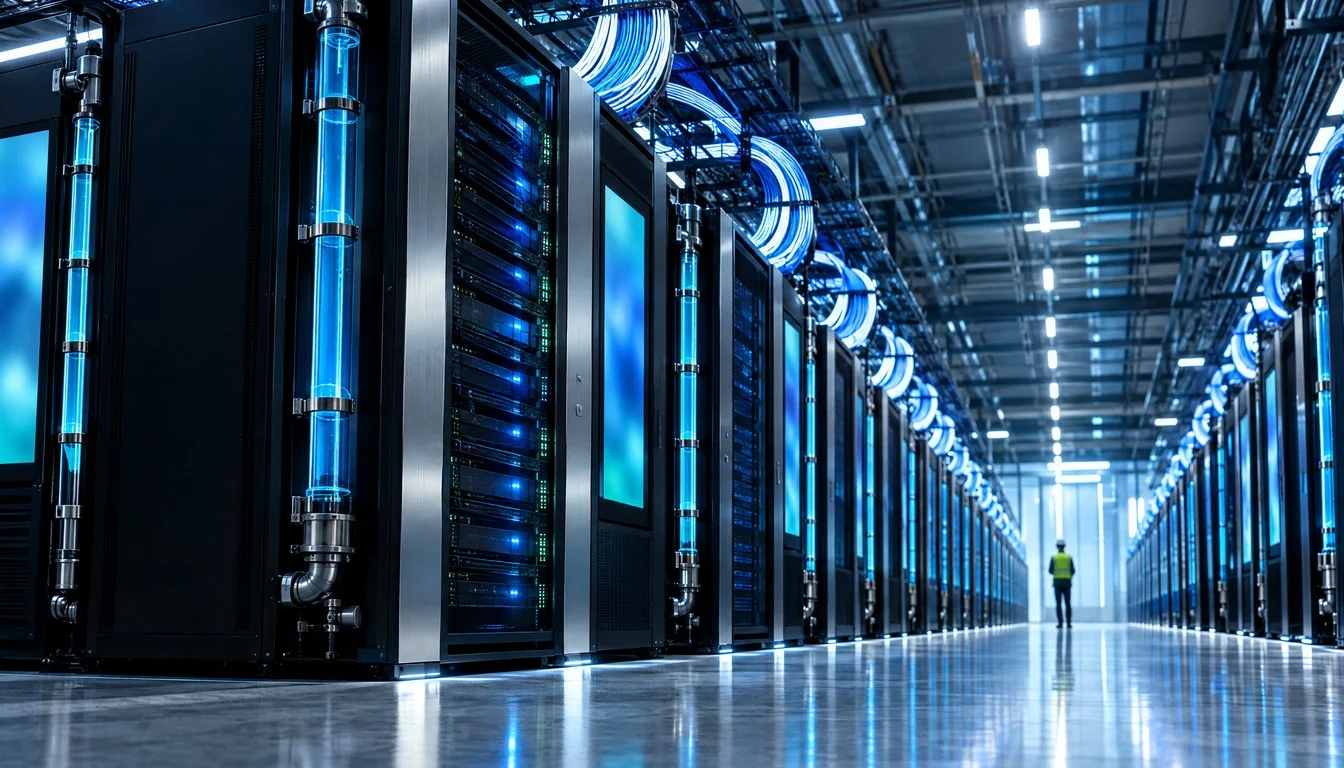
Microsoft’s disclosed training details are unusually specific for a pre-training announcement. The company ran the job on 16,000 Nvidia GB200 GPUs across August and September 2026, completing the pre-training phase in 38 days. Secondary reporting pegs the training corpus at roughly 50 trillion tokens, with about 18% of that data being visual rather than text, consistent with the model’s native vision design.
Model: MAI-Base-2 (Microsoft AI)
Architecture: Mixture-of-Experts, encoder-free vision-language
Total parameters: 2.8 trillion
Active parameters per token: 80 billion
Training hardware: 16,000 x Nvidia GB200 GPUs
Training window: August-September 2026 (38 days)
Training data: ~50 trillion tokens (~18% visual)
Status: Pre-training complete, in post-training
Public release: Not yet announced
Planned distribution: Licensed to partners via Azure AI Foundry
Sixteen thousand GB200s is not a small allocation. It reflects how much of Microsoft’s Nvidia supply is now feeding internal model development rather than only external Azure capacity. That detail matters beyond the model itself: it is also a signal to the market about demand for Nvidia’s GB200 line at a moment when GPU pricing has been climbing across multiple regions, a trend covered in reporting on Nvidia B200 pricing tied to the Tencent-Oracle deal.
The Efficiency Claim: 4x to 12x Over DeepSeek
The centerpiece of Microsoft’s announcement is not raw benchmark scores, which the company has not published, but a compute-efficiency comparison. Microsoft says its training recipe was 4.2 to 12.3 times more FLOPs-efficient than DeepSeek-V4-Pro-Base across four held-out evaluations, and 6.3 to 12.7 times more efficient than its own predecessor, MAI-Base-1. In the company’s own phrasing, reported by Digg: “It is 4-12x more pre-training FLOPs-efficient than the strongest open base model, DeepSeek-V4-Pro-Base, and we have put that saving into training a larger model.”
That framing matters because it reorients the competitive story around efficiency per unit of compute rather than headline parameter counts. DeepSeek has spent the past two years setting the pace on that exact metric, with releases like DeepSeek V4.1 Flash built explicitly around cheap, fast inference. If Microsoft’s efficiency numbers hold up under independent testing, it would mark one of the first times a US lab has publicly claimed to beat DeepSeek specifically on training-compute efficiency rather than just final benchmark scores.
It is worth being precise about what the claim does and doesn’t cover. Microsoft’s own disclosure frames the 4x to 12x figure as a measure of pre-training FLOPs efficiency across four specific held-out evaluations, not a claim that MAI-Base-2 is 4 to 12 times better across every possible benchmark or use case. Efficiency and overall quality are related but distinct metrics, and the gap between them is exactly where independent evaluation will need to do its work once the model becomes available for outside testing.
Suleyman’s OpenAI Comparison
The more provocative claim came not from Microsoft’s published blog post but from an internal town hall. According to reporting from Hyper.ai and 247wallst.com, Microsoft AI CEO Mustafa Suleyman told employees that internal tests showed MAI-Base-2 outperforming the base model currently used for OpenAI’s GPT-5.6 Sol on evaluations measuring pattern understanding and prediction, while using roughly one-quarter of OpenAI’s estimated pre-training compute budget.
That claim deserves a caveat the size of the headline itself: it is an internal, unverified comparison relayed secondhand, not a published benchmark with disclosed methodology, test sets, or scoring. Microsoft and OpenAI remain commercially entangled through Azure hosting and Microsoft’s existing investment, which makes a public, head-to-head, Microsoft-authored comparison against OpenAI an unusually loaded statement even before any outside party gets to check the numbers. Readers should treat the GPT-5.6 Sol comparison as a claim under internal review, not a settled result.
Why a Quarter of the Compute Budget Matters
If accurate even directionally, a 4x compute advantage changes the economics of the entire frontier race. Training runs at this scale cost hundreds of millions of dollars in GPU time, data center power, and engineering hours. A lab that can hit comparable or better results with a quarter of the compute either trains bigger models at the same budget or trains the same-size model for a fraction of the cost, and either path compounds advantage over multiple model generations. That’s the strategic logic behind Microsoft publishing an efficiency claim before it has published a single customer-facing benchmark score.
Pre-Training Complete Is Not a Launch
It’s easy to read “2.8 trillion parameters” and assume a product is imminent. It isn’t, at least not yet. Microsoft explicitly describes MAI-Base-2 as having finished pre-training and moved into post-training, the phase where a raw base model gets fine-tuned, aligned, and safety-tested before it becomes something a developer or consumer can actually call. Microsoft has not announced a release date, a price per token, or even confirmation of which products MAI-Base-2 will eventually power. The company’s stated near-term plan is to license model weights to trusted partners through Azure AI Foundry, which suggests a staged, enterprise-first rollout rather than an immediate consumer chatbot launch.
That distinction is easy to lose in headlines built around a single eye-catching parameter count, but it’s the difference between “Microsoft just shipped a GPT-5.6 Sol killer” and the more accurate “Microsoft just finished one expensive, promising training run that still has to prove itself outside the building.” Readers comparing this to fully shipped open models, like Nvidia’s recently released Nemotron family, should keep that gap in mind.
How MAI-Base-2 Stacks Up on Paper
Because Microsoft hasn’t published standard benchmark scores for MAI-Base-2, a direct numeric leaderboard comparison isn’t possible yet. What can be compared, using each model’s own disclosed specs, is scale, architecture, and training footprint against the other large models that have shipped or been announced in the same window.
| Model | Developer | Total Params | Active Params | Status (Oct 16, 2026) |
|---|---|---|---|---|
| MAI-Base-2 | Microsoft AI | 2.8 trillion | 80 billion | Pre-training complete, in post-training |
| Muse Spark Open | Meta | 816 billion | 42 billion | Publicly released |
| Nemotron 3.5 Super VL | Nvidia | 120 billion | N/A (dense/open) | Publicly released |
| DeepSeek-V4-Pro-Base | DeepSeek | Not fully disclosed | Not fully disclosed | Publicly released, used as efficiency baseline |
| GPT-5.6 Sol (base model) | OpenAI | Not disclosed | Not disclosed | Powers shipped OpenAI products |
The table underscores a pattern that’s shaped up through 2026: labs now routinely disclose total and active parameter counts as a marketing signal even when they withhold full benchmark tables. Microsoft’s 2.8 trillion total parameter figure is the largest publicly confirmed number in that list, though the comparison is incomplete since neither DeepSeek nor OpenAI has published full architecture specs for the models Microsoft is measuring itself against.
Microsoft’s Bigger Strategy: Less OpenAI, More MAI
MAI-Base-2 is not an isolated research exercise. It’s the second generation of Microsoft’s own foundation model line, following MAI-Base-1, and it arrives as Microsoft has spent the better part of two years building out an internal AI division, Microsoft AI, led by Suleyman since his move from Inflection AI in 2024, explicitly meant to reduce Microsoft’s dependence on OpenAI’s models for Copilot and other first-party products. Microsoft remains OpenAI’s largest backer and its primary cloud host, but the two companies have increasingly competing incentives as OpenAI builds its own enterprise sales motion and prepares for life beyond the exclusivity terms of their earlier agreements.
A 2.8-trillion-parameter in-house model that Microsoft claims beats DeepSeek on efficiency and may rival OpenAI’s own base model gives Microsoft leverage in multiple directions at once. It reduces reliance on a single external model supplier, it gives Azure AI Foundry a flagship in-house product to sell alongside hosted third-party models, and it signals to investors that Microsoft’s AI roadmap doesn’t depend entirely on OpenAI’s continued cooperation.
Market and Industry Reaction
Industry commentary following the announcement has focused less on raw capability and more on what the efficiency numbers imply about the broader AI capital spending cycle. If true at scale, a 4x to 12x compute efficiency gain across major labs would eventually ease some of the GPU demand pressure that has pushed prices higher across the board, including the kind of regional spikes reported around Microsoft’s own Maia 300 chip effort, which Microsoft has separately pitched as a lower-cost alternative to Nvidia silicon for inference workloads.
Public commentary captured the scale of the announcement plainly. Microsoft AI itself summarized the achievement this way, in a statement cited in a public post quoting the announcement: “We now have state-of-the-art pre-trained base models in the 3T-parameter weight class, built entirely in-house at MAI.” That framing places MAI-Base-2 at the upper edge of disclosed model scale for 2026, ahead of every other total-parameter figure confirmed so far this month.
Historical Context: From MAI-Base-1 to MAI-Base-2
Microsoft’s push toward independent model development has been building for roughly two years. MAI-Base-1, the predecessor model, established the Microsoft AI division’s basic in-house pre-training pipeline but didn’t generate the same scale of public attention. MAI-Base-2’s jump to 2.8 trillion total parameters, combined with the claimed 6.3x to 12.7x efficiency gain over its own predecessor, suggests Microsoft has made real architectural and data-pipeline progress between generations rather than simply scaling up hardware spend.
That generational leap mirrors a pattern playing out across the industry in 2026: labs that once measured progress mainly in parameter count are now explicitly marketing compute efficiency, a shift driven partly by GPU scarcity and partly by the sheer expense of training runs at this scale. Mistral framed its own Mistral Large 4 launch around similar tradeoffs between scale and serving cost, and Google’s Gemini 4 Argon rollout leaned heavily on efficiency-per-dollar messaging as pricing climbed after launch.
The Competitive Landscape in October 2026
MAI-Base-2 landed in an unusually crowded week for frontier AI news. Within days of each other, Nvidia released its open Nemotron model family, Meta rolled out Muse Spark Open, and Microsoft disclosed MAI-Base-2’s completed pre-training run. That clustering isn’t coincidental. Labs have increasingly timed announcements to stay visible against competitors’ news cycles, and October 2026 has become one of the densest stretches of frontier model disclosures of the year.
| Date (Oct 2026) | Company | Announcement | Key Claim |
|---|---|---|---|
| Oct 13-15 | Gemini 4 Argon general availability | First new flagship since Gemini 3 Pro | |
| Oct 15 | Nvidia | Nemotron 3.5 Super VL, Bolt models | Open models, 120B params, edge-to-datacenter range |
| Oct 15 | Microsoft AI | MAI-Base-2 pre-training complete | 2.8T params, 4-12x efficiency vs. DeepSeek |
| Oct 15-16 | Meta | Muse Spark Open on Mac Studio | 816B param MoE model, runs on consumer hardware |
| Oct 16 | Meituan | Data World framework release | Open tooling for LLM training-data environments |
What stands out in that table isn’t any single model’s superiority, since none of these announcements include a shared, independently verified benchmark suite. It’s the sheer density of disclosure. Five major labs made significant model-related announcements within roughly 72 hours, a pace that makes it harder for any one release, including Microsoft’s, to dominate the news cycle for more than a day or two.
What Independent Verification Will Need to Show
Every efficiency and performance claim in Microsoft’s announcement comes from Microsoft’s own internal held-out evaluations. None of it has been replicated by an outside lab, a third-party benchmark organization, or an academic group, at least not yet. The 4x to 12x DeepSeek efficiency figure, the comparison to GPT-5.6 Sol’s base model, and the claim of beating every open-weight model tested are all self-reported. That’s standard practice for pre-training announcements across the industry, since outside parties can’t test a model that isn’t publicly available, but it does mean the real test of MAI-Base-2’s standing comes later, once post-training finishes and Microsoft either ships a product or releases weights to partners who can run their own evaluations.
Predictions: Where This Goes Next
A few things seem likely to play out over the coming months based on how Microsoft has structured this disclosure and how the broader market has behaved around similar announcements:
- Microsoft will likely release MAI-Base-2 first to select Azure AI Foundry enterprise partners before any broad consumer-facing launch, mirroring its stated distribution plan.
- Expect independent benchmark organizations to request or attempt access to MAI-Base-2 once post-training completes, which will be the first real test of Microsoft’s efficiency claims against DeepSeek and OpenAI.
- Microsoft’s relationship with OpenAI will likely become more openly competitive in public messaging, even as the companies remain commercially linked through Azure hosting agreements.
- Other major labs will likely respond with their own efficiency-focused disclosures rather than pure parameter-count claims, continuing the shift away from “bigger is better” messaging seen across October’s wave of releases.
- GPU demand tied to frontier training runs is unlikely to ease in the near term, regardless of efficiency gains, since labs appear to be reinvesting compute savings into training larger models rather than training the same-size models for less.
Why This Matters Beyond the Spec Sheet
For developers and enterprise buyers, the practical takeaway isn’t the 2.8 trillion parameter figure itself. It’s what the efficiency claim implies about future pricing. If Microsoft’s training-efficiency numbers translate into cheaper inference once MAI-Base-2 ships, Azure customers could see more competitive per-token pricing against OpenAI, Anthropic, and Google offerings. That would add a fourth major hyperscaler-backed model option to a market that, as of October 2026, is already juggling frequent price and capability shifts across open model releases and closed frontier updates alike.
For now, MAI-Base-2 is a strong signal of intent and a genuinely large training run, backed by specific, verifiable hardware and timeline details. Whether it becomes a product that reshapes the competitive order, or another impressive internal benchmark that fades once independent testing begins, depends entirely on what Microsoft does with it over the next few months.
Frequently Asked Questions
What is MAI-Base-2?
MAI-Base-2 is Microsoft AI’s second-generation, in-house foundation model, a mixture-of-experts architecture with 2.8 trillion total parameters and 80 billion active parameters per token. Microsoft announced on October 15, 2026, that the model had completed pre-training and moved into post-training.
Is MAI-Base-2 available to the public?
No. As of October 16, 2026, Microsoft has not announced a public release date, pricing, or consumer product built on MAI-Base-2. The model is still in post-training, and Microsoft’s stated plan is to license weights to trusted partners through Azure AI Foundry before any broader rollout.
How does MAI-Base-2 compare to DeepSeek?
Microsoft claims its MAI-Base-2 training recipe was 4.2 to 12.3 times more compute-efficient than DeepSeek-V4-Pro-Base across four held-out evaluations. This is a training-efficiency claim, not a direct benchmark score comparison, and it has not been independently verified.
Did MAI-Base-2 really beat OpenAI’s GPT-5.6 Sol?
Microsoft AI CEO Mustafa Suleyman reportedly told staff internally that tests showed MAI-Base-2 outperforming the base model behind GPT-5.6 Sol on specific pattern-understanding and prediction evaluations, using about a quarter of OpenAI’s estimated pre-training compute. This claim comes from an internal town hall, not a published, independently reproducible benchmark, so it should be treated as unverified.
What hardware did Microsoft use to train MAI-Base-2?
Microsoft trained MAI-Base-2 on 16,000 Nvidia GB200 GPUs over a 38-day run spanning August and September 2026, using an estimated 50 trillion training tokens, about 18% of which was visual data.
Why does Microsoft need its own AI model if it already uses OpenAI’s?
Microsoft has been building out its own AI research division to reduce dependence on any single external model supplier, give Azure AI Foundry a flagship in-house product, and maintain leverage as its relationship with OpenAI becomes increasingly competitive even while the two companies remain commercially linked through Azure hosting.
How big is MAI-Base-2 compared to other models released in October 2026?
At 2.8 trillion total parameters, MAI-Base-2 is larger by total parameter count than Meta’s 816-billion-parameter Muse Spark Open and considerably larger than Nvidia’s 120-billion-parameter Nemotron 3.5 Super VL. Neither DeepSeek nor OpenAI has publicly disclosed full parameter counts for the models Microsoft is comparing itself against.
Related
- Nvidia Debuts 3 Open Nemotron Models, 4GB to 120B [2026]
- Meta Muse Spark Open Debuts on 7 Clouds at Once [2026]
- Gemini Argon Price Doubles Nov. 30, Sonnet 5.5 Holds [2026]
- DeepSeek V4.1 Flash API Setup: 13 Steps, 1M Tokens [2026]
- Microsoft Maia 300 Chip Claims 40% Edge Over Nvidia [2026]
Related Coverage
- Liquid AI's LFM2.5: 24B Params, 184 Tokens/Sec [2026]
- NVIDIA Nemotron 3.5 Super VL: 120B Params, 5x Faster [2026]
- Artlist vs Reve vs Ideogram: Which Image Generator Is Better at Understanding Spatial Instructions?
- China AI Export Rule Takes Effect Today: 40 Techs [2026]
- iPhone Duo Siri AI vs Galaxy AI: 50% Bigger Screen [2026]

Elias Virtanen
Elias Virtanen is the Cybersecurity Analyst at Tech Insider, bringing hands-on expertise from his background in penetration testing and security consulting. He previously worked as a security researcher at F-Secure in Helsinki, where he focused on threat intelligence and vulnerability disclosure. Elias covers ransomware trends, zero-trust architecture, and the evolving regulatory landscape including NIS2 and the EU Cyber Resilience Act. He holds a CISSP certification and an MSc in Information Security from Aalto University.
View all articles