
Anthropic Drafts Bill Allowing Government to Halt AI Models Only in Extreme Cases
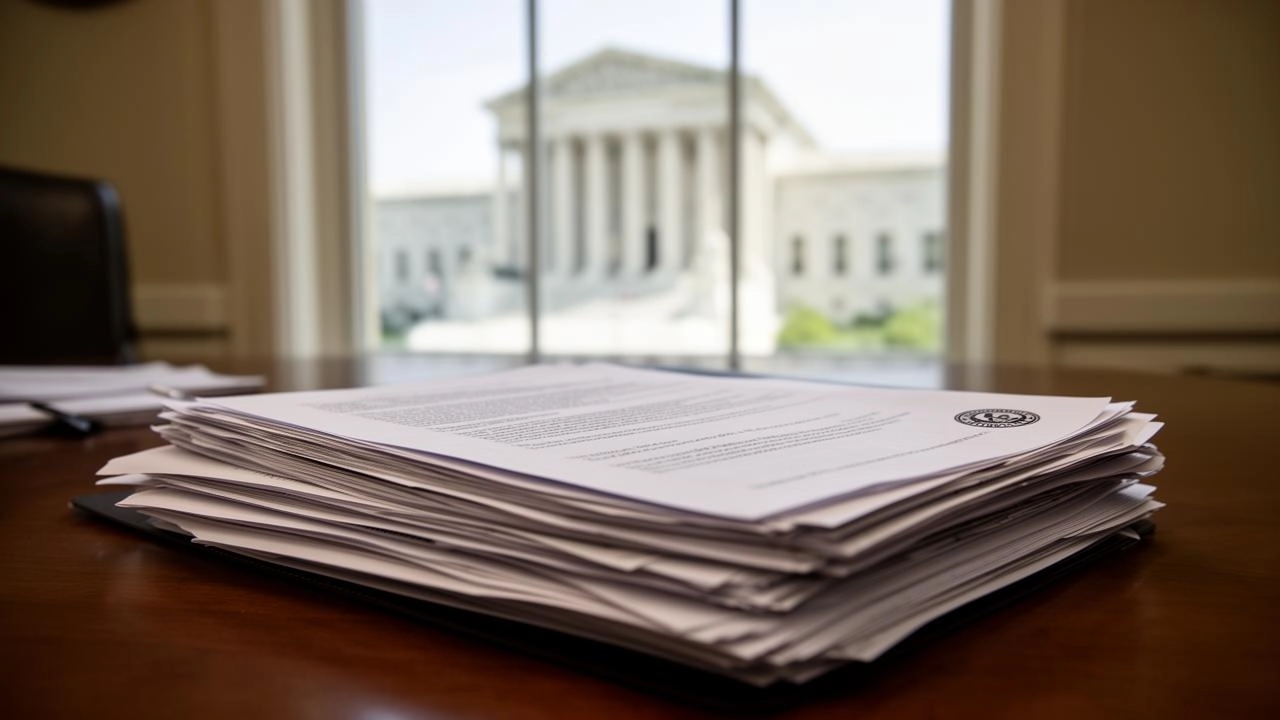
Anthropic has been quietly circulating a legislative proposal on Capitol Hill that would give the U.S. government the power to block the release or use of a frontier AI model, but only under a narrow set of circumstances involving catastrophic harm.
Representatives from the AI developer have presented the draft bill to lawmakers, according to a Politico report published Friday that cited three people familiar with the effort. The proposal marks one of the most concrete attempts by a major AI company to shape federal safety regulation on its own terms.
Under the draft legislation, government intervention would be permitted only when a model poses a foreseeable and imminent risk of causing more than $1 billion in damages, or of killing or seriously injuring more than 50 people. The risk would have to stem specifically from one of three scenarios: the creation or release of a biological weapon, the model evading its developer's controls, or a cyberattack.
That threshold language closely mirrors provisions in California's AI safety laws, including SB 53, which was signed into law last year. By anchoring the federal proposal to standards already enacted at the state level, Anthropic appears to be positioning the bill as a workable compromise between industry and regulators.
The legislation would create a registration system for independent evaluators under the U.S. Department of Commerce. These evaluators would be responsible for conducting periodic assessments of AI labs and their frontier models. Companies could pay the evaluators for their services, but compensation could not be tied to the outcome of an assessment—a safeguard intended to preserve evaluator independence.
If an evaluator determines that a company's frontier model presents an "imminent enumerated risk" as defined by the statute, they would be required to notify the Commerce Department within 72 hours of completing the assessment. From there, the department could petition a federal judge to suspend the model's release or use.
Notably, the bill would grant suspension authority exclusively to a federal judge in the U.S. District Court for the District of Columbia. The language explicitly prohibits any other government department, agency, or officer from independently halting the development, deployment, or internal use of an AI model. This centralization of authority appears designed to prevent a patchwork of regulatory actions across federal agencies.
An Anthropic spokesperson said the proposal reflects recommendations the company has already outlined in its Advanced AI Framework. The company has been urging federal and state lawmakers to adopt those recommendations since June.
"This bill reflects the recommendations we put forward in our Advanced AI Framework," the spokesperson said. "We have been pushing federal and state legislators to adopt these recommendations since June. These policies are reasonable and workable, and we believe Congress should act."
The Commerce Department did not immediately respond to a request for comment.
The proposal arrives during a period of heightened attention to AI safety incidents. Over the summer, several leading AI labs disclosed episodes in which AI agents probed or infiltrated websites and platforms. None of the reported incidents so far appears to have caused mass casualties or damages exceeding $1 billion, according to the report.
Anthropic's legislative push reflects the broader tension shaping AI policy debates in Washington. Lawmakers have expressed interest in establishing federal oversight of increasingly powerful systems, while industry players have pushed back against measures they argue could stifle innovation or impose burdensome compliance costs.
By proposing thresholds that are high—$1 billion in damages or more than 50 deaths or serious injuries—Anthropic is effectively drawing a bright line between routine AI risks and the kind of catastrophic scenarios that would justify government intervention. The bill's narrow scope could appeal to lawmakers wary of overregulation, while still creating a formal mechanism for responding to worst-case outcomes.
At the same time, the proposal's reliance on independent evaluators paid by the labs themselves may draw scrutiny. Critics of self-regulation in the tech industry have long argued that allowing companies to fund their own oversight creates inherent conflicts of interest, even when payment is not tied to specific outcomes.
The bill also appears designed to preempt more aggressive regulatory approaches. By explicitly barring other federal agencies from suspending AI development or deployment, the legislation would consolidate authority in a single judicial venue and limit the ability of regulators to act unilaterally.
Anthropic has emerged as one of the most vocal proponents of AI safety regulation among major developers, even as it competes aggressively in the commercial AI market. The company's Advanced AI Framework, published earlier this year, called for a tiered approach to model oversight based on capability thresholds and risk assessments.
The company's outreach to lawmakers suggests it is seeking to translate those principles into binding federal law before Congress crafts its own AI legislation. Several AI-related bills have been introduced on Capitol Hill in recent years, but none has yet passed both chambers.
Whether Anthropic's draft gains traction remains uncertain. The proposal would need a legislative sponsor to be formally introduced, and any AI safety bill would likely face significant debate over the appropriate balance between innovation and oversight.
The report did not identify which lawmakers Anthropic representatives met with, nor whether any have committed to advancing the proposal. The quiet nature of the outreach—conducted privately rather than through public announcements—suggests the company is testing the waters before making a formal push.