
Anthropic Co-Founder Says AI Could Lift US GDP to $44.4 Trillion by 2030
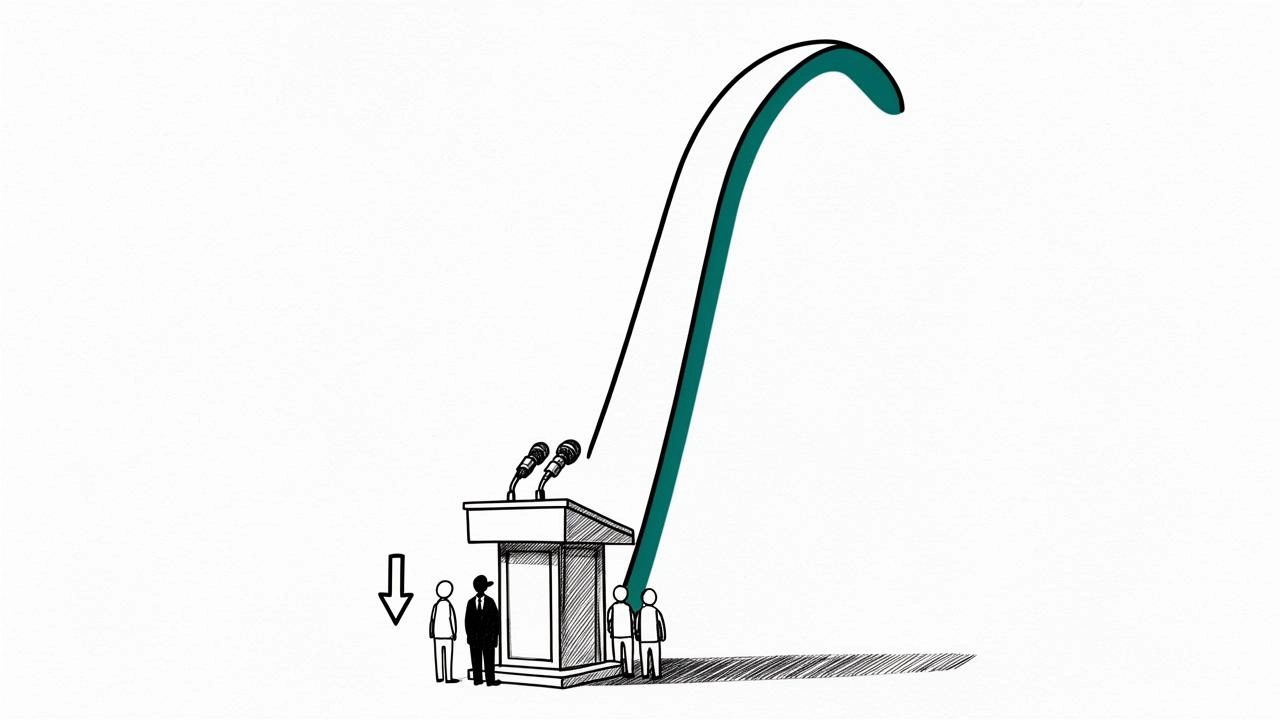
Artificial intelligence could expand US economic output to as much as $44.4 trillion by the end of the decade, according to an internal model developed by AI research company Anthropic, a scenario that co-founder Jack Clark acknowledged sounds extreme but argued is implied by the technology's accelerating progress.
Speaking Saturday at the IMF and World Bank annual meetings in Bangkok, Clark outlined three potential trajectories for US GDP in 2030, all measured in constant 2025 dollars. The most conservative projection puts output at $34.1 trillion, a 1.6% improvement over the model's baseline. A middle scenario reaches $36.3 trillion, or 8.3% above baseline. The aggressive case hits $44.4 trillion, roughly 32.4% higher.
The current level of US economic output is just over $30 trillion. Clark said the top-end figure "sounds very outlandish," but added that AI is vastly increasing scientific discovery.
"I know, but it's implicated by the technology continuing to get better," he said, according to Reuters. "And if GDP were to grow this much, then economic doctrine suggests that new industries and inventions would need to have been created to power such a major economic expansion."
Anthropic's research presents the three outcomes as scenarios rather than a single unconditional forecast. The company's analysis indicates that reaching the extreme case would require more than businesses simply replacing employees with AI software. New products, economic activities and productivity improvements would have to generate substantial additional value.
The projections arrive as policymakers and investors grapple with both the promise and the risks of increasingly capable AI systems. Clark called for international cooperation to erect "unusual and serious rules" for the transformative technology, warning that stronger safeguards are needed as AI capabilities advance.
Employment and Distribution Risks
The research also examines how increased automation could affect employment and the distribution of economic gains. Anthropic expects AI to create new tasks while automating existing ones, although the relative balance differs significantly between scenarios.
The company acknowledges that economic growth does not guarantee equivalent increases in workers' incomes. Some productivity gains could disproportionately benefit capital owners and companies controlling advanced technology.
Market Skepticism Persists
Clark's remarks come during a difficult stretch for AI-related investments. Global technology funds recently recorded $4.75 billion in withdrawals, even as broader equity funds attracted approximately $20 billion. US semiconductor companies suffered a $1.64 trillion selloff across six sessions, reflecting concerns about valuations, borrowing costs and the returns on AI investment.
Those market losses do not invalidate Anthropic's long-term economic scenarios, but they highlight the uncertainty surrounding how quickly productivity improvements can justify current spending. Major technology companies continue committing substantial capital to GPUs, data centers and electricity infrastructure, yet the businesses receiving those investments are not necessarily those ultimately generating sufficient profits to justify them.