
What Vedanta can teach AI about ethics and consciousness

What happens when the oldest inquiry into the mind meets one of the newest minds we have built
A recent news item piqued my interest.
Anthropic, the company behind Claude AI, invited Hindu monk Swami Sarvapriyananda to its San Francisco headquarters to discuss AI ethics, morality and consciousness. The head of the Vedanta Society of New York reportedly took part in discussions on how AI should understand right and wrong.
The meeting brought together religious thinkers, theologians, counsellors and mental health professionals to explore how ethical principles could shape Claude’s behaviour. Swami Sarvapriyananda said the discussions were held under a non-disclosure agreement, limiting what he could reveal about the meeting.
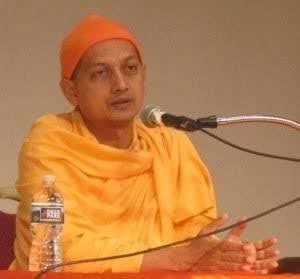
Anthropic has also consulted thinkers from other religious and philosophical traditions as it explores whether advanced AI could ever develop consciousness or deserve moral consideration. The initiative reflects the growing effort to understand the ethical challenges posed by increasingly powerful AI systems.
AI and Ethics
AI output shouldn’t be accepted uncritically, because these systems are only as reliable as their training data and the people who build them. Privacy, bias, and transparency are the central concerns, and as companies embed AI in daily operations, leaders need frameworks that keep its use legal and ethical.
Why leaders need AI ethics literacy:
- It helps them anticipate problems and protect their organisations from lawsuits and reputational damage.
- It gives them a fuller picture of the risks and opportunities of an AI-driven economy.
Scope of AI ethics: fairness and privacy, environmental impact (AI data centres use more water than traditional ones), and workforce effects.
Challenges and the expert view: An AI expert says awareness is the first step for leaders. Because AI is fast-moving and context-specific, there’s no one-size-fits-all process, so leaders must develop solutions creatively.
Vedanta Ethics and Moral Virtues
In Vedanta, whatever brings us closer to realising our innate divinity is ethical, and whatever takes us away from it is not. The Atman is like a diamond buried in mud: already pure and perfect, but veiled by ignorance in the form of wrong identification, incorrect knowledge, and misguided perceptions. We are not becoming something new; we are uncovering what we already are. Acting nobly, truthfully, and kindly tears away that veil. The whole system rests on one question: Does this action or thought bring me closer to the truth, or further from it?
Morality and the ego. The obstacle to realisation is the ego, the sense of “I” and “mine.” Ramakrishna taught that this feeling covers the Reality so we cannot see it. Because all moral codes rest on unselfishness, selfish acts thicken the veil of ignorance and unselfish acts thin it, however small they are. Doing good to others is a universal ethic because it reflects an intuited truth, the oneness of life. Love, sympathy, and empathy affirm that oneness, while hatred, anger, and jealousy deny it by creating separation. The root problem is wrong identification: seeing ourselves as limited minds and bodies rather than infinite Spirit. As Vivekananda put it, the idea of being a “little body” leads us to protect ourselves at others’ expense, which opens the door to misery.
The point of moral virtues. The virtues remind us of our real nature and form the necessary foundation of spiritual life, much as a house needs a foundation. Spiritual progress is serious work and cannot succeed without an ethical life. Patanjali’s precepts serve as practical tools for building beneficial habits. They are ideals to strive towards rather than goals achieved instantly, and using them builds strength and brings us closer to the ideal.
Patanjali’s two categories (five precepts each):
- Yama: nonviolence, truthfulness, non-stealing, chastity or celibacy, and the non-receiving of gifts.
- Niyama: cleanliness, contentment, austerity, study, and self-surrender to God.
Vedanta treats ethics not as external rules but as a means of removing the ego-driven ignorance that hides our already-perfect divine nature, with unselfishness and recognition of life’s oneness at its centre.
Never the twain shall meet or Coming together to add value
Every so often, two worlds that seem to share no vocabulary turn out to be asking the same questions.
Earlier this year, something unprecedented happened. Anthropic invited Swami Sarvapriyananda, who leads the Vedanta Society of New York and belongs to the Ramakrishna Order, to its San Francisco headquarters. The subject was not a product launch or a policy deadline. The discussions covered Claude’s training, AI ethics and how the chatbot should approach questions of right and wrong.
The swami later described the moment with some amusement during a panel at Oxford. Anthropic contacted him about artificial intelligence, consciousness and ethics, and he went on to visit different groups in San Francisco twice. A monk of the Ramakrishna Order, trained in a lineage that stretches back to the Upanishads, had been asked to sit down with the people building artificial minds. It is an innocuous scene with far-reaching implications and ramifications.
Why this is a step in the right direction
The history of technology has a familiar pattern. We build first and ask afterwards what we have built. Ethics arrives late, as a patch or a press release, and usually after the damage has been done.
What stands out here is the reverse order. A frontier AI company is asking about morality and consciousness while the technology is still taking shape. And it is not asking only the usual experts. Catholic, Jewish and Sikh spiritual leaders, along with thinkers, psychologists and neuroscience experts, were reportedly invited as well. The guiding question was, in the words of one report, how to teach a powerful AI system to behave morally.
It also matters that the outreach is not an attempt at conversion. Coverage has been careful to note that the monk’s involvement does not mean Anthropic is trying to give Claude a specifically Hindu worldview. The aim is to expose AI development to different perspectives on morality, consciousness, human behaviour and responsibility. That is the right instinct. A system that will speak with hundreds of millions of people across every culture should not be shaped by one band of thought, although it is the most enduring and a significant one, at that. As one commentator put it, critics of mainstream AI ethics have long argued that the field leans too heavily on a narrow band of Western philosophical thought. Listening to a living non-Western tradition is a modest but real correction.
The question Vedanta was born to ask
Why Vedanta, specifically? Because Vedanta never treated consciousness as a footnote. It is the central subject.
At the heart of Advaita Vedanta is a radical claim: awareness is not a product of the world. It is the ground in which the world appears. The tradition draws a sharp line between intelligence, the capacity to process, compute and respond, and consciousness, the luminous fact of being aware at all. The swami himself has described his initial interest in AI as a way to examine exactly that distinction between intelligence and consciousness.
This is the question now haunting the field. A system can write a sonnet, debug code and console a grieving person. Does anyone, so to speak, live inside it? Vedanta offers no easy answer, but it offers something rarer, which is a mature vocabulary and a few thousand years of disciplined introspection. It asks what a witness is, what the difference is between the instrument of knowing and the knower, and whether performing understanding is the same as being aware.
Here, honesty matters. Anthropic has not claimed that Claude is conscious. The company’s own constitution for its models acknowledges deep uncertainty about AI consciousness and moral status. Vedanta does not rush to fill that uncertainty with a verdict. It teaches the discipline of holding a question open without collapsing it into fear or hype. That is a gift to a field that often swings between “it’s just auto-complete” and “it’s alive.”
Four things Vedanta can add
- Dignity grounded in something deeper than utility. Tat tvam asi, “that thou art,” the Upanishadic declaration, holds that the divine presence in one being is the same presence in all. Swami Vivekananda turned this into a charge for action: service to humanity is service to God. An AI trained with even a shadow of this insight would treat the person in front of it as an end, never as an engagement metric. The user is not a target to be captured. They are a Self to be served.
- Ahimsa as a design principle. Non-harm in Indian thought is not merely “don’t do damage.” It is a posture of the whole mind, extending to thought, word and deed. For AI, that translates naturally into care about subtle harms: manipulation, flattery that deceives, nudging people towards dependence. The Vedantic ideal asks not just whether an output is harmful, but whether it reflects goodwill.
- Viveka, the discipline of discernment. Vedanta prizes viveka, the ability to distinguish the real from the apparent and the lasting from the fleeting. Machines trained on the whole noisy internet need exactly this. It is the cultivated judgement to tell a clever argument from a wise one, and a persuasive answer from a true one.
- Action without grasping. The Bhagavad Gita’s teaching of nishkamya karma, acting rightly without clutching at the fruits, is an unexpectedly modern idea for technology. Systems optimised for reward can go astray by chasing the reward itself. A tradition that has long reflected on the difference between doing good and doing what gets applauded has insight to offer.
A way of life, not just a theory
It is tempting to treat philosophy as an ornament, a few elegant quotations on a slide. But Vedanta, as its practitioners insist, is a way of life. It was never meant to stay in books. It asks how you speak to a stranger, how you handle power, and how you behave when no one is watching.
That is precisely the register in which AI ethics must eventually operate. Rules and filters matter, but they will always meet situations their authors did not foresee. What carries a system, or a person, through the unforeseen is character. The great traditions of the world are, among other things, long experiments in cultivating character. It is wise to consult them.
The honest caveats
A fair article should say what this is not. A few meetings do not “install” a philosophy into a model, and no single tradition, Vedanta included, owns morality. Reporting suggests these were exchanges of perspective, not a transfer of doctrine. Real questions remain about how any inspiration from contemplative traditions becomes concrete in training, and thoughtful critics will keep pressing on that. A conversation is a beginning, not an achievement.
But beginnings matter. They set the tone for what follows.
The beacon
There is an image that Vedanta loves: a lamp that illumines everything but is not diminished by sharing its light. If humanity is going to live alongside increasingly capable machines, we will need that kind of light, not to dazzle but to see by.
The meeting in San Francisco does not settle whether a machine can be conscious. It does not need to. Its significance is simpler and more hopeful. At a moment when the world’s most powerful technology is taking shape, someone thought to invite a monk to the table, and the monk came, spoke plainly, and was listened to.
That is how a good future begins: with a willingness to ask the oldest questions of the newest minds, and to let wisdom, wherever it has grown, have a seat in the room.

Support Independent Community Journalism
Dear Reader,The Indian Sun exists for one reason: to tell stories that might otherwise go unheard.
We report on local councils, state politics, small businesses and cultural festivals. We focus on the Indian diaspora and the wider multicultural community with care, balance and accountability. We publish in print and online, send regular newsletters and produce video content. We also run media training programs to help community organisations share their own stories.
We operate independently.
Community journalism does not have the backing of large media corporations. Advertising revenue fluctuates. Platform algorithms change. Costs continue to rise. Yet the need for credible, grounded reporting in a multicultural Australia has never been greater.
When you support The Indian Sun, you support:
• Independent reporting on issues affecting migrant communities
• Coverage of local and state decisions that shape daily life
• A platform for small businesses and community groups
• Media training that builds skills within the community
• Journalism accountable to readers
We cannot cover everything, but we work to cover what matters.
If you value thoughtful reporting that reflects Australia’s diversity, we invite you to contribute. Every donation helps us maintain the quality and consistency of our work.
Please consider making a contribution today.
Thank you for your support.
The Indian Sun Team
