
"After NVIDIA, it's here"...Samsung and SKT are going to focus on increasing investment
DeepX Attracts 7.2 Billion Investment Funds from Samsung Electronics
Revelion Applies NPU to SKT's Major Functions
Mobileint and POSCO Strengthen AX Business with POSCO
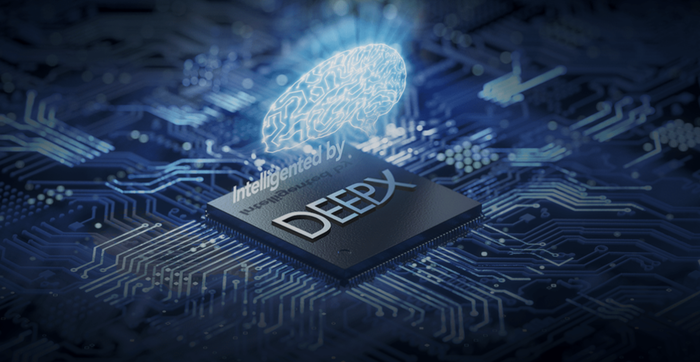 사진 확대
As the NPU market, a low-power artificial intelligence (AI) semiconductor, grows, leading Korean conglomerates such as Samsung Electronics and SK Telecom (SKT) are increasing their investments in domestic NPUs.
According to global market research firm Markets & Markets, the global NPU market is estimated to increase from $5.99 billion (about 8.5 trillion won) last year to $56.08 billion (about 75.4 trillion won) in 2032. This is the result of annual growth of 35%.
Efficiency is behind the growing NPU market. NPU is a semiconductor specialized in AI operations and has the advantage of being easy to mount in various devices because it consumes less power than graphic processing units (GPU). Accordingly, it is evaluated as suitable for implementing "On-Device AI" that drives AI in devices with power and space constraints such as smartphones and automobiles.
Most recently, a venture investment association invested by Samsung Electronics invested in DeepX, a physical AI semiconductor company. According to the industry, DeepX held a board meeting on the 7th and decided to raise a third-party allocation capital worth about 14.7 billion won for "SVIC No. 33 New Technology Business Investment Association" and Samsung Securities, operated by Samsung Venture Investment. SVIC 33 will invest about 7.2 billion won and Samsung Securities about 7.5 billion won in DeepX, respectively.
SVIC 33 is identified as a subsidiary of Samsung Electronics. According to Samsung Electronics' half-year report this year, Samsung Electronics holds a 99% stake in SVIC's 33rd new technology business investment association.
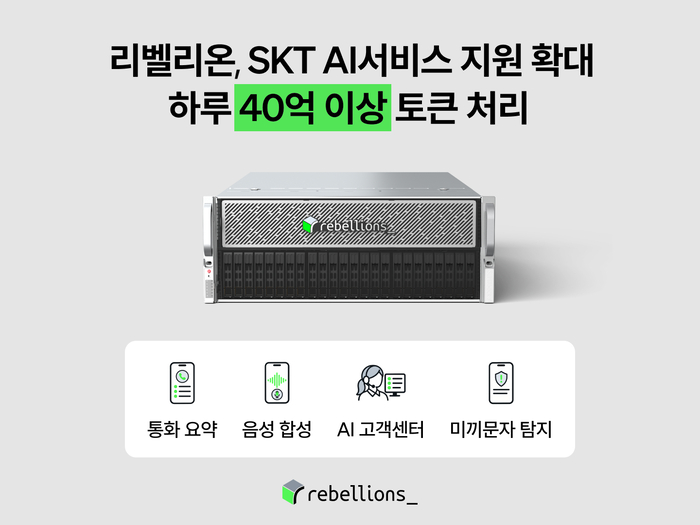 사진 확대
DeepX is known to work closely with Samsung Electronics. DeepX's first mass-produced product, 'DX-M1', is produced by Samsung Electronics' 5-nano process, and 'DX-M2', a next-generation product, is being developed using Samsung Electronics' 2-nano process.
DeepX is building global performance through NPU exports. Since mass production of DX-M1 last year, it has secured 77 commercial purchase orders (POs) worth more than $13 million in 10 countries, including Korea, the United States, Europe, Japan, and China, for about a year. It is also expanding its sales and development base. It has established sales and supply networks with 27 semiconductor distributors around the world and expanded its connection with global development ecosystems such as Raspberry Pi, Baidu Paddle, and Ultralitics.
The capital increase is part of DeepX's ongoing Series D round. DeepX plans to use its procurement funds to develop next-generation AI semiconductors, prepare for mass production, and expand global customer and supply networks.
Revelion, which is considered the first direct investment case of the National Growth Fund, is expanding the scope of commercialization of domestic NPUs based on cooperation with SKT. SKT participated in Revelion's pre-IPO investment round worth 640 billion won in March 2026. SKT owns about 18.2% of Revelion along with group affiliates such as SK Hynix and SK Square in the wake of the merger of AI semiconductor subsidiary Safion Korea and Revelion in 2024.
Revelion is being applied to the core functions of SKT's four commercial AI services. Since June of this year, NPU has been introduced sequentially in the ▲ AI contact center (AICC) 'post-counseling processing and search system' ▲ Scamvanguard 'Bait character detection function' since the ▲Aida call summary 'One-line summary function' ▲Aida. Currently, there are about 14 million real-time AI traffic per day that the Revelion infrastructure covers in these four services.
Following the driving of SKT's AI foundation model 'AIDATX K1', Revelion succeeded in expanding this commercial service, proving the practical performance of Sovereign AI. Based on the verified large-scale traffic processing capabilities and efficiency in the future, it plans to expand the supply of NPU infrastructure to various industries such as finance, telecommunications, and public.
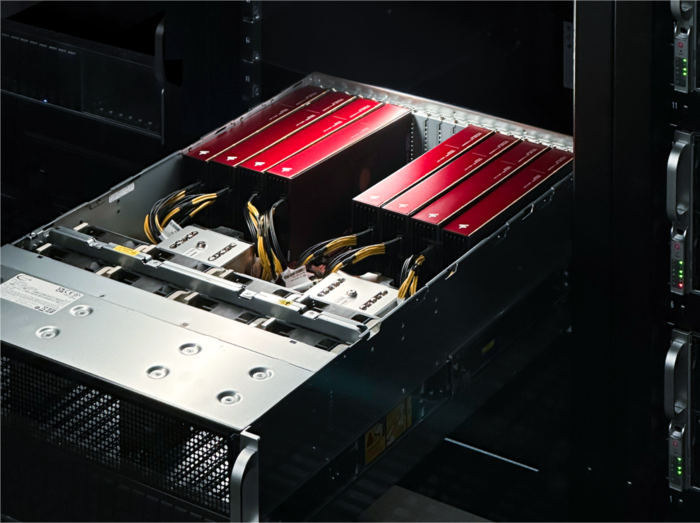 사진 확대
Puriosa AI is also speeding up its commercialization by attracting investment and expanding its overseas business. Puriosa AI received 3 billion won from Kakao Investment last year. This year, Naver and Cisco Systems, a U.S. network and information technology (IT) company, participated in the Series D investment round worth about 820 billion won.
Recently, projects to confirm the possibility of using domestic AI semiconductors are being promoted in the public sector. According to Korea Venture Investment, Purio AI and Upstage will demonstrate chat services that combine domestic AI semiconductors and large language models (LLM).
It is also pushing for overseas exports. Puriosa AI will work with U.S. AI infrastructure company I/ONX HPC and data center development and operator Velox to participate in the 15-megawatt (MW) AI data center project in Stockholm, Sweden. It is a project to first operate a 2MW facility in early 2027 and then expand it step by step.
Puriosa AI plans to supply 1,800 copies of its AI inference accelerator RNGD in the first stage, and supply more than 8,800 copies sequentially, including the entire expansion stage.
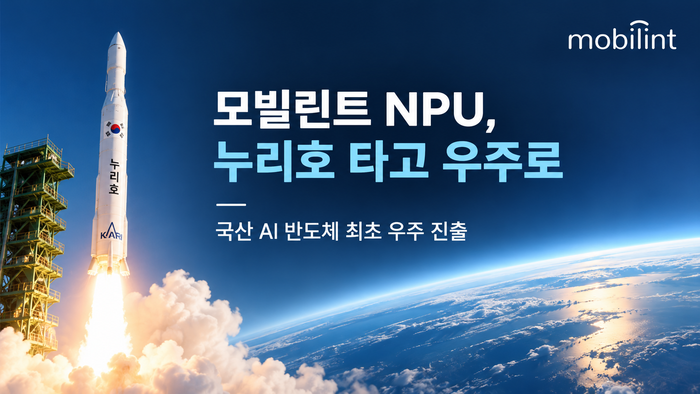 사진 확대
Mobileint is expanding its NPU application beyond industrial sites to the space sector. In February this year, POSCO DX and POSCO Technology Investment received 3 billion won from a corporate venture capital (CVC) investment association jointly invested. In April of the same year, the company signed a business agreement with POSCO DX and decided to apply NPU to manufacturing sites to promote "AI conversion (AX)" of industrial sites.
Two NPU boards based on Mobileint's AI semiconductor "REGULUS" were recently installed on the space medicine demonstration satellite "BEE-1012" at the fifth launch of Nuri. The installed NPU boards are a board for satellite state analysis in cooperation with KAI and Punjin, and a board for protein crystal growth observation and image analysis of Space Rintec, respectively.
The NPU board, which cooperated with KAI and Punjin, drives an AI model that analyzes satellite state data. It performs operations necessary to detect anomalies and identify causes to support autonomous failure response and operational judgment of satellites.
The NPU board developed in cooperation with Space Rintec analyzes protein crystal growth images taken in a microgravity environment. The goal is to judge the growth status of crystals and use the analysis results to control experimental conditions and select necessary data.