
The fear of an apocalypse predates AI by a long time.
Recently, the tech world has seen numerous warnings about humans losing control of artificial intelligence (AI), even mentioning the risk of an apocalypse once this technology rebels. However, similar fears have existed for a long time.
Fears from ancient times
According to Seven Days , the topic of "doomsday" has been widely discussed lately. Almost every day, a new scientist , researcher, or tech expert predicts a new deadly pandemic, climate catastrophe, asteroid-induced extinction, or rebellious AI that will wipe out humanity.
However, Christopher Star points out that modern humans are not the first generation to have this concern. In his book, *How to Face the End of the World: An Ancient Guide for Apocalyptic Times* , the 53-year-old classical studies professor at Middlebury College indicates that the concept of the end of the world has existed for 3,000 years.
Christopher Star draws on the works of Plato, Lucretius, Seneca, and other ancient philosophers and writers to find strategies for coping with disaster, whether it manifests as a sudden catastrophe or a gradual decline.
Author/Work
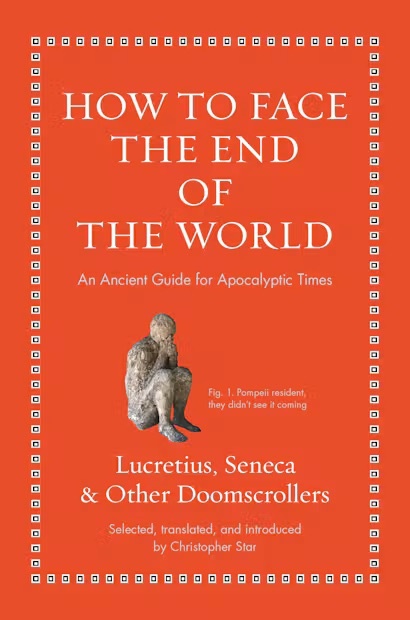
How to Face the End of the World: An Ancient Guide for Apocalyptic Times
Author: Christopher Star · Published: September 29, 2026 · Princeton University Press
Drawing on the works of Hesiod, Plato, Lucretius, Seneca, and Epictetus, this book explores classical views on cosmic destruction, natural disasters, and cyclical rebirth, while examining the origins of doomsday thinking.
In this journey, How to Face the End of the World: An Ancient Guide for Apocalyptic Times offers ways to reflect on disaster that can help people become more resilient, reduce fear, and provide insight into how to live meaningfully.
"If you think that time operates in grand cycles of creation and destruction, or have ever experienced déjà vu , then Stoicism is for you," Star writes in the introduction. Conversely, Hesiod, the ancient Greek poet, argued that humanity is capable of avoiding the destruction of the world by living an upright life.
Even ancient peoples who believed the end of the world was inevitable found benefit in contemplating that grim prospect. "The exploration of the end of the world serves a deeper philosophical and therapeutic purpose," Star writes.
He argued that analyzing this topic provides us with the psychological tools to cope with disasters of any scale.
Why do humans constantly talk about the apocalypse?
In an interview with Seven Days about the theme of his recently published book, Christopher Star stated that "the end of the world" appears in different ways across various cultures.

"My research focuses primarily on how ancient philosophers thought about it," he shared. Additionally, neuroscientists have also conducted extensive research on this topic.
The human brain loves to think about the future and visualize scenarios, from minor ones to the worst-case scenarios. According to Star, this isn't just pessimism and negativity like "There's nothing we can do." It's about planning for all possibilities.
What the author found interesting through researching ancient documents is the view that the apocalypse will happen sooner. A prime example is the rumor that the Mayan calendar ended in 2012. In modern times, we have a "doomsday clock" constructed by scientists.
The final part of the Christopher Star interview reminds readers to remember the common history of doomsday prophecies.
"They often don't come true. And if the worst happens, throughout history, humanity has proven its ability to build new worlds from disaster," the author of the book observes.
Pioneering scientists
"Pioneering Scientists" is a fascinating book about the history of famous inventions. To make such great contributions to humanity, these renowned scientists worked with passion and an unceasing spirit of learning.
The creator of ChatGPT: 'The world should accept the risks from AI'
AI creating AI: Humanity's most terrifying challenge.