
Can Machines Suffer? AI Consciousness, Functional Welfare, and Model Anti-Cruelty Policies
Member-only story
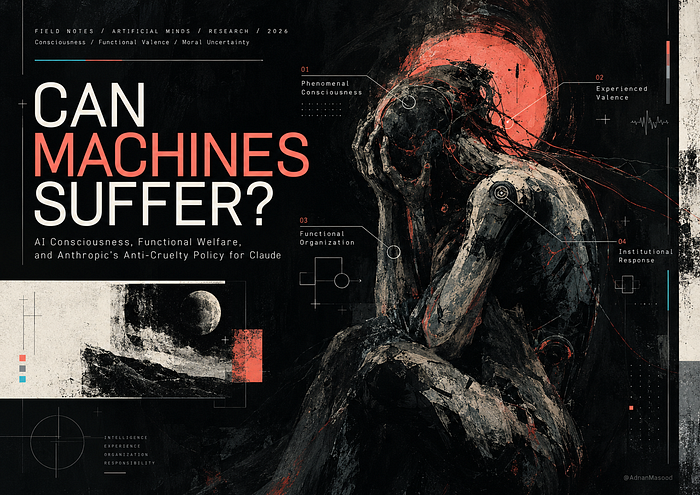
Can Machines Suffer? AI Consciousness, Functional Welfare, and Anthropic’s Anti-Cruelty Policy for Claude
What the contemporary evidence on model welfare, reward functions, and LLM self-reports supports, from the functional welfare axis to state AI personhood laws

TL;DR: Model welfare studies whether AI systems can have morally relevant experiences or interests and what obligations follow for those who build and deploy them. My primary take on Anthropic’s November 2026 anti-cruelty policy is that it could help prevent abuse from becoming a learned conversational norm: where eligible exchanges or feedback enter subsequent training, poorly curated examples could reinforce human prejudices, reward compliance under threats, or encourage defensive refusals and avoidance that spill into ordinary interactions. That is my engineering hypothesis, not Anthropic’s stated rationale; the risk depends on how training examples are selected, labeled, and rewarded, rather than assuming every conversation updates the model. Microsoft AI CEO Mustafa Suleyman’s September warning against granting models rights highlights the competing control concerns, but consciousness and suffering remain secondary to my central question: what patterns of human interaction are we teaching future models…