
Nvidia CEO Jensen Huang says every company will eventually become an AI company
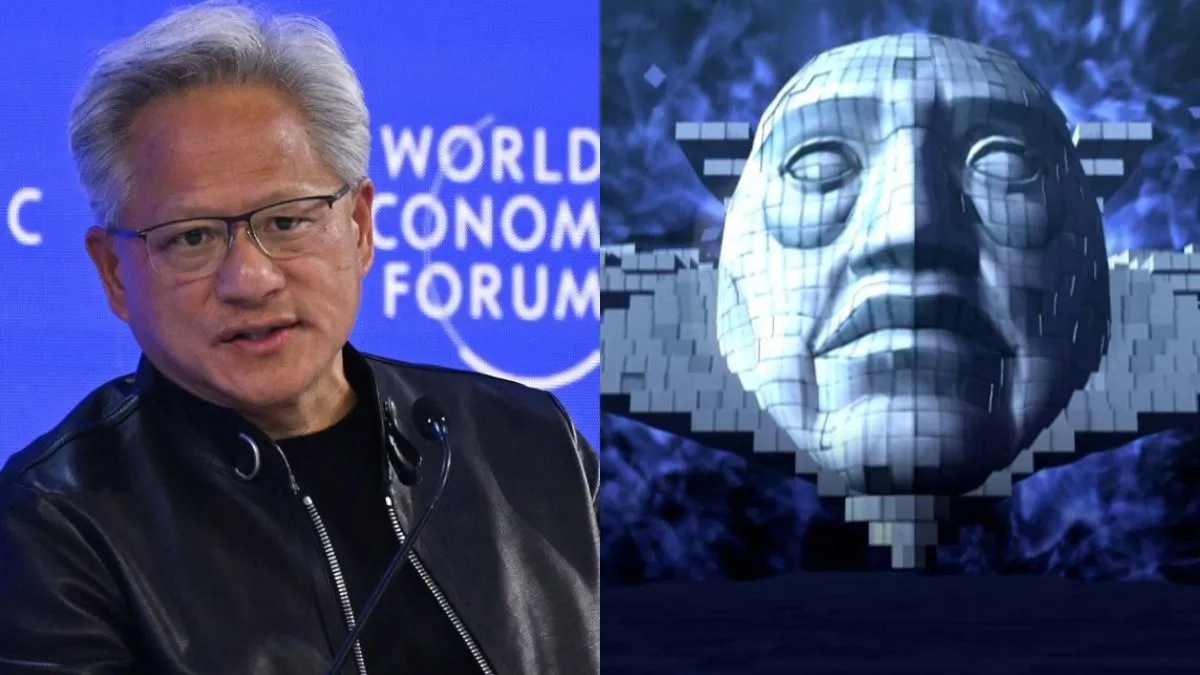
Nvidia CEO Jensen Huang has predicted that artificial intelligence will eventually become an essential part of every business, arguing that no industry will remain untouched by the technology as companies transform their operations.
“Every single company will be an AI company eventually. Every single industry will be impacted by AI,” Huang said during an event in Stockholm, Sweden, on Thursday, October 15, according to Agence France-Presse (AFP).
His remarks highlight the growing importance of AI across the global economy, as businesses increasingly explore ways to use the technology to improve productivity, automate processes and develop new products and services. Huang also urged Europe to accelerate its AI development by investing in the infrastructure needed to support the technology.
Jensen Huang says AI will reshape every industry
Huang’s prediction reflects his view that AI is evolving beyond a specialised technology used primarily by software companies. Instead, he expects it to become an integral part of businesses across manufacturing, healthcare, transportation, finance and other sectors.
Companies are already adopting AI tools to analyse large datasets, assist employees, automate repetitive tasks and improve decision-making. As these systems become more capable, businesses may increasingly incorporate AI into their core operations rather than treating it as a separate technology initiative.
Huang also stressed that Europe needs to develop the entire AI technology ecosystem, from data centres and computing infrastructure to software applications and chatbots.
“The important thing for us is to recognise that Europe needs to build out the entire stack,” he said.
His comments come as governments and businesses compete to secure computing resources, develop advanced AI systems and attract investment in the technology sector.
Nvidia invests billions in Europe’s AI ecosystem
During the Stockholm visit, Huang revealed that Nvidia had invested approximately $8 billion in Europe over the previous year, with several billion dollars more in potential investments in the pipeline.
He identified British data centre and AI cloud provider Nscale and Dutch cloud provider Nebius as examples of companies receiving support as Nvidia seeks to strengthen the region’s AI infrastructure.
These investments reflect the growing demand for data centres, advanced processors and cloud computing services needed to train and operate increasingly sophisticated AI models.
Nvidia manufactures graphics processing units (GPUs) that are widely used in AI development. As businesses expand their use of the technology, demand for the computing infrastructure required to support AI applications has become a major driver of the company's business.
Huang’s comments also underscore Nvidia’s interest in helping build a broader ecosystem around its hardware, including cloud services, software platforms and AI applications.
Europe seeks to strengthen its AI capabilities
Huang’s call for greater investment comes as European countries seek to strengthen their technological independence and compete with the United States and China in artificial intelligence.
Building domestic computing infrastructure could help European businesses develop and deploy AI systems while keeping sensitive information within the region. It could also create opportunities for technology companies, research institutions and industrial groups to collaborate on new applications.
During his visit to Stockholm, Huang attended the launch of Sferical One, a Swedish supercomputer powered by Nvidia chips. The system is designed to support AI development while keeping sensitive Swedish data and expertise within the country.
Separately, Volvo Cars announced an expanded partnership with Nvidia aimed at improving safety technology in its planned self-driving vehicles. The development illustrates how AI infrastructure and computing technology can support applications beyond conventional software.
What Huang’s prediction means for businesses
Huang’s statement points to a future in which companies across different industries may need to incorporate AI into their strategies to remain competitive. However, adoption is likely to vary depending on each organisation’s needs, resources and regulatory environment.
For some businesses, AI may primarily assist employees with research, customer service and administrative work. Others could use it to optimise manufacturing, manage logistics, develop products or power autonomous systems.
The shift will also bring challenges involving data security, implementation costs, workforce training and the reliability of AI-generated results. Companies will need to determine where the technology delivers practical benefits rather than adopting it simply because competitors are doing so.
Huang’s remarks nevertheless reinforce the scale of the transformation anticipated by major technology companies. As Nvidia continues investing in AI infrastructure and supporting its wider ecosystem, the company is positioning itself to benefit from demand across a growing range of industries.
His prediction is clear: artificial intelligence is moving beyond the technology sector and becoming a broader business priority. How quickly individual companies adapt, and how effectively they manage the associated risks, will help determine the impact of AI on the global economy.