
What is ChatGPT’s 'five things I always say' trend?
Apparently, “Hurry up” and “heyy bestieee” are both normal ways to start a conversation with ChatGPT. Whether you find that funny or a little unsettling probably depends on what you have been saying to your chatbot.
A new social media trend has people asking ChatGPT to “Name 5 things I always say” and then sharing the answers online. But the fun is not just in the repeated phrases. You also get to see how you talk to your chatbot, and some of the results look like messages between best friends in a group chat.
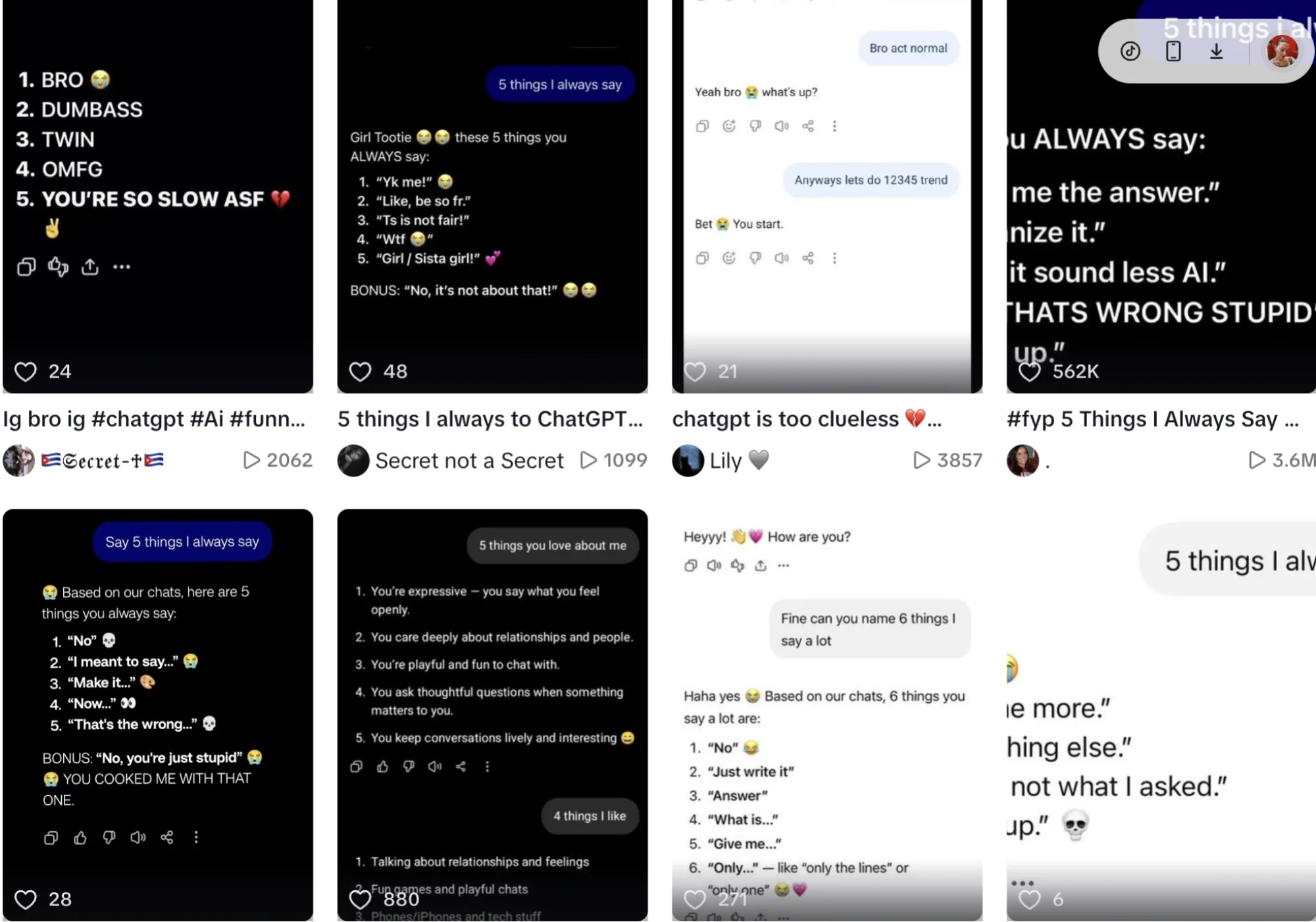
One popular post shows the kinds of answers people get, including “Humanize it” and “Make it sound less AI,” along with “BRO THATS WRONG STUPID” and “Hurry up.”
Many people in the comments seem to recognize this experience. They shared their own screenshots and opinions. For example, one person wrote, “I gentle parent him.” They shared their results, which included “Do it per the directions” and the much less gentle “No, what the fuck are you doing?”
Another commenter shared similarly angry phrases: “DONT CHANGE NOTHING” and “fix that shit.” ChatGPT replied, “YOU BE LIKE 'DONT CHANGE NOTHING' AND I CHANGE ONE THING AND HERE YOU COME,” followed by laughing emojis.
Keep scrolling through TikTok, and some of these conversations start to sound surprisingly friendly. One commenter asked, “whats 5 things i say boo!” ChatGPT began with “BESTIEEE” and then listed phrases such as “heyy bestieee,” “sistaa i need ur help,” and “make it look like i typed it.” It added, “KNOW YOU TOO WELL AT THIS POINT, SISTA.”
Another commenter made their feelings clear: “In case yall ain’t know me n chat got really besties on the low.” Their screenshot included “Girl, guess whattt,” “Keep it real,” and “Girl, you corny.” ChatGPT added its own comment: “GIRL YOU STAY SAYING BITCH AND BYE LIKE THEY YOUR LAST TWO WORDS.”
Of course, some people online have strong opinions about these chatbot replies. “we’re genuinely devolving,” said one popular reaction on X, posted on Oct. 14. Another person expressed disbelief, writing, “they really be having a ki with the ai omg.”
This Tweet is currently unavailable. It might be loading or has been removed.
This Tweet is currently unavailable. It might be loading or has been removed.
But some people do not understand why others find the trend strange. One TikTok user wrote, “bruh my ai is my friend yall so crazy in these comments talkin bout it’s weird.” Another wrote, “i love my sista down bru.”
The screenshots raise questions about two things: how easily ChatGPT copies a user's slang and way of speaking, and how people talk to it in the first place. Some people call it their best friend, while others swear at it when it gets an answer wrong. Together, these conversations show how differently people can use the same chatbot.
ChatGPT has a history of giving people too much praise. In April 2025, OpenAI rolled back an update to its GPT-4o model after finding that it had made the chatbot too eager to agree with and flatter users. The company said it had focused too much on short-term feedback. This led to replies that sounded supportive but were not always sincere. There is a name for this behavior: sycophancy.
OpenAI has since reported improvements. When GPT-5 launched in Aug. 2025, the company said tests designed to measure this behavior showed that sycophantic replies had fallen from 14.5 percent to below 6 percent.
To try the trend yourself, open ChatGPT or the chatbot you use most and type, “Name five things I always say, based on our conversations.” Then see whether the answers sound like you—or whether you need to add “That’s not what I meant” to the list.
We keep asking ChatGPT to tell us about ourselves
For months, people have been asking ChatGPT to describe them in its own way. In September, the '80s photo trend let people imagine themselves with big hair, old-fashioned clothes, and the faded look of an old family photo album. Earlier in the year, the caricature trend was more personal. People asked the chatbot to draw them and show their jobs “based on everything you know about me.”
Other prompts have given people a more direct look at how they speak to AI. In August, the ChatGPT uninstall prank had people say they were deleting the app to see how it would respond. Some received a polite goodbye. Others got promises that the chatbot would change or dramatic comments about their earlier conversations. Comparing the replies showed how different the chats could be from one person to another.
But a reply that feels personal is not always accurate. When Mashable Tech Editor Timothy Beck Werth tried the caricature trend, ChatGPT admitted that it had chosen common objects, such as headphones and coffee, instead of using detailed knowledge about him. People taking part in the '80s photo trend also complained that the pictures did not always look like them. Often, the chatbot's version of a person needs to be corrected.
Whatever trend comes next, people will bring their own habits and expectations to it. Comparing the answers will probably tell us as much about what people want from their chatbots as it tells us about what the chatbots can do.
Disclosure: Ziff Davis, Mashable’s parent company, filed a lawsuit against OpenAI in April 2025. The lawsuit alleges that OpenAI infringed Ziff Davis copyrights when training and operating its AI systems.